


TeraWulf has positioned itself at the center of the bitcoin mining industry’s pivot toward artificial intelligence, with the company reporting $12.8 billion in AI contract value as listed mining stocks continue to outperform BTC itself in 2026.
The contract figure represents the total value of AI and high-performance computing commitments TeraWulf has secured as it shifts infrastructure away from pure bitcoin mining. The company detailed its strategic direction in its fourth quarter and full year 2025 earnings report, which outlined accelerating AI and data center buildouts alongside its existing mining operations.
Why TeraWulf’s AI Contract Pipeline Changes the Valuation Story
For a company that began as a bitcoin miner, a multi-billion-dollar AI contract pipeline signals a fundamental shift in how investors should evaluate the business. Traditional mining revenue is tied directly to bitcoin’s spot price and network difficulty, both of which fluctuate unpredictably.
AI infrastructure contracts, by contrast, offer longer-duration revenue visibility. TeraWulf has been expanding its data center capacity to serve this demand, including plans to deliver over 70 MW of data center capacity for AI and HPC workloads.
The company also expanded its strategic partnership with FluidStack, a cloud computing provider, to channel GPU compute demand through its facilities. This positions TeraWulf not just as a power provider but as a node in the broader AI infrastructure supply chain.
TeraWulf reported $168.5 million in 2025 revenue as its AI and HPC buildouts gained momentum. The gap between that annual revenue and the total contract pipeline illustrates the long-term nature of the commitments, with delivery spread across multiple years of construction and deployment.
Bitcoin Mining Stocks Are Beating BTC in 2026
TeraWulf’s pivot is part of a broader pattern. Listed bitcoin mining companies have outperformed both bitcoin and the S&P 500 on a year-to-date basis, a trend that J.P. Morgan analysts have highlighted in recent coverage of the sector.
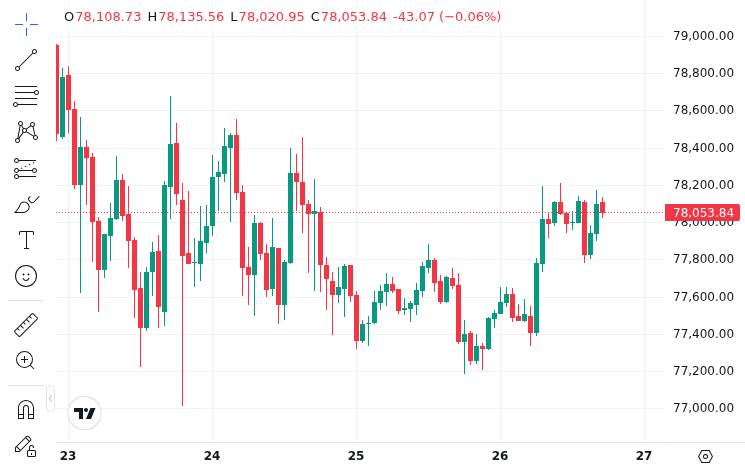
Miner equities offer leveraged exposure to bitcoin sentiment, but companies with AI or data center optionality attract a different class of investor entirely. Institutional capital that would not buy BTC directly may invest in a company like TeraWulf if the revenue model looks more like a traditional infrastructure business than a crypto-native one.
This dynamic mirrors a broader shift in how crypto-adjacent businesses interact with traditional financial markets. The mining-to-HPC pivot gives these companies a dual narrative: bitcoin upside when the market is strong, and AI infrastructure demand as a floor when crypto sentiment weakens.
The trend has also drawn attention from participants beyond traditional mining circles, including institutional staking operators re-evaluating how digital asset infrastructure generates returns.
Execution Risks Behind the Headline Number
A large contract pipeline is not the same as delivered revenue. Large-scale data center buildouts depend on power availability, permitting timelines, and the creditworthiness of counterparties signing multi-year agreements.
TeraWulf’s planned expansion to over 70 MW of AI-ready capacity requires significant capital expenditure. The company must secure reliable power at competitive rates, a challenge that intensifies as AI demand drives up energy costs across the data center industry.
Contract quality matters as much as headline size. Investors should watch for details on customer concentration, contract duration, and whether commitments include binding take-or-pay provisions or softer memoranda of understanding. Similar dynamics apply across the broader digital asset infrastructure space, where headline figures can obscure execution complexity.
Bitcoin exposure remains a factor as well. Even as TeraWulf diversifies, its mining operations still generate revenue tied to BTC price movements. A sharp bitcoin downturn could pressure the stock regardless of AI contract progress, particularly if investors reassess the company’s blended risk profile.
The next quarterly report will be critical for gauging how much of the contract pipeline has converted into active revenue, and whether the 70 MW buildout is on schedule.
Disclaimer: This article is for informational purposes only and does not constitute financial or investment advice. Cryptocurrency and digital asset markets carry significant risk. Always do your own research before making decisions.