


A CEX.IO survey of 1,100 active crypto users in the United States found that 36% have cut everyday spending since October 2025, even as nearly four in five respondents said they plan to hold or increase their crypto positions over the next six months.
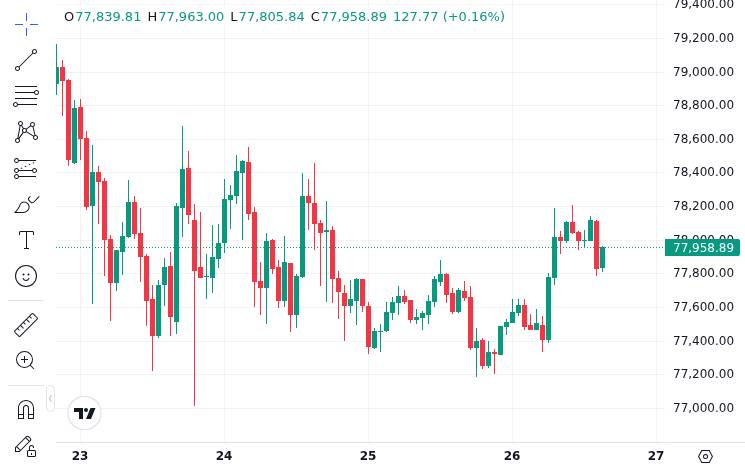
The results land during a period of broad market caution. Bitcoin traded at $77,880 at the time of reporting, and the Fear and Greed Index sat at 33, a reading classified as “Fear.”
What the CEX.IO Survey Found About Crypto Traders’ Daily Spending
CEX.IO said it surveyed 1,100 active crypto users based in the United States. Of those respondents, 36% reported reducing spending on everyday non-crypto purchases since October 2025.
Separately, 37% said they had delayed or cancelled a purchase specifically because of their crypto portfolio’s performance. Among all respondents, 21% said the delayed or cancelled purchase involved a major expense.
Delayed Major Purchases Signal Deeper Financial Trade-Offs
The distinction between trimming daily spending and postponing large purchases matters. Cutting a coffee budget is a different signal than shelving a car purchase or home renovation because of portfolio drawdowns.
That 21% figure suggests crypto market conditions are influencing decisions well beyond discretionary spending for a meaningful share of active traders. The pattern echoes broader concerns about how regulatory uncertainty in crypto markets can ripple into household finances.
The published survey page does not include a full methodology appendix, field dates, or margin of error, which limits how broadly the percentages can be generalized beyond the surveyed group.
Why Current Market Conditions Fit the Survey’s Risk-Off Mood
The survey results arrived alongside a cautious market backdrop. Total crypto market capitalization stood at roughly $2.68 trillion, with Bitcoin dominance at about 58.2%.
A Fear and Greed reading of 33 places the market firmly in risk-off territory. That sentiment aligns with the household-level stress the CEX.IO survey describes.
How Market Sentiment Spills Into Personal Budgeting
When portfolio values decline or stagnate, traders who hold a significant share of their net worth in crypto may tighten non-crypto spending as a buffer. The survey’s 36% spending-cut figure is consistent with that pattern, though it does not prove direct causation between any single price move and a budgeting decision.
Bitcoin’s 24-hour change at the time of research was a modest 0.33%, suggesting the spending cuts reflect sustained conditions rather than a single sharp drawdown. Events like the recent KelpDAO exploit and broader DeFi security concerns may compound the cautious mood among active traders.
Why Spending Cuts and a 79% Hold-or-Add Plan Matter Together
The survey’s most striking tension sits between the spending cuts and forward-looking conviction. A full 79% of respondents said they plan to hold or add to their crypto positions over the next six months.
That combination, cutting household expenses while doubling down on crypto, suggests respondents view current market conditions as temporary rather than terminal. They are absorbing short-term financial discomfort to maintain or grow positions.
Retail Conviction Versus Cash-Flow Pressure
The split points to a market where retail participants have not capitulated. Consumer stress is real, with more than a third trimming daily budgets, but the hold-or-add majority signals that conviction in crypto’s medium-term trajectory remains intact among active traders.
This dynamic matters for market structure. If the 79% follow through, retail selling pressure may remain muted even as the Fear and Greed Index signals caution. The recent Ethereum Foundation unstaking activity offers a parallel example of strategic positioning during uncertain conditions.
The key takeaway is that consumer financial pain and crypto conviction are coexisting, not contradicting. How long that balance holds depends on whether market conditions stabilize or deteriorate further in the months ahead.
Disclaimer: This article is for informational purposes only and does not constitute financial or investment advice. Cryptocurrency and digital asset markets carry significant risk. Always do your own research before making decisions.