

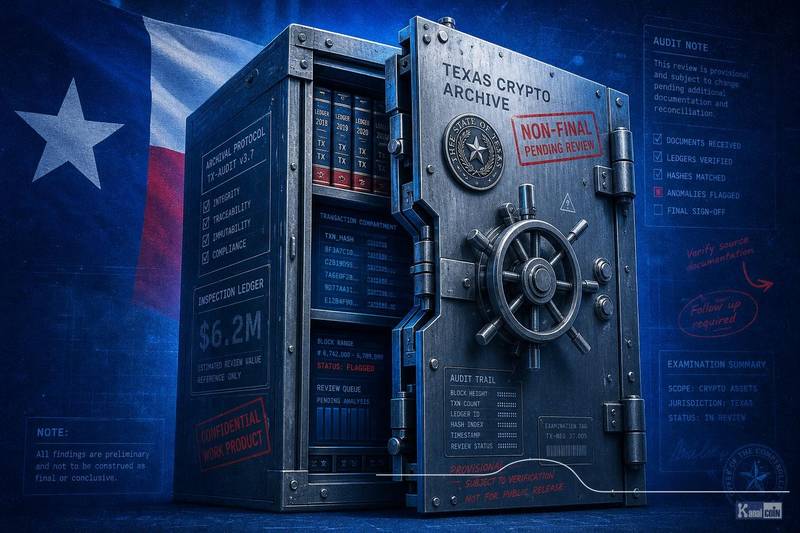
The SEC alleges a Texas promoter diverted $6.2 million from investors while marketing a fake AI-powered crypto trading operation. Here’s what the complaint says and what comes next.

The SEC alleges a Texas promoter diverted $6.2 million from investors while marketing a fake AI-powered crypto trading operation. Here’s what the complaint says and what comes next.

Tether’s May 2026 news cycle highlights expansion across AI initiatives, payment rails and compliance positioning, signaling a broader strategy beyond stablecoin issuance.

The US CFTC signals a possible path for crypto perpetual futures. Here is the regulatory angle, what may change for exchanges, and why the market is watching.

Kraken plans to launch CFTC-regulated perpetual futures for US traders. Here is the focused news outline covering the launch, why the regulatory angle matters, and what traders should watch next.

A New York Times report says the CFTC cleared regulatory hurdles for Trump-linked crypto firms. Here’s why the claim matters for crypto oversight.

A newly proposed U.S. bill, H.R.8957, aims to create a Strategic Bitcoin Reserve with transparent management requirements. Here’s what the legislation means for Bitcoin and crypto policy.

A revised strategic bitcoin reserve bill removes the 1 million BTC purchase target and adds a 20-year lockup period. Here is what changed and why it matters.
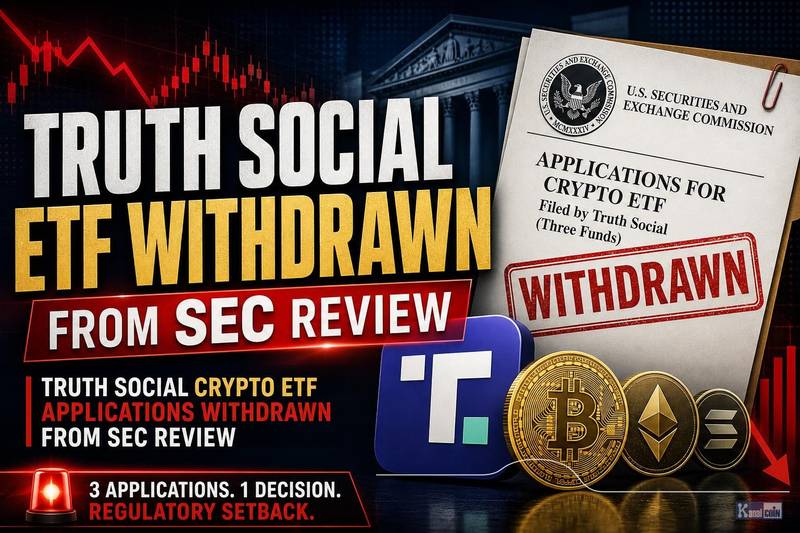
Truth Social’s three crypto ETF applications have been withdrawn from SEC review. Here is the likely regulatory context, what the move signals, and what to watch next.

Truth Social has withdrawn its Bitcoin ETF application from the SEC, shifting the focus to the filing retreat, regulatory context, and what comes next.

Grayscale and VanEck have updated BNB ETF filings as the SEC reviews the proposals. Here is what changed, why it matters, and what to watch next.

The CLARITY Act advanced out of the Senate Banking Committee in a 15-9 vote as Bitcoin, XRP, and Dogecoin posted gains, putting crypto regulation and market reaction in focus.

A Senate panel advanced the Clarity Act in executive session, putting crypto market structure back in focus as the draft moves toward its next legislative test.
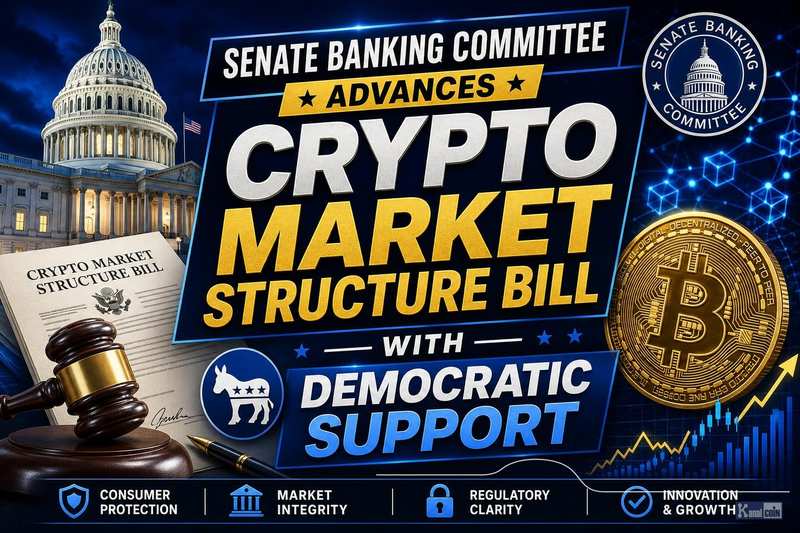
The Senate Banking Committee moved a crypto market structure bill forward with some Democratic support, signaling momentum while leaving major policy questions unresolved.
The crypto industry’s Clarity Act is moving into Senate markup, setting up a key test for U.S. digital asset legislation, committee priorities, and next procedural steps.

The US Senate Banking Committee has released a draft Crypto Clarity Act bill. Here is what the proposal signals, why it matters for crypto regulation, and what comes next.

NYSE files an SEC rule-change proposal to enable tokenized securities trading, signaling a potential bridge between blockchain market rails and traditional finance.

Ripple CEO says a U.S. market structure bill is still not a done deal even after a stablecoin compromise, signaling continued crypto policy uncertainty.

SEC Chair says the current legal framework no longer fits crypto, signaling a push for clearer token rules, updated oversight and new policy debates ahead.

Coinbase says a deal on CLARITY Act stablecoin-yield language has been reached, potentially clearing the way for Senate markup. Here is the immediate policy and market focus.

Payward completes its acquisition of Bitnomial, adding a CFTC-licensed crypto derivatives platform and sharpening its regulated market position.
Stand With Crypto has delivered a petition to Congress urging approval of the CLARITY Act, adding pressure to the U.S. crypto policy debate.

Bitbank and EPOS Card launched a crypto-linked Visa in Japan, letting users pay monthly card bills from their bitbank account in Bitcoin, with 0.5% rewards.

Explore the reported CFTC legal action in New York tied to Coinbase and Gemini, why the case matters, and what crypto traders should watch next.

Russia’s crypto bill for foreign trade settlements has passed its first reading, signaling a notable step in the country’s cross-border digital asset policy.

The SEC has launched a podcast that puts crypto near the top of its agenda. Here is what that means for regulation, markets, and the industry.

Senator Thom Tillis said he is ‘guardedly optimistic’ on stablecoin legislation and expects to schedule a markup, signaling possible momentum in Congress.

Ondo Finance has asked the SEC to approve stock entitlements on Ethereum, advancing its push to bring regulated securities exposure onchain.

Ondo is pursuing SEC clearance for a tokenized equities model on Ethereum, raising fresh questions around compliant onchain stock exposure.

The SEC and CFTC are reportedly accelerating US crypto oversight through interpretive rules instead of lengthy rulemaking. Here is what changed, why it matters, and what firms should watch next.

Treasury Secretary Bessent is urging Congress to pass crypto market structure legislation quickly, warning that delay could raise market and regulatory risks.

The crypto market structure bill release has been pushed back as industry attention turns to a revised stablecoin yield compromise and its policy implications.

Full list of SEC-approved spot cryptocurrency ETFs in 2026, including Bitcoin, Ethereum, Solana, XRP and other assets — with approval dates, issuers, and what’s still pending.
A high-profile US stablecoin bill has stalled after internal crypto industry and partisan disputes derailed its momentum, drawing sharp public frustration from lawmakers pushing to finalize regulation.
U.S. Representatives Adrian Smith and Nikki Budzinski have introduced the bipartisan PREDICT Act, aiming to establish regulatory clarity for cryptocurrency-based prediction markets in the United States.

Arizona’s legislature has advanced a bill establishing a Digital Assets Strategic Reserve Fund, potentially making it the first U.S. state to hold Bitcoin as a reserve asset.
The CFTC has launched a new Innovation Task Force placing crypto at the center of its regulatory agenda. Here is what the mandate covers and why it matters for digital asset markets.

The CFTC has unveiled a new Innovation Task Force focused on crypto, artificial intelligence, and prediction markets, signaling a shift toward proactive regulatory engagement with emerging financial technologies.

Fidelity Digital Asset Services has formally asked the SEC’s Crypto Task Force to define how on-chain settlement fits into existing securities law, filing multiple submissions in 2025.

The SEC and CFTC jointly defined five crypto asset classes for the first time. Bitcoin is up 8% since the Iran conflict while the S&P 500 and gold both fell.
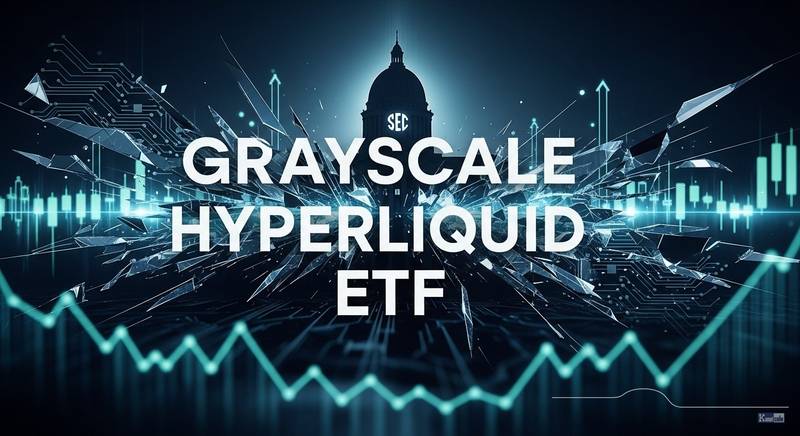
Grayscale has filed with the SEC seeking approval for an exchange-traded fund tracking the HYPE token, Hyperliquid’s native asset, expanding its altcoin ETF lineup beyond Bitcoin and Ethereum.
The Senate and White House have reached a tentative agreement on stablecoin yield, potentially clearing the path for landmark U.S. stablecoin legislation to advance.

Whale wallet BillΞ.eth sold another 5,571 ETH for $11.76M at an average of $2,111, locking in a $760,000 realized loss. On-chain data tracks the repeated sell-off pattern.

The FBI has warned of a criminal network impersonating law enforcement to coerce victims into sending funds through crypto ATMs. Here’s how the scam works and what to watch for.
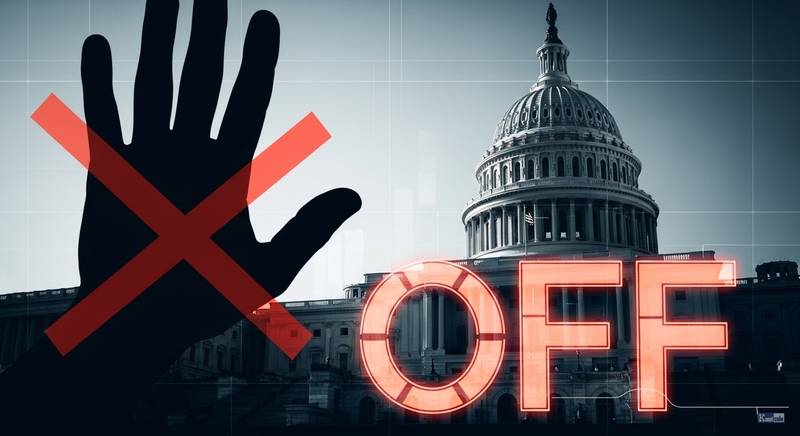
Congress is moving to ban war-related prediction market bets through the new BETS OFF Act. Here is what the bill targets, why lawmakers are acting, and what it could mean for event-driven markets.

SEC and CFTC have issued first-ever guidance on how federal securities laws may apply to crypto assets. Here is what the move means for classification, compliance and the broader market.

The SEC says most crypto assets are not securities, with staking, airdrops and Bitcoin mining highlighted. Here is what the policy shift could mean for the market.

The war in Iran is fracturing Republican unity on Israel, creating uncertainty that ripples into crypto markets, U.S. sanctions enforcement, and digital asset legislation.

A DeFi lobbying group has dropped its airdrop-related lawsuit against the SEC, citing the agency’s shifting stance on crypto regulation under the new administration.