


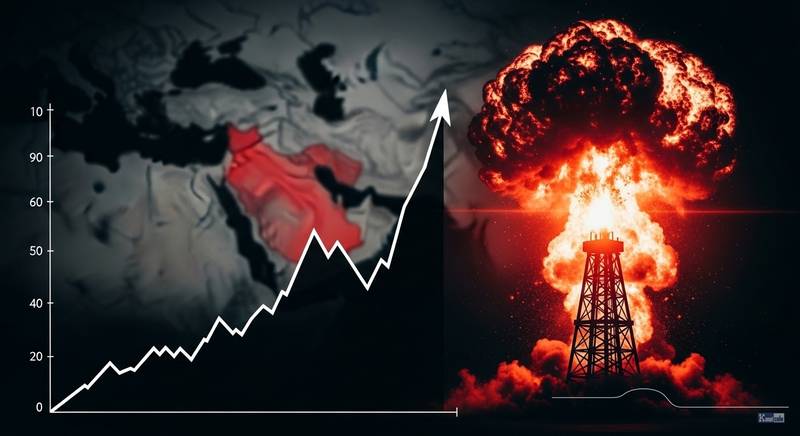
Iran war energy impacts are already visible in the Gulf, and that matters well beyond oil traders. With traffic through the Strait of Hormuz effectively disrupted by the conflict, the immediate question is how quickly one shipping shock can spread into crude, LNG, inflation and risk sentiment across Asia, including Southeast Asia.
The evidence available for this article is strong on energy security, but narrower on the specific Forbes framing. A more useful approach is to treat this as a practical Q&A about what the disruption means, what is physical, what is fear-driven, and which signals readers should watch next.
Why Would an Iran War Immediately Matter for Global Energy Markets?
Because the Strait of Hormuz is not a marginal route. The IEA says around 25% of the world's seaborne oil trade moved through the Strait in 2025, and more than 110 bcm of LNG passed through it, equal to almost one-fifth of global LNG trade.
That is why traders reprice risk before they can prove every physical shortage. If tankers are delayed, rerouted or exposed to higher war-risk insurance, oil benchmarks can jump on expected scarcity and higher transport costs even before refineries report outright supply losses.
“Traffic through the Strait has been essentially halted by the conflict, putting pressure on the trade of a wide range of energy products.”
Source: International Energy Agency
The market reaction has already reflected that logic. AP reported Brent crude settled at $100.46 a barrel on March 12, 2026, as war-related supply fears intensified.
For readers in Indonesia, the Philippines, Thailand and other fuel-importing parts of Southeast Asia, the first-order risk is not a local battlefield event. It is the speed with which a Gulf shipping shock can raise import costs, strain subsidy frameworks and complicate inflation management across economies that still take global oil and gas pricing as a given.
Which Energy Channels Could See the Biggest Impact: Oil, Gas, Shipping or Inflation?
Oil is the fastest channel because it is the deepest and most visible benchmark market. When crude rises sharply, the move can feed into diesel, jet fuel, freight and petrochemical inputs, which is why geopolitical shocks in the Gulf often broaden into a wider inflation story.
Gas is the second channel, and it is often underplayed. The IEA's Hormuz data shows LNG exposure is also large, so the impact is not just about motorists and airline fuel, but also power generation, industrial demand and fertilizer economics if LNG cargoes are delayed or repriced.
Shipping and insurance can amplify both moves. Even if some barrels or cargoes still flow, a conflict premium on tanker rates, insurance and rerouting can lift delivered costs, which means consumers and businesses may feel the shock through logistics bills as much as through the headline oil chart.
That distinction matters for crypto readers too. Short-term fear can hit risk assets even when the real-economy damage is still forming, while a sustained energy shock can keep pressure on inflation expectations and interest-rate narratives. That combination tends to matter for speculative assets, and it is one reason broader macro pieces such as Kanalcoin's coverage of SEC and CFTC crypto guidance or its report on how US securities views affect staking, airdrops and mining remain relevant even during an energy crisis.
The policy response shows governments see more than a temporary spike. According to the IEA, member countries approved a 400 million barrel emergency stock release on March 11, 2026, a record-sized intervention designed to calm supply fears and stabilize the market.
That does not remove risk, but it changes the balance between shock and resilience. Emergency stocks can cushion refiners and consumers for a period, while the harder problem is how long shipping disruption lasts and whether producers can bypass Hormuz fast enough to offset the blockage.
Asian exposure deserves special attention here because the region is deeply tied to imported hydrocarbons. If Gulf flows remain impaired, importers from Northeast Asia to Southeast Asia may face a layered problem of higher benchmark prices, tighter LNG competition and weaker household purchasing power, especially where electricity or transport costs adjust with a lag.
What Should Readers Watch Next if the Crisis Deepens?
The cleanest watchlist starts with three indicators: official statements on military escalation or sanctions, evidence of actual tanker traffic through Hormuz, and the direction of crude and LNG benchmarks. These matter more than social-media noise because they show whether the market is repricing fear or enduring a longer supply event.
Readers should also watch whether emergency measures expand beyond the March 11 stock release. If governments keep tapping reserves, or if insurers and shipowners continue charging a steep war premium, that would suggest the disruption is shifting from a headline shock into a more persistent cost problem.
A final signal is how the inflation conversation changes in Asia. If energy costs stay elevated, central banks and finance ministries across the region may have to give more weight to fuel, food and freight pressure, which would ripple into consumer sentiment and risk appetite, including crypto positioning. Kanalcoin readers following the geopolitical angle can also compare this with the site's earlier coverage of Iran-related diplomatic reactions.
The grounded takeaway is simple: this is not only an oil-price story. It is a chokepoint story, an LNG story, an inflation story and, for Asia, an import-cost story, with the market still trying to determine how much is panic and how much is lasting supply damage.
Disclaimer: This article is for informational purposes only and does not constitute financial or investment advice.
Disclaimer: This article is for informational purposes only and does not constitute financial or investment advice. Cryptocurrency and digital asset markets carry significant risk. Always do your own research before making decisions.