


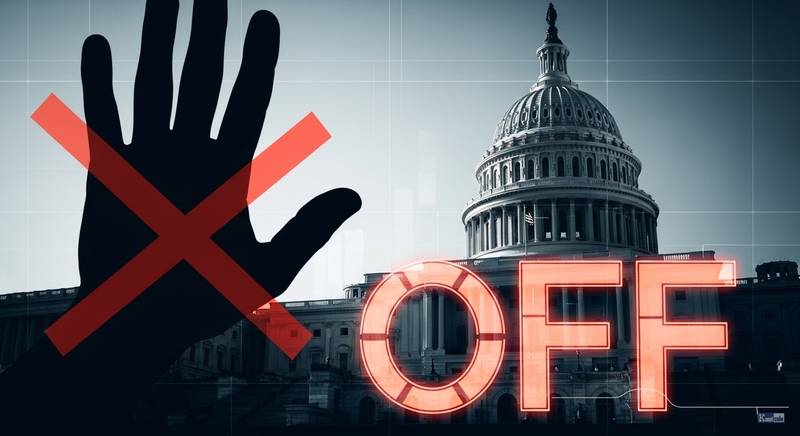
Congress is moving to tighten rules on war-related prediction market bets, but the official bill text now in circulation is Sen. Adam Schiff’s “DEATH BETS Act,” not a formally verified “BETS OFF Act.” For crypto and event-market traders in Southeast Asia, the push matters because a sharper U.S. ban on conflict-linked contracts could reshape listing standards on global platforms that regional users watch closely.
An official Senate bill draft shows Schiff proposing an amendment to the Commodity Exchange Act that would bar registered entities from listing contracts tied to terrorism, assassination, war, similar activity, or an individual’s death. The same text gives the proposal its short title, the Discouraging Exploitative Assassination, Tragedy, and Harm Betting in Event Trading Systems Act, or the DEATH BETS Act.
That distinction matters because the research supporting this article did not verify an official congressional filing or lawmaker release using the exact “BETS OFF Act” name. Based on the evidence gathered for this run, the safer reading is that Congress is advancing a broader crackdown on war and death-linked event contracts, while the BETS OFF branding remains unconfirmed.
What lawmakers are trying to ban
The bill targets a narrow slice of prediction markets rather than every event contract. Its focus is contracts that let traders profit from war, terrorism, assassinations, or an individual’s death, categories lawmakers argue should be explicitly off-limits under federal commodities law.
Reuters reported on March 5, 2026 that Rep. Mike Levin and Sen. Chris Murphy were working on legislation after well-timed bets appeared ahead of U.S.-Israeli strikes on Iran, adding to scrutiny around event-driven markets. Reuters also cited Levin saying the existing statute already bars contracts contrary to the public interest, including war and assassination, but still leaves platforms too much room to operate in the gray area.
Schiff’s March 10 press release, as summarized in the research brief, said Rep. Levin would introduce companion legislation in the House and pointed to more than $500 million wagered on the timing of U.S. military strikes on Iran alone. The same source said a Kalshi market on whether Iran’s Ali Khamenei would be out as Supreme Leader reached $54 million in trading volume before it was paused.
Why conflict-based betting has become a flashpoint
The main policy argument is not about ordinary political forecasting. It is about whether markets tied to war or death create incentives to monetize violent events and potentially reward traders who act on sensitive government information before the public sees it.
“There is no good way for people to be betting on war and death.”
Mike Levin, as quoted in Reuters coverage carried by WTAQ
Policy groups have pushed a similar line. The Center for American Progress said six newly created Polymarket accounts earned roughly $1.2 million after bets placed only hours before the February 28, 2026 strikes on Iran, then argued Congress should make clear that turning sensitive government information into trading profit is illegal.
Another warning sign came before the new bill text surfaced. A February 13 Senate letter to CFTC Chair Michael Selig, cited in the research brief, urged the agency not to back contracts tied to sports, war, or other prohibited events, while NPR separately noted the Commodity Exchange Act already bans several categories including assassination, terrorism, war, and games.
What this could mean for platforms and traders
If the Senate and House proposals gain traction, prediction platforms may face immediate pressure to review any market that touches military escalation, leadership removals during conflict, or death-linked outcomes. Even before final passage, the bill strengthens the case for more conservative listing standards and faster delistings when a contract edges into national security territory.
For Southeast Asian readers, the practical issue is access rather than direct U.S. legislative exposure. Traders in Indonesia, the Philippines, Singapore, and elsewhere often follow offshore crypto-adjacent products, so tighter U.S. enforcement can spill into platform policy, account restrictions, and risk controls that affect regional users indirectly.
That does not automatically mean a blanket assault on all prediction markets. The evidence gathered here supports a more limited interpretation: lawmakers are trying to close the door on war and death-related contracts first, while leaving the wider debate over election, economic, and other event markets to future regulatory fights.
Why the U.S. debate matters in Southeast Asia
Regional exchanges and trading communities already watch U.S. regulatory signals closely because they often shape how global compliance teams classify high-risk products. A more explicit federal ban on war-linked contracts could become a reference point for risk committees well beyond Washington, especially on venues serving users across multiple jurisdictions.
That broader regulatory spillover is relevant for readers tracking other geopolitical and policy shocks on Kanalcoin, including Trump NATO Iran War: What’s Really Going On and Iran War Energy Impacts: A Necessary Q&A on Oil, Gas and Markets. It also fits the wider compliance trend discussed in SEC, CFTC Crypto Guidance Explained: What Federal Securities Laws Mean for Crypto Assets.
Outlook
The next step to watch is whether the House companion bill appears with language matching Schiff’s Senate text, and whether any official filing finally confirms the BETS OFF name used in some headlines. Until that happens, the most defensible characterization is that Congress has documented momentum behind a bill to explicitly ban war and death-related event contracts, with the DEATH BETS Act as the verified text now available.
For platforms, the warning is immediate even before any final vote. For traders, especially those using offshore-facing markets from Southeast Asia, the message is that contracts tied to military action or human tragedy are moving from a regulatory gray zone toward a direct political target in Washington.
Disclaimer: This article is for informational purposes only and does not constitute financial or investment advice. Cryptocurrency and digital asset markets carry significant risk. Always do your own research before making decisions.