


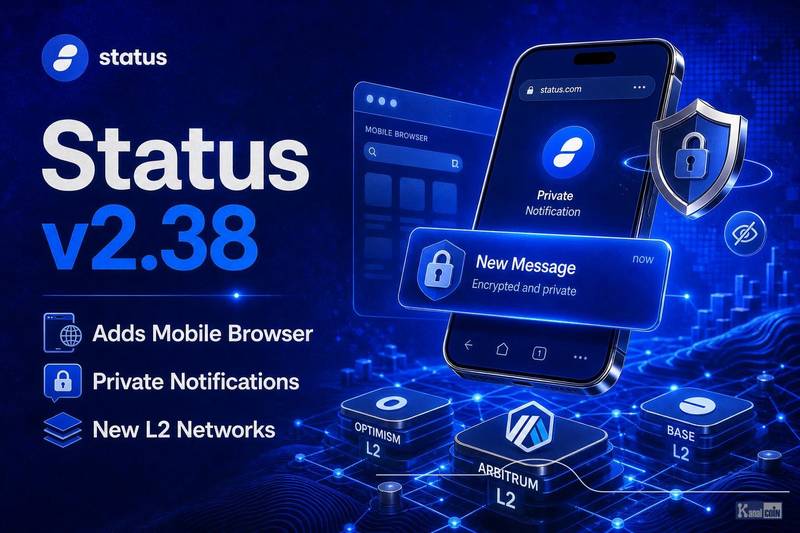
Status has released version 2.38 of its messaging and crypto wallet application, introducing a mobile browser, private notifications, and support for new Layer 2 networks in what represents a significant feature expansion for the privacy-focused platform.
Status v2.38 at a Glance
The update, detailed on the official Status blog, bundles three core additions into a single release. A built-in mobile browser now lets users access decentralized applications directly from the app. Private notifications bring alert functionality without exposing message content. New L2 network integrations expand the chains available within the Status wallet.
TLDR Keypoints:
- Mobile browser: Status v2.38 adds an in-app browser for accessing dApps on mobile devices.
- Private notifications: Push notifications now function while preserving message privacy.
- New L2 networks: The wallet supports additional Layer 2 chains, broadening transaction options.
What the New Features Mean for Status Users
The mobile browser turns Status from a standalone messenger and wallet into a more complete Web3 gateway. Users no longer need to switch between Status and a separate mobile browser to interact with decentralized applications. This follows the project’s broader direction toward a unified mobile experience that consolidates messaging, finances, and browsing.
Private notifications address a long-standing tension in encrypted messaging apps. Delivering push notifications typically requires routing some data through centralized servers, which can compromise metadata privacy. Status v2.38’s approach aims to preserve the platform’s privacy-first positioning while still keeping users informed of incoming messages.
The addition of new L2 networks gives wallet users access to cheaper and faster transaction options beyond Ethereum mainnet. As regulatory frameworks around digital assets continue to evolve globally, multi-chain support has become a baseline expectation for crypto wallets rather than a differentiator.
Why This Update Matters in the Broader Web3 App Landscape
Mobile-first functionality is increasingly critical for Web3 adoption. Most crypto users interact with their wallets and messaging tools on phones, and apps that require desktop access or multiple tools for basic tasks lose users to simpler alternatives. Status v2.38’s bundled browser directly targets this friction point.
Privacy remains a core selling point for Status, which uses the Waku protocol for peer-to-peer communication. Adding notifications without undermining that privacy layer is a meaningful technical challenge. For users weighing Status against conventional messengers, this feature removes one of the practical trade-offs of choosing an encrypted alternative.
L2 network expansion reflects the broader shift in crypto infrastructure, where projects like those building cross-chain research tools and industry events focused on institutional digital assets signal growing demand for multi-network interoperability. Status v2.38 positions the app to serve users across an increasingly fragmented chain landscape.
Disclaimer: This article is for informational purposes only and does not constitute financial or investment advice. Cryptocurrency and digital asset markets carry significant risk. Always do your own research before making decisions.