
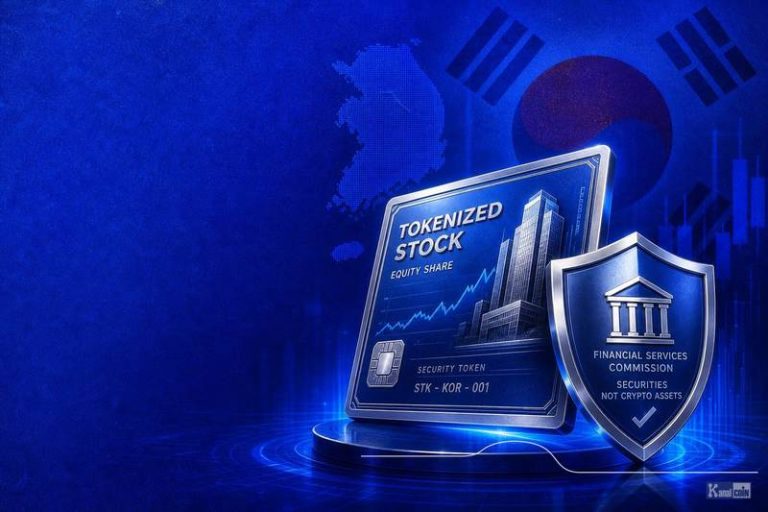
South Korea’s Finance Ministry has declared that tokenized stocks should be classified as securities, not crypto assets, a regulatory distinction that could reshape how digital equity products are issued, traded, and taxed in one of Asia’s most active digital asset markets.
The decision draws a firm line between tokens that represent ownership in traditional financial instruments and the broader category of cryptocurrencies. Under this framework, a stock that has been digitized on a blockchain still carries the same legal obligations as its conventional counterpart.
How South Korea Is Splitting Tokenized Stocks From Crypto
South Korea’s financial regulators have been working toward a formal framework for tokenized securities. The Financial Services Commission outlined guidelines that treat tokenized equities under existing capital markets law rather than the country’s separate virtual asset regulations.
The distinction matters because a tokenized stock, unlike a typical cryptocurrency, represents a claim on a real-world company’s equity. It carries rights such as dividends, voting power, and liquidation proceeds. The ministry’s position is that blockchain technology does not change the fundamental nature of these rights.
South Korea has also been advancing legislation to legalize and regulate tokenized securities as a distinct product category. This legislative push signals that regulators view the tokenization of traditional assets as a separate policy challenge from cryptocurrency oversight, similar to how institutional capital has been moving toward regulated digital asset structures in other markets.
Why the Securities Label Changes the Rules
Classifying tokenized stocks as securities means issuers and trading platforms must comply with disclosure requirements, investor protection rules, and licensing obligations that apply to conventional stock markets. Crypto exchanges operating under virtual asset service provider licenses would not automatically be authorized to list these products.
The classification also has tax implications. South Korea’s authorities have indicated that tokenized stocks may be taxed under existing securities tax law rather than the country’s crypto tax framework. This could affect how gains are calculated and reported for both retail and institutional investors.
For platforms that have been building tokenized equity products, the ruling means they may need to obtain securities dealer or broker licenses. This raises the compliance bar significantly compared to operating under crypto-specific regulations, a shift that could affect how companies like those building crypto research infrastructure in Korea position their services.
What Comes Next for Tokenized Securities in Korea
South Korea has set a July deadline for finalizing tokenized securities rules, giving market participants a narrow window to prepare. The timeline suggests regulators are moving quickly to close the gap between policy intent and enforceable regulation.
The ministry’s approach evaluates tokenized financial products by the rights they confer, not the technology used to issue them. This principle could extend beyond stocks to tokenized bonds, fund units, and other traditional instruments that are increasingly being issued on blockchain networks.
Market participants working across both crypto and traditional finance may need to separate their security-token operations from broader digital asset offerings. Firms recognized for innovation in the crypto space will face the question of whether tokenized securities fit within their existing compliance structures or require entirely new ones.
Disclaimer: This article is for informational purposes only and does not constitute financial or investment advice. Cryptocurrency and digital asset markets carry significant risk. Always do your own research before making decisions.