


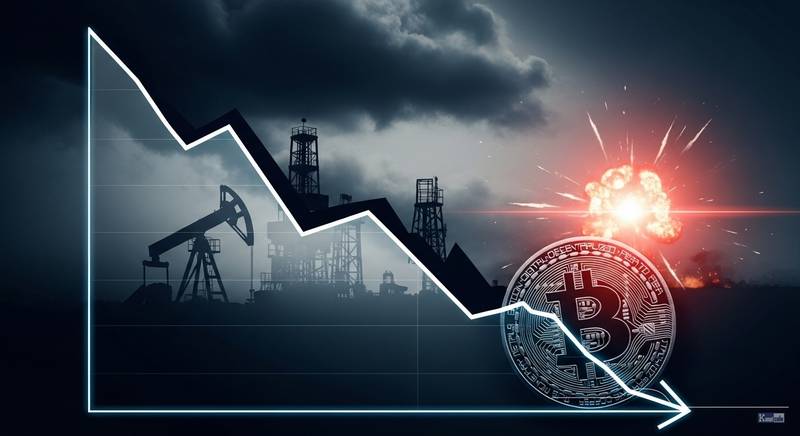
US Vice President JD Vance said energy prices will “come back down to reality” once the Iran war concludes, framing current elevated costs as temporary wartime disruption. For Bitcoin miners already squeezed by post-halving economics, the timeline of any energy price relief could directly affect mining profitability and, by extension, BTC sell pressure across the market.
What Vance Said, and the War Context Behind It
Vance made the remarks during a CNBC appearance on March 18, telling viewers that energy prices will “come back down to reality” after the Iran conflict ends. The statement positions the administration’s view that current price spikes are a geopolitical side effect, not a structural shift.
The Iran war has disrupted global energy supply chains and pushed oil prices well above pre-conflict levels. Vance, speaking in his capacity as Vice President, offered what amounts to an official economic forecast tied to a resolution of the conflict.
The remarks come amid broader political debate over who bears responsibility for rising gas costs. Multiple reports have tracked the administration’s messaging on energy prices as a political liability, with Vance repeatedly attributing current conditions to wartime disruption rather than domestic policy.
Whether energy markets cooperate with that narrative depends on how the Iran conflict evolves. For now, the Vice President’s statement is a signal, not a guarantee.
Why Energy Prices Are a Crypto Market Signal
Electricity is the single largest operating cost for Bitcoin miners. When energy prices rise, mining margins compress, and operators with thin margins are forced to sell BTC holdings to cover expenses. This creates additional sell pressure on the market.
The dynamic is especially acute in the current post-halving environment. Since the April 2024 halving cut block rewards in half, miners have operated on tighter margins. The recent drop in Bitcoin hash rate linked to rising energy costs illustrates how sensitive mining operations have become to electricity pricing.
If Vance’s forecast proves correct and energy costs normalize after the Iran war, miners would see direct relief. Lower electricity bills mean healthier margins, less forced selling, and reduced BTC supply hitting exchanges.
That relief would matter most for mid-tier mining operations. Large-scale miners with fixed-rate power contracts are somewhat insulated, but smaller operations, particularly those in regions dependent on natural gas generation, have felt the full impact of wartime energy spikes.
Oil Markets and Broader Crypto Sentiment
Geopolitical risk premiums in energy markets have rippled into broader risk asset sentiment throughout the Iran conflict. When oil prices spike on war escalation headlines, crypto markets have tended to pull back alongside equities as investors reduce exposure to volatile assets.
The intersection of energy inflation and Federal Reserve policy adds another layer. Rising energy costs feed into headline inflation numbers, which in turn reduce the likelihood of rate cuts that crypto markets have been pricing in. If energy prices do “come back down to reality” as Vance suggested, it would ease one of the key inflation inputs the Fed is watching.
Still, Vance’s statement is a political forecast, not a market guarantee. Energy price normalization depends on variables the Vice President does not control: the pace of any ceasefire or diplomatic resolution, OPEC production decisions, and the extent of infrastructure damage in the region.
For crypto traders tracking macro signals, the concrete watchpoints remain the trajectory of ceasefire negotiations, weekly oil inventory reports, and the Fed’s response to energy-driven inflation data. Vance’s remarks add a political signal to that mix, suggesting the administration expects, or at least wants markets to expect, a return to lower energy costs.
Bitcoin miners and the broader crypto market will be watching whether that expectation translates into actual relief. In the meantime, operations like those highlighted in competitive mining and trading events continue to navigate the elevated cost environment the war has created.
Disclaimer: This article is for informational purposes only and does not constitute financial or investment advice. Cryptocurrency and digital asset markets carry significant risk. Always do your own research before making decisions.