


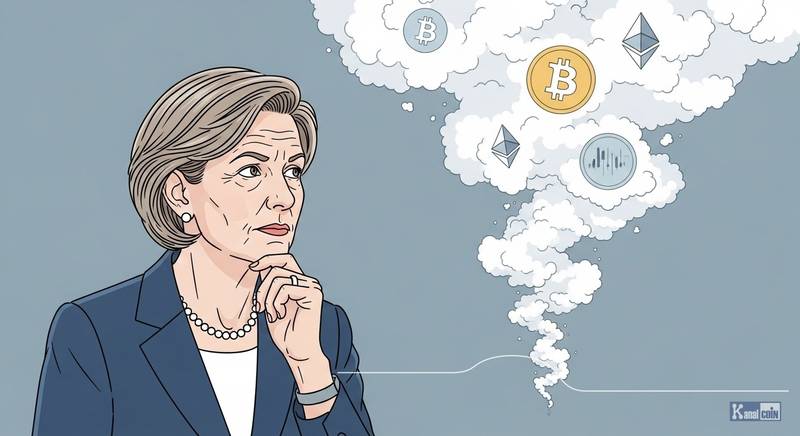
Bitcoin pushed higher as traders across Southeast Asia digested a U.S. Treasury Secretary crypto prediction narrative built around a one-and-a-half-quadrillion-dollar forecast, but the safer reading is narrower: Scott Bessent backed a more pro-stablecoin U.S. line, while the eye-catching figure itself comes from Chainalysis, not from Treasury.
CoinGecko showed Bitcoin at $72,869, up 0.9% over 24 hours, with a $1.46 trillion market cap and $33.59 billion in 24-hour volume. That price action gave the policy story immediate relevance, even if the available dataset does not prove Bessent’s remarks alone caused the move.
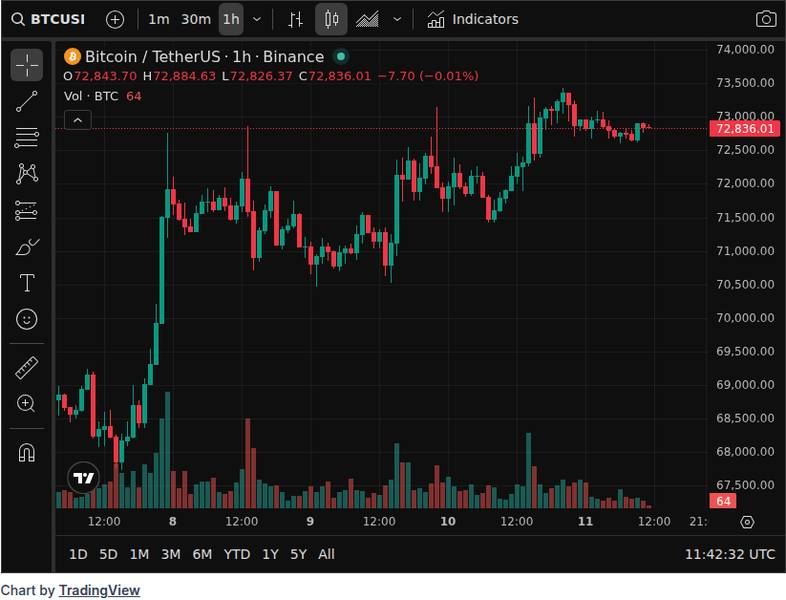
Bitcoin Price Jumps As Treasury-Linked Crypto Narrative Gains Attention
In remarks published on July 31, 2025, Treasury Secretary Scott Bessent said the GENIUS Act gives stablecoins the regulatory clarity to grow into a multitrillion-dollar industry. For bitcoin traders, that official language matters because it suggests Washington now sees dollar-backed tokens as infrastructure, not only as a compliance problem.
Bessent had already linked stablecoins to U.S. monetary strategy in an Axios interview published on March 7, 2025. That dollar-dominance framing is relevant in Southeast Asia, where exchange users often read U.S. policy shifts as liquidity signals, similar to kanalcoin’s earlier coverage of Milei Walks Back Dollarization as Argentines Reject the Plan.
“we are going to keep the U.S. the dominant reserve currency in the world, and we will use stablecoins to do that”
Scott Bessent via Axios
The Treasury Borrowing Advisory Committee’s Q2 2025 digital-money presentation put the stablecoin market at about $234 billion and modeled a rise to roughly $2 trillion by 2028. That is a market-cap and Treasury-demand argument, not the same thing as the much larger transaction-volume scenario now circulating across crypto media.
What The $1.5 Quadrillion Crypto Prediction Means
Chainalysis said adjusted stablecoin volume reached $28 trillion in 2025 and could climb to $719 trillion by 2035 through organic growth. In the same model, the firm said volume could approach $1.5 quadrillion by 2035 if macro catalysts accelerate adoption.
That forecast refers to payment and settlement throughput flowing across stablecoins, not to the total value of bitcoin, not to stablecoin market cap, and not to a Treasury forecast. The distinction matters because headlines that merge TBAC’s reserve-demand math with Chainalysis’s volume model can make the policy story sound more definitive than the evidence allows.
Decrypt’s summary of the Chainalysis study framed the projection as a scenario analysis rather than as a promise. That is the right way to read it for Asian market participants comparing policy headlines with actual trading conditions on exchanges and payment rails.
“The blockchain is now the essential plumbing for the next era of global payments.”
Chainalysis Team via Decrypt
The available Treasury materials do not show Bessent using the exact headline figure. What they do show is a friendlier U.S. stance toward stablecoins, which is enough to amplify a pre-existing Chainalysis forecast without proving that Treasury authored it.
Why This Matters For Crypto Markets Now
Bitcoin remains the market’s fastest macro barometer, so even a move above $72,000 can pull the wider crypto complex into a new narrative cycle. The significance here comes from the combination of an official Treasury endorsement of stablecoin growth and a separate private-sector model that sketches a much larger payments future.
That mix of policy and narrative matters for Southeast Asian desks because regional exchanges often reprice global headlines through bitcoin first, then through related listed plays and sovereign-adoption stories. Kanalcoin readers have seen the same transmission channel in coverage of David Bailey’s Nakamoto Eyes Reverse Stock Split to Avoid Nasdaq Delisting and Bhutan Sold 70% of Its Bitcoin in 18 Months as Mining Faces Questions, where balance-sheet narratives spilled quickly into market expectations.
For traders in Jakarta, Manila, Bangkok, and Singapore, the immediate takeaway is not that Washington has blessed a straight-line boom. It is that U.S. stablecoin policy is becoming a dollar-liquidity story with direct implications for regional exchanges, payment startups, and the way bitcoin absorbs macro headlines.
Disclaimer: This article is for informational purposes only and does not constitute investment advice.
Disclaimer: This article is for informational purposes only and does not constitute financial or investment advice. Cryptocurrency and digital asset markets carry significant risk. Always do your own research before making decisions.