


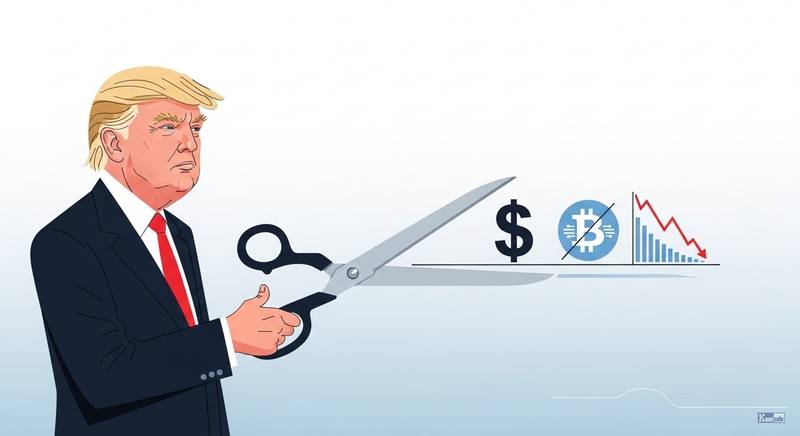
President Donald Trump has renewed his public demand for the Federal Reserve to cut interest rates, escalating a familiar clash with the central bank at a moment when the U.S. war in Iran is threatening to push inflation higher and complicate the path to easier monetary policy.
The pressure campaign comes as the Fed faces a difficult balancing act. On one side, slowing economic growth and political demands point toward rate cuts. On the other, the Iran conflict is driving up energy prices and disrupting supply chains, creating exactly the kind of inflationary pressure that would force the Fed to hold rates steady or even consider tightening.
According to CNN reporting, Trump’s war with Iran is directly jeopardizing his own stated goal of securing Fed rate cuts this year. The conflict has introduced a new variable into the Fed’s inflation calculus that did not exist when markets were pricing in multiple cuts for 2026.
Trump Pushes Fed for Cuts as Iran War Complicates Inflation Picture
Trump has framed rate cuts as essential for sustaining economic momentum, echoing a pattern from his first term when he publicly pressured then-Chair Jerome Powell to lower borrowing costs. The renewed push puts the White House squarely at odds with the Fed’s mandate to manage price stability independently of political influence.
The Iran war has amplified that tension. Military operations in the region have driven up oil and commodity prices, feeding directly into consumer inflation through higher energy and transportation costs. For the Fed, this creates a bind: cutting rates while war-driven inflation is accelerating would risk further price instability.
The Federal Reserve’s latest policy statement reflects this difficult position. The central bank must weigh the dual mandate of maximum employment and stable prices against a backdrop where geopolitical conflict is actively working against one of those goals.
The political tension between White House pressure and Fed independence is not new, but the wartime context raises the stakes. Any perception that the Fed is bowing to presidential demands could undermine market confidence in the institution’s credibility, a scenario that historically triggers volatility across all asset classes.
Why the Fed’s Rate Decision Is a Binary Moment for Bitcoin
For crypto markets, the rate cut debate is more than a macro headline. Fed rate cut cycles have historically coincided with strong Bitcoin rallies. The 2019 mid-cycle cuts and the post-2022 pivot both preceded significant upside in risk assets, including BTC.
The mechanism is straightforward: lower rates weaken the dollar, increase liquidity in financial markets, and push investors toward higher-risk, higher-return assets like Bitcoin. A weaker dollar index tends to support BTC pricing, as the asset is denominated in USD globally.
But the Iran war introduces a genuine paradox for Bitcoin holders. The same conflict creating geopolitical uncertainty that some view as a safe-haven argument for Bitcoin is also the primary obstacle preventing the rate cuts that would fuel a broader crypto bull run. If war-driven inflation stays elevated, the Fed will delay cuts, which is bearish for risk assets in the near term.
Bitcoin ETF flows have remained a key barometer of institutional sentiment around these macro shifts. Recent data shows sustained ETF inflows, suggesting that institutional investors are positioning for eventual monetary easing even as the timeline remains uncertain.
The jeopardized rate cut timeline means crypto traders face a split scenario. In one path, the Fed cuts despite inflation risks, sending a liquidity signal that historically benefits BTC. In the other, persistent inflation from the Iran conflict keeps rates elevated, pressuring risk assets and potentially triggering a repricing of rate cut expectations already baked into crypto valuations.
Key Dates and Data Points Traders Are Watching
The next FOMC rate decision will be the most immediate catalyst. Any shift in the Fed’s language around inflation expectations or the pace of potential cuts will move markets. Traders should monitor the post-meeting statement and press conference for signals on how the committee views war-driven price pressures versus growth risks.
Upcoming CPI and PCE inflation data releases will shape the Fed’s decision-making framework in the weeks ahead. A hotter-than-expected inflation print, particularly one driven by energy costs tied to the Iran conflict, would significantly reduce the probability of near-term cuts.
Oil prices remain the most direct proxy for war-driven inflation pressure. Sustained crude above recent highs would signal that supply chain disruptions are feeding into broader price increases, a scenario that extends beyond energy into sectors like agriculture and manufacturing.
Futures markets have already begun repricing rate cut expectations since the Iran conflict escalated. CME FedWatch probabilities, which reflect market consensus on the Fed’s next moves, are the clearest real-time gauge of whether the cuts Trump is demanding are actually on the table.
For Bitcoin and the broader crypto market, the convergence of geopolitical risk, inflation data, and Fed policy creates a period where macro signals will likely dominate price action over project-specific or on-chain developments. Traders watching this space should track the Fed calendar, inflation prints, and oil prices as their primary indicators in the weeks ahead.
Disclaimer: This article is for informational purposes only and does not constitute financial or investment advice. Cryptocurrency and digital asset markets carry significant risk. Always do your own research before making decisions.