



Key Points:
- Trove Markets initially attracted strong attention through its close association with Hyperliquid and the HIP-3 framework.
- However, the project’s ICO structure and post-sale actions revealed significant structural risks.
- The 95% TGE collapse has since become a case study in narrative-driven risk within crypto markets.
How Trove Markets Attracted Investors Through the Hyperliquid Narrative
Instead of establishing themselves as separate offerings, Trove Markets chose to position themselves through their linkages with the credible protocol called HyperLiquid. This organization presented Trove as a natural extension of the HyperLiquid ecosystem and yet a completely independent project.
Throughout fundraising, Trove emphasized permissionless deployment on HyperEVM via HIP-3. This messaging reduced perceived execution risk and created confidence that integration was structurally guaranteed.
Practically speaking, many retail market players were less interested in acquiring TROVE on the basis of product merits and more interested in TROVE’s indirect exposure to Hyperliquid. At this point, the narrative took precedence over the analysis of tokenomics and the alignment of incentives.
Why Trove Markets’ ICO Structure Left Retail Exposed
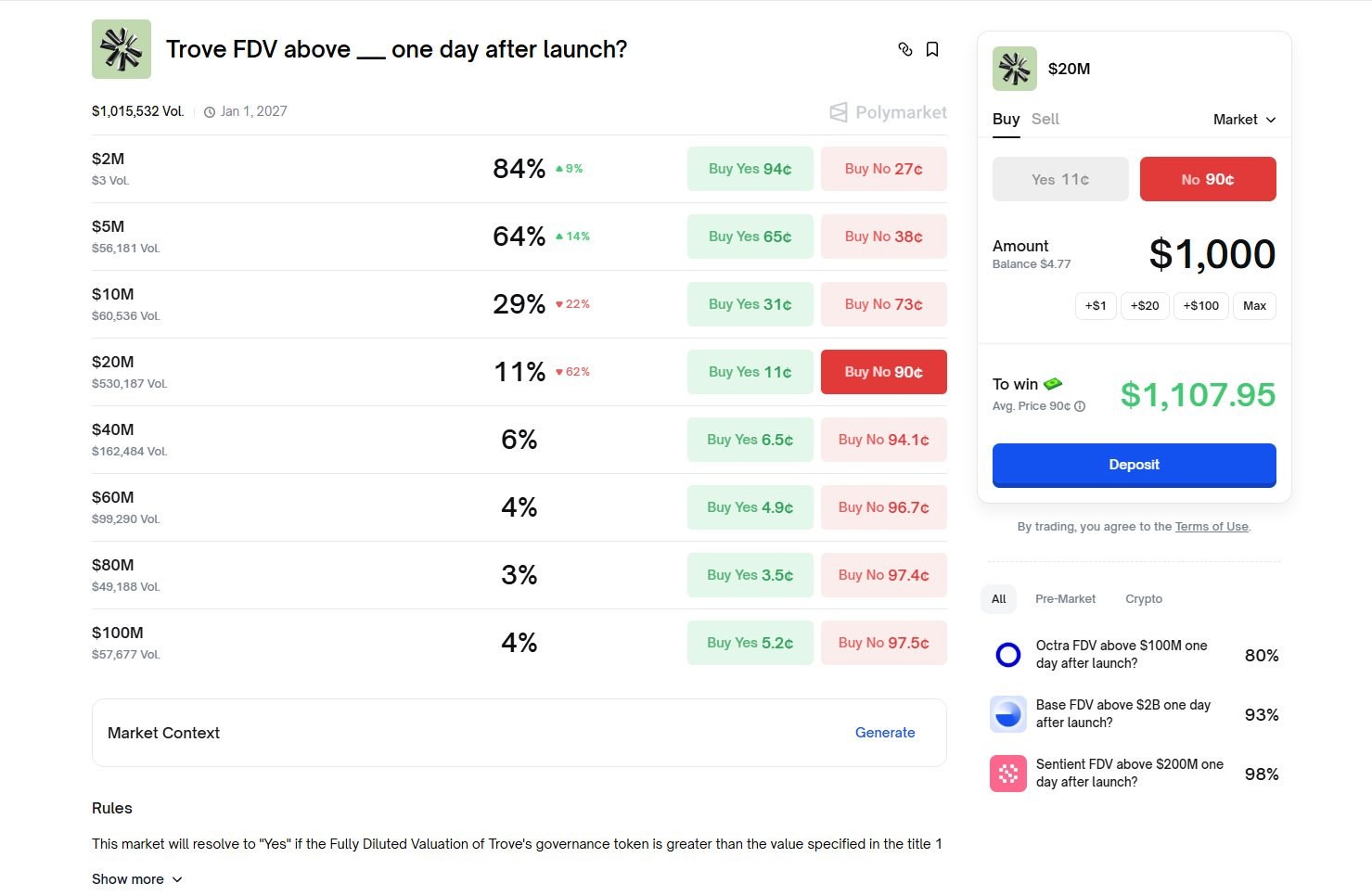
During the ICO, Trove Markets raised approximately $11.9 million at a fully diluted valuation (FDV) near $20 million. Retail investors entered at the highest valuation across all distribution phases.
Earlier angel rounds reportedly acquired tokens at discounts of roughly 50%, with limited disclosure on lock-up conditions. This pricing asymmetry embedded sell pressure before public trading even began.

Community discussions suggested that portions of early allocations were used for influencer promotion and marketing. As a result, circulating supply risk was heavily concentrated at TGE, leaving retail investors with minimal downside protection.
The ICO was also briefly extended and then reversed, raising concerns over mutable rules after capital commitment. Taken together, these factors placed retail at a structural disadvantage before launch.
How the $10 Million HYPE Sale Undermined the Core Narrative
Immediately following the ICO, on-chain data showed that a wallet connected to Trove Markets sold a vast amount of HYPE within one day. The total amount sold was approximately 194,000 HYPE tokens valued at close to $10 million. These tokens had been first purchased for staking to fulfill the HIP-3 requirements.

The founder of Trove denied any control over the selling wallet and asked for it to shut down. Nevertheless, sales had continued just a few minutes later, as indicated by the data.
This added fuel to speculations concerning insider dealings or compromised levels of access. At that stage, faith in Trove’s Hyperliquid alignment was undermined fast.
What the 95% TROVE TGE Collapse Revealed
With TGE, TROVE started trading around an $11 million valuation. In minutes, market capitalization dropped to close to $1 million, with a depreciation of approximately 95%.
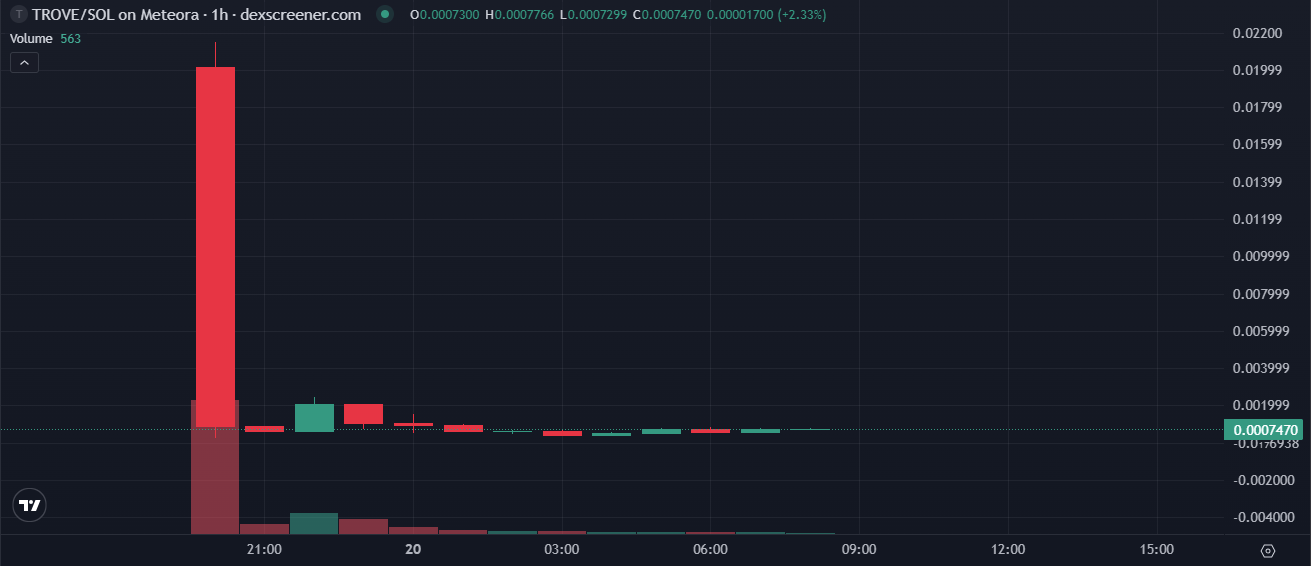
The initial liquidity was only estimated to be $500,000, and thus not enough to sustain the market from selling pressure. Retail investors were left stranded.
Despite the collapse, Trove reportedly retained approximately $9.4 million in ICO proceeds. No price stabilization or liquidity support plan was publicly disclosed.
As a result, the dump was increasingly viewed not as market volatility, but as a structural outcome. Early participants with liquidity advantages were the only cohort able to exit.
Trove Markets and the Broader Lesson of Narrative Risk
Unlike traditional rug pulls, Trove Markets did not disappear after TGE and continued public communication. However, project persistence did little to mitigate retail losses.
Unlike traditional rug pulls, Trove Markets did not disappear after TGE and continued public communication. However, project persistence did little to mitigate retail losses.
Amid mounting pressure, the Hyperliquid Foundation donated 10,000 HYPE to on-chain investigator ZachXBT to support an independent review. This signaled that concerns had escalated beyond a single project.
The Trove case illustrates that modern crypto failures need not involve outright disappearance. A strong narrative, skewed tokenomics, and precise timing can still turn retail into liquidity.
The takeaway is clear: narratives are not legal commitments, and on-chain data outweighs public statements. In environments where trust is monetized, structural understanding becomes essential.
| Disclaimer: This website provides information only and is not financial advice. Cryptocurrency investments are risky. We do not guarantee accuracy and are not liable for losses. Conduct your own research before investing. |