



The top crypto payment gateways for businesses are BVNK, Stripe Stablecoin Payments, CoinGate, Triple-A, BitPay, and MoonPay Commerce. In business terms, the strongest platforms are the ones that reduce payment friction without creating treasury, compliance, or settlement complexity somewhere else in the stack.
A business-grade crypto payment gateway now has to do more than accept coins at checkout. It has to support the right stablecoins, settle quickly, fit existing accounting and treasury routines, and avoid turning compliance into an afterthought. That is why this ranking is much more B2B-focused than a general merchant list.

Which Crypto Payment Gateway Is Best For Businesses?
For businesses, BVNK is the strongest high-level answer when the priority is stablecoin-driven payment infrastructure with managed compliance and API-led control. Stripe Stablecoin Payments is the cleaner option for companies already built on Stripe, while CoinGate remains the strongest broader business processor with transparent public pricing.
The Business Filters That Actually Matter
This comparison prioritizes:
- stablecoin settlement quality
- fiat payout structure
- compliance readiness
- API and platform integration depth
- custody and treasury implications
- cost transparency
Those filters matter because a business payment stack is judged by operational reliability, not by whether the gateway can advertise the longest possible asset list.
That business lens overlaps with best crypto payment gateways for merchants, but it leans harder into treasury, compliance, and operating scale. It also ties directly into why stablecoin payment rails are repricing the gateway market, because stablecoin settlement is now a core B2B filter.
Business Comparison Grid
| Gateway | Best for | Fee transparency | Fiat payout | Compliance posture | Integration |
|---|---|---|---|---|---|
| BVNK | stablecoin-heavy businesses | low public transparency | Yes | strong | API, hosted pages, portal |
| Stripe Stablecoin Payments | Stripe-native businesses | clear | Yes | strong | Checkout, Elements, Payment Links, Invoicing |
| CoinGate | balanced business use | clear | Yes | strong | plugins, API, buttons, billing |
| Triple-A | compliance-first payment acceptance | low public transparency | Yes | strong | managed processor + API |
| BitPay | conservative business processing | clear | Yes | strong | plugins, invoicing, in-store |
| MoonPay Commerce | digital product and creator businesses | clear | Yes | medium to strong | SDKs, API, widgets, Shopify |
1. BVNK
Introduction
BVNK leads this business-focused ranking because it is built around a problem many companies now actually have: how to run stablecoin-based payment flows without having to become a compliance and treasury specialist internally.
Advantages
- strong stablecoin infrastructure positioning
- managed compliance is part of the value proposition
- API-first product design
- well suited to larger payment environments and platforms
Disadvantages
- public pricing is not transparent
- less attractive for smaller merchants
- not a simple plugin-first store gateway
Quick Specs
- Transaction fee: custom / not publicly disclosed
- Payout: fiat and stablecoin operational flows
- Operating model: managed or hybrid
- Integration: API, hosted payments, payment portal
2. Stripe Stablecoin Payments
Introduction
Stripe ranks second because many businesses do not need a pure crypto processor. They need stablecoin acceptance to fit into an existing business stack that already handles billing, invoices, subscriptions, and payout routines.
Advantages
- 1.5% pricing with clear documentation
- stablecoin checkout inside familiar Stripe infrastructure
- strong billing and API support
- clean fit for SaaS and service businesses
Disadvantages
- narrower merchant availability
- stablecoin-specific rather than broad-crypto
- less suited to self-custody-first companies
Quick Specs
- Transaction fee: 1.5%
- Coins: USDC, USDP, USDG
- Networks: Ethereum, Solana, Polygon, Base
- Integration: Checkout, Elements, Payment Links, Invoicing, API
3. CoinGate
Introduction
CoinGate stays near the top because it does a better job than most rivals at keeping the product legible to ordinary businesses. The pricing is public, the integration surface is practical, and the settlement choices are flexible enough for mixed crypto and fiat operating models.
Advantages
- 1% standard pricing
- fiat, stablecoin, or crypto payout routes
- useful mix of plugins and API
- regulated structure helps for business adoption
Disadvantages
- default weekly settlement is not ideal for every treasury workflow
- stricter verification than self-custody-led tools
- less enterprise-specific than BVNK
Quick Specs
- Transaction fee: 1%
- Settlement options: EUR, USD, stablecoins, crypto
- Integration: plugins, API, payment buttons, billing
- Operating model: managed
4. Triple-A
Introduction
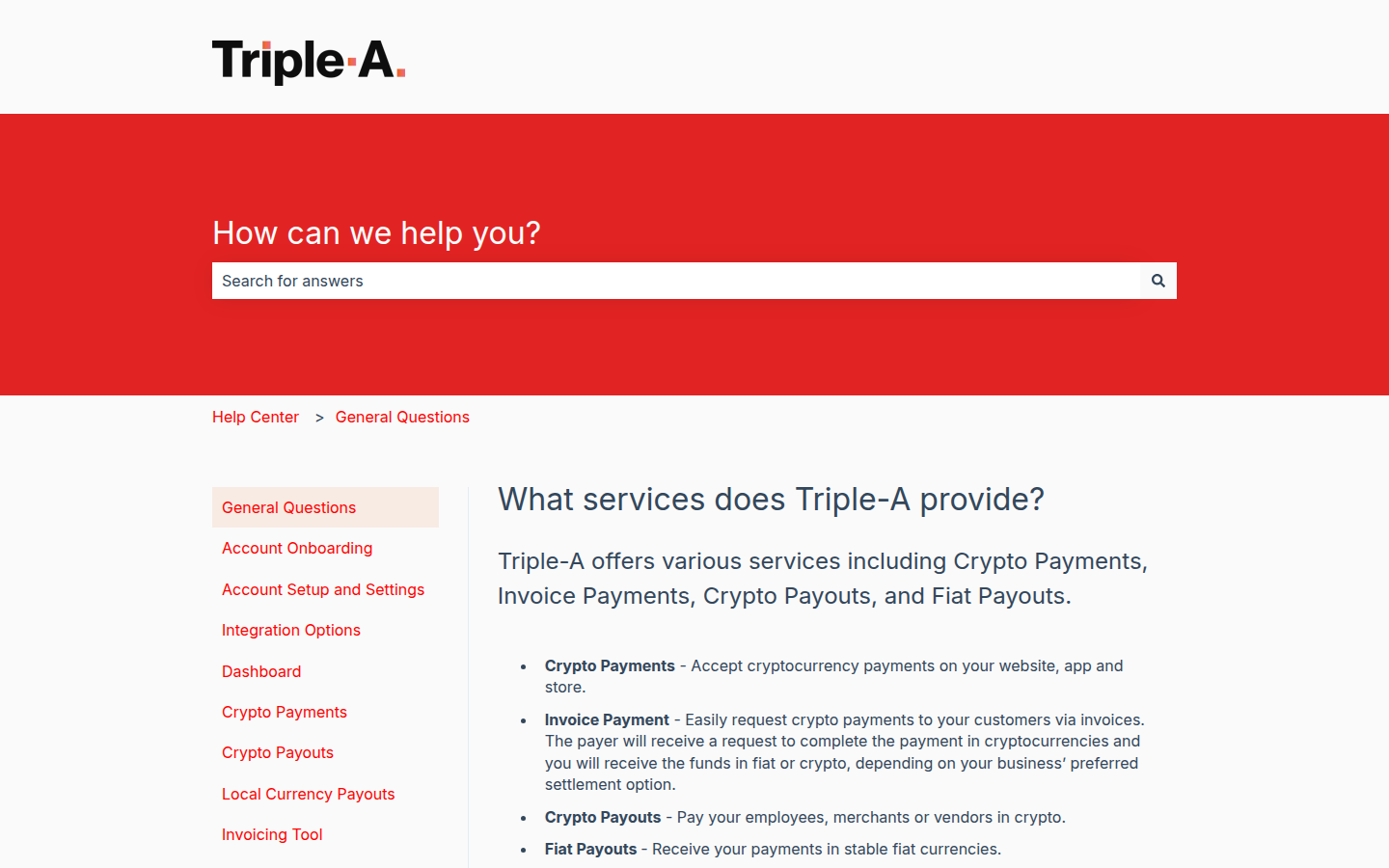
Triple-A earns a high place in a business-led ranking because it is a compliance-first payment processor with fiat and crypto settlement logic, broad wallet support, and a stronger enterprise-service posture than many plugin-led merchant tools.
Advantages
- strong support for USDT, USDC, BTC, Lightning, ETH, and PYUSD
- fiat or crypto settlement options
- clear KYB-led business operating model
- practical fit for companies that prioritize regulated processor behavior
Disadvantages
- no simple public transaction-fee sheet
- less naturally suited to smaller self-serve merchants
- not positioned as a deep developer-first platform
Quick Specs
- Transaction fee: not publicly disclosed
- Settlement: fiat or crypto
- Coins: USDT, USDC, BTC, ETH, PYUSD and more
- Integration: managed processor model with API support
5. BitPay
Introduction
BitPay remains a good answer for businesses that want a more traditional processor model. It is not the most modern product in the category, but it still addresses risk, accounting clarity, and payout regularity better than many crypto-native tools.
Advantages
- public fee range
- strong compliance perception
- daily settlements
- plugin support for common business storefronts
Disadvantages
- heavier fee structure than lower-cost rivals
- less flexible than some newer stablecoin-native stacks
- more conservative than product-led API challengers
Quick Specs
- Transaction fee: 1-2% + $0.25
- Settlement: fiat or crypto
- Integration: Shopify, WooCommerce, Magento, invoicing, online and in-store
- Operating model: managed processor
6. MoonPay Commerce

Introduction
MoonPay Commerce closes the list because it works best for businesses that think more like digital product teams than like finance departments. It is strong where app-native checkout, SDKs, creator payments, and embedded flows matter.
Advantages
- good developer surface area
- Shopify support
- optional fiat offramp
- flexible embedded-commerce tooling
Disadvantages
- not the cheapest standard fee
- total cost can rise once extra layers are used
- less compelling for conservative treasury-led businesses
Quick Specs
- Transaction fee: 2%, or 1% with HelioX
- Extra fees: swaps 0.25%; auto-offramp 0.50%
- Integration: SDKs, API, widgets, charges, pay links, Shopify
- Operating model: managed
Best Picks By Business Type
- Best for stablecoin-heavy businesses: BVNK
- Best for Stripe-native companies: Stripe Stablecoin Payments
- Best all-around business processor: CoinGate
- Best compliance-first processor: Triple-A
- Best conservative legacy-style choice: BitPay
- Best for app and creator commerce: MoonPay Commerce
Final Verdict
The top crypto payment gateway for businesses is BVNK when the business is really buying payment infrastructure rather than a simple checkout tool.
For more ordinary online businesses, CoinGate is still the more accessible answer because the pricing is public, the settlement logic is easier to understand, and the integration choices are practical. Stripe becomes the strongest option when the business is already deeply committed to the Stripe stack and wants stablecoin acceptance without adding a separate crypto treasury layer.
Disclaimer: This article is for informational and editorial purposes only and does not constitute legal, tax, or financial advice. Terms, fees, supported countries, and onboarding requirements can change and should be confirmed with each provider before integration.