


Strategy, the software company formerly known as MicroStrategy, reported a $12.54 billion loss for the first quarter of 2026 as a decline in Bitcoin’s price dragged down the value of its massive treasury holdings.
The company disclosed the results in its first quarter 2026 financial results, released on May 5. The loss stems directly from a drop in the market value of Bitcoin held on the company’s balance sheet.
Strategy is the largest publicly traded corporate holder of Bitcoin. Under updated fair-value accounting rules, the company must now mark its BTC holdings to market each quarter, meaning unrealized losses flow directly through its income statement. A sustained decline in Bitcoin’s price during Q1 translated into the $12.54 billion reported loss.
Why Treasury Exposure Amplified the Loss
When a company holds Bitcoin as a treasury reserve asset, its financial results become tightly correlated with BTC price movements. For Strategy, which has accumulated hundreds of thousands of Bitcoin over several years, even a moderate percentage decline produces a multibillion-dollar impact on reported earnings.
This is distinct from the company’s core software business. The loss does not necessarily reflect operational weakness; it reflects the accounting treatment of a volatile asset held at scale. Investors evaluating Strategy’s results need to separate treasury-driven swings from the underlying business performance.
The shift to fair-value accounting, which Strategy adopted under updated FASB rules, replaced the previous impairment-only model. Under the old system, companies could write down Bitcoin but could not mark it back up until they sold. The new rules cut both ways, allowing gains in rising markets and losses in falling ones.
What This Signals for Corporate Bitcoin Strategies
Strategy’s reported loss highlights a key tension in the growing trend of corporate treasury diversification into digital assets. Companies that followed Strategy’s lead by allocating reserves to Bitcoin now face the same quarterly earnings volatility.
The result may influence how corporate boards assess Bitcoin exposure going forward. A loss of this magnitude, even if unrealized, can affect share price, credit ratings, and investor sentiment. Companies considering similar strategies will need to weigh the potential for innovation in digital asset infrastructure against balance-sheet risk.
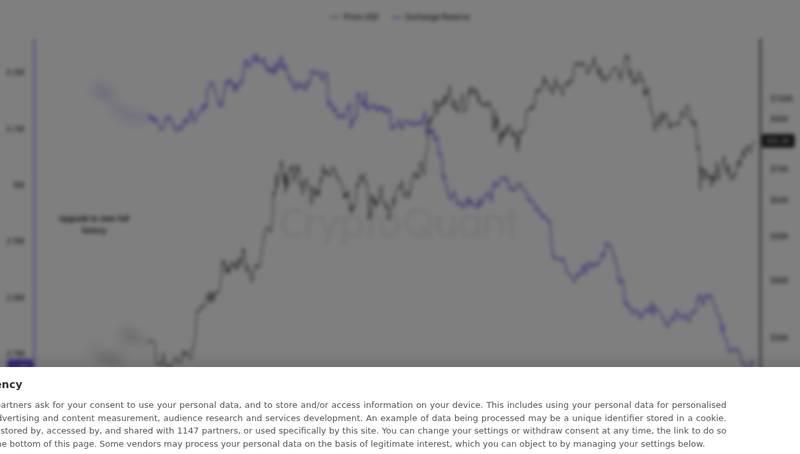
Exchange reserve data shows broader market dynamics at play beyond Strategy’s individual position. Net flows on and off exchanges reflect how institutional and retail holders are responding to Bitcoin’s price trajectory, context that matters for any company holding BTC as a reserve asset.
For now, Strategy has not indicated any plans to reduce its Bitcoin position. The Q1 loss, while striking in scale, is a product of the company’s conviction-driven accumulation strategy meeting a quarter of unfavorable price action. Whether evolving regulatory frameworks encourage or discourage similar corporate approaches remains an open question heading into the second half of 2026.
Disclaimer: This article is for informational purposes only and does not constitute financial or investment advice. Cryptocurrency and digital asset markets carry significant risk. Always do your own research before making decisions.