



Do Countries Need to Pay Bitcoin Tolls to Cross the Strait of Hormuz?
The viral line “Every country has to pay tolls in Bitcoin to pass through the Strait of Hormuz. #BTC back to 100k$” is circulating from https://t.me/Bitcoin_Magazine/22630 and a related https://bitcoinmagazine.com/news/iran-to-accept-bitcoin-for-strait post, but this brief marks verification as partial and includes no decree, treaty notice, or shipping authority order proving a universal rule.
What the Viral Strait of Hormuz Bitcoin Tolls Claim Actually Says
The available record in the brief is a social post and follow-up media framing, not a published legal instrument. In practical terms, that means the claim should be labeled an allegation rather than confirmed policy until documentary evidence appears in public reporting from the same chain of coverage, including the Telegram post at @Bitcoin_Magazine and Bitcoin Magazine’s report entry.
The strongest wording in the brief’s reporting set is narrower than “every country.” CoinDesk’s April 8 market report describes Iran as eyeing a crypto toll for oil-tanker transit, which is materially different from a universal Bitcoin-only requirement across all states and vessel classes.
Bloomberg’s April 1 report also frames payments as yuan-and-crypto toll arrangements for safe passage. That cited framing, if accurate, points to mixed settlement methods rather than a single compulsory BTC rail for every country, so the headline-level absolute claim remains unproven.
Could a Payment-Settlement Shift in a Major Shipping Route Affect Bitcoin Demand?
The “#BTC back to a six-figure level” narrative can be monitored, but this brief provides no verified implementation file, no verified shipping-payment ledger, and no extracted market dataset that would convert that target into evidence-based valuation work; the available sources remain scenario reporting from CoinDesk and Bloomberg.
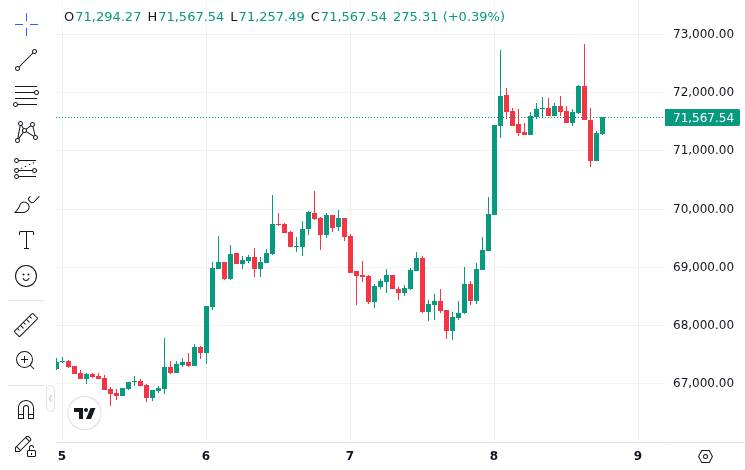
The CoinMarketCap capture packaged for this run shows a BTC candlestick snapshot with C 71,567.54 and +275.31 (+0.39%) at capture time, which is useful as a spot print reference but does not by itself verify that Strait settlement rules caused that move.
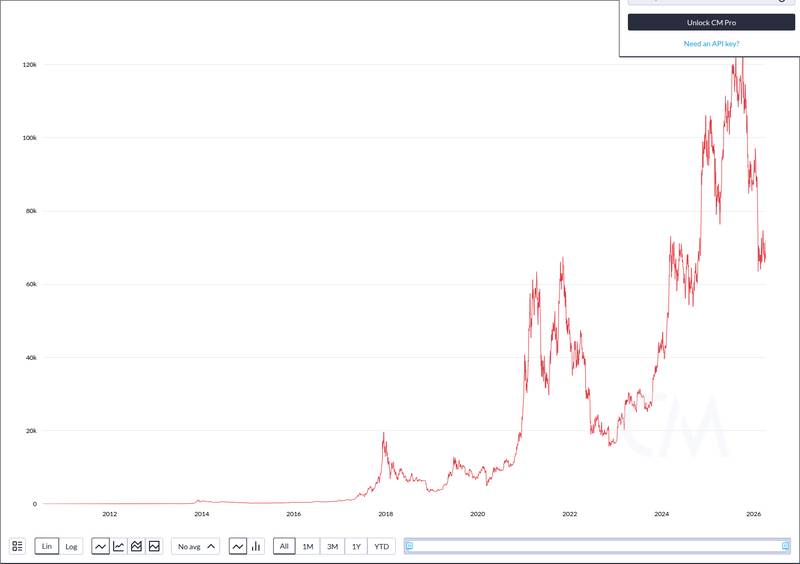
The CoinMetrics panel included in the visual package shows the BTC USD market-price metric in a multi-cycle structure, with a prior zone above 120k and a later region around 60k-70k; that confirms volatility context, but it does not provide on-chain proof of Hormuz-linked toll settlements or exchange-reserve transfers.
What would materially upgrade this story from rumor-cycle to confirmed policy is explicit publication of payment terms and enforceability details in mainstream reporting such as the CoinDesk update or the Bloomberg coverage. That evidence-first threshold is the same editorial standard seen in Kanalcoin’s reporting on Ethereum Foundation Sells 416.67 ETH for 933,340 DAI at $2,240, Polymarket Acquires Brahma to Scale Crypto and DeFi Infra, and MEXC Brand Upgrade Unveils Infinite Opportunities With 0 Fees.
TLDR Keypoints
- The universal “every country must pay Bitcoin tolls” framing remains unverified against the available source set, which is currently social-post origin plus media amplification, not a published legal mandate.
- Evidence in CoinDesk and Bloomberg supports a narrower reading: exploratory or mixed-currency toll reporting, not confirmed global BTC compulsion.
- What to watch next is straightforward: official policy text, enforceable settlement rules, and traceable payment evidence tied to the reported corridor, rather than headline-only price narratives from secondary commentary such as CryptoRank’s market note or Coingape’s scenario piece.
Disclaimer: This article is for informational purposes only and does not constitute financial or investment advice. Cryptocurrency and digital asset markets carry significant risk. Always do your own research before making decisions.