



MagicBlock has launched a Private Payments API on Solana, introducing confidential and compliant USDC transfers to a network that now ranks second globally by total value locked at approximately $12.8 billion.
Why the Solana Ecosystem Is Raising the Stakes
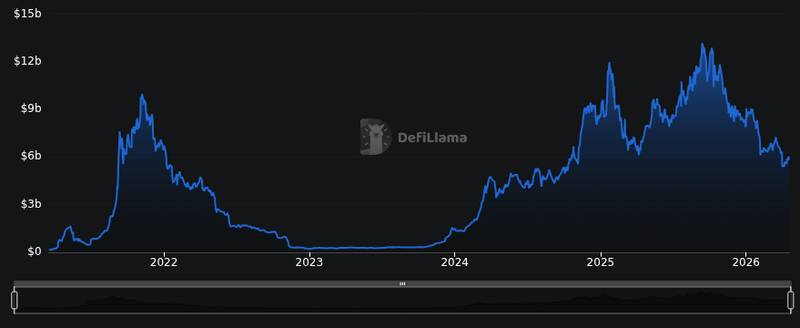
Solana’s positioning as a high-performance Layer 1 has attracted increasingly sophisticated infrastructure projects. The network holds $12.8 billion in TVL, second only to Ethereum, creating competitive pressure for builders to deliver institutional-grade tooling rather than simple DeFi primitives.
This trend is not limited to DeFi protocols. Infrastructure launches now span privacy, compliance, and cross-chain interoperability, similar to how Wrapped XRP recently went live on Solana to expand DeFi access across ecosystems.
The phrase “raising the stakes” reflects a shift from raw throughput competition to specialized tooling that institutions require before deploying capital on-chain.
How MagicBlock Enters the Privacy Infrastructure Narrative
Privacy infrastructure refers to the protocol-level systems that allow transactions to remain confidential while still satisfying regulatory requirements. On Solana, this category has been underdeveloped relative to the network’s scale.
On March 20, 2026, MagicBlock announced its Private Payments API, which the company said enables businesses to add confidential and compliant USDC transfers. The beta is available on both Solana Mainnet and Devnet.
The API exposes a POST /v1/spl/transfer endpoint that builds unsigned transactions moving funds between a user’s Solana base balance and an ephemeral rollup flow, according to MagicBlock’s developer documentation.
This launch builds on MagicBlock’s earlier work. In September 2025, the company announced TEE-secured Ephemeral Rollups, which it described as the first TEE-powered privacy infrastructure built natively for Solana, preserving sub-50 millisecond execution with full composability.
The compliance angle is central to MagicBlock’s positioning. According to reporting from Colosseum on April 3, 2026, the Private Payments API beta includes wallet screening, AML checks, and OFAC-sanctioned jurisdiction geofencing by default. This places MagicBlock in the compliance-compatible privacy lane rather than the privacy-at-all-costs approach seen on other chains.
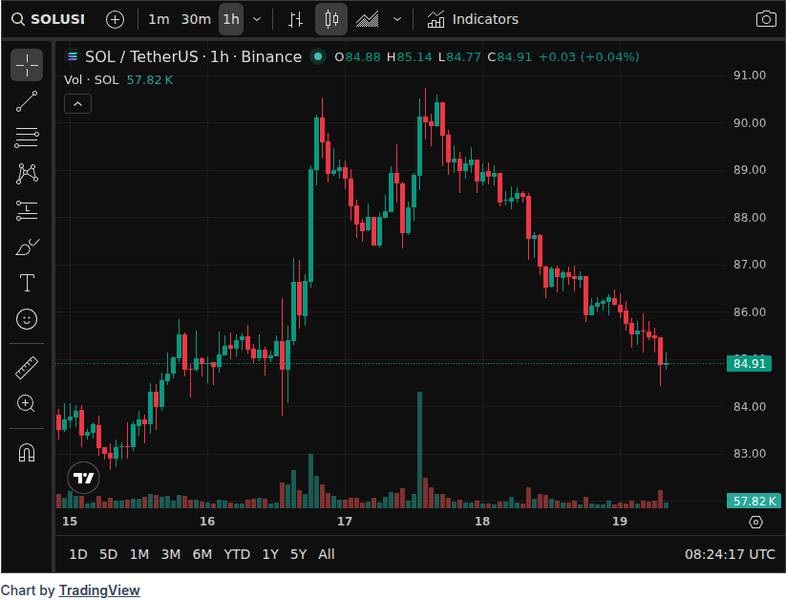
SOL currently trades at $85.07 with a market capitalization of roughly $49 billion, providing context for the scale of capital that privacy infrastructure must serve.
The broader market context is cautious, with the Crypto Fear & Greed Index sitting at 27, firmly in “Fear” territory. Infrastructure launches during risk-off periods often signal teams building for long-term positioning rather than short-term hype cycles.
What Builders and Observers Should Watch Next
MagicBlock’s emergence is notable, but no public adoption metrics, customer counts, or named institutional users have been disclosed. The distinction between launching a product and achieving meaningful traction remains important.
For developers evaluating Solana’s infrastructure stack, privacy-preserving payment rails with built-in compliance could reduce integration friction for fintech applications. The approach mirrors broader industry trends where institutional interest in digital assets continues to grow alongside demand for regulatory clarity.
Key items to monitor include whether MagicBlock publishes transaction volume data from the beta period, whether additional stablecoins beyond USDC receive support, and how the compliance layer adapts as regulatory frameworks evolve across jurisdictions.
For ecosystem watchers tracking capital flows across chains, MagicBlock’s trajectory will indicate whether privacy infrastructure becomes a competitive differentiator for Solana or remains a niche feature used by a small subset of builders.
Disclaimer: This article is for informational purposes only and does not constitute financial or investment advice. Cryptocurrency and digital asset markets carry significant risk. Always do your own research before making decisions.