



Charles Schwab plans to launch spot bitcoin and ether trading for its clients in the first half of 2026, CEO Rick Wurster told Reuters, marking a significant step by one of the largest U.S. brokerages into direct cryptocurrency access.
The announcement, reported by Reuters on December 3, 2025, outlined a phased rollout that would begin with Schwab employees before expanding to a small group of clients and eventually opening to the broader investor base.
Schwab is not starting from zero in digital assets. The firm’s clients already hold more than 20% of the industry’s crypto exchange-traded products, roughly $25 billion in crypto exposure out of $10.8 trillion in total client assets, according to a July 2025 CNBC interview with Wurster.
What Schwab plans to launch in H1 2026
The planned product covers spot bitcoin and spot ether trading, meaning clients would buy and sell the actual cryptocurrencies rather than derivatives or fund shares. This is a stated plan with a target window, not a live product launch.
Wurster confirmed the timeline during the Reuters NEXT conference, adding that Schwab would also consider crypto-related acquisitions if the opportunity and price were right. The phased testing approach, starting internally before reaching clients, suggests the firm is building operational safeguards before broad availability.
In his earlier July 18, 2025 appearance on CNBC, Wurster signaled the direction clearly.
“We also anticipate launching Bitcoin and Ether sometime soon.”
Rick Wurster, CEO of Charles Schwab, via official Schwab transcript
At the time of writing, bitcoin traded at $66,864 with a 24-hour change of roughly -0.21% and a market cap near $1.34 trillion. Ether sat at $2,052.51, down about -0.61%, with a market cap of approximately $247.74 billion.
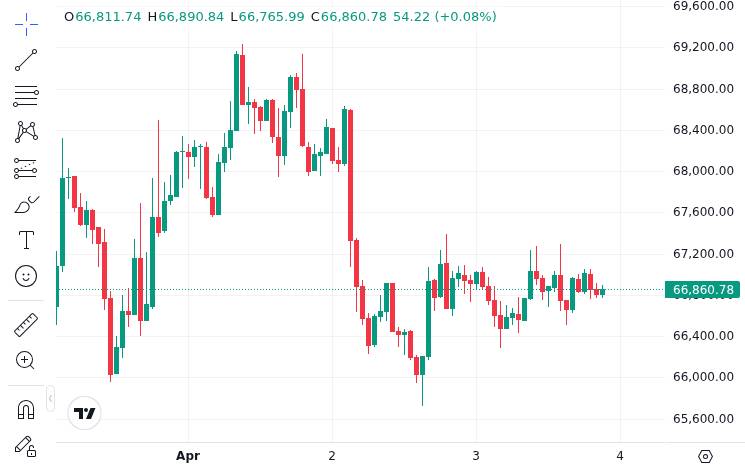
The Crypto Fear & Greed Index registered at 9, deep in “Extreme Fear” territory, reflecting broader market caution even as institutional players like Schwab prepare new crypto offerings.
Why Schwab’s crypto trading move matters
Schwab manages $10.8 trillion in client assets, making it one of the largest retail brokerage platforms in the United States. Adding direct spot crypto trading would remove a layer of friction for millions of existing clients who currently access digital assets only through exchange-traded products.
The distinction between spot trading and indirect exposure products is meaningful. Crypto ETFs and trusts carry management fees and can trade at premiums or discounts to net asset value. Direct spot access lets investors hold the underlying asset, potentially at lower cost depending on how Schwab structures its fee schedule.
Schwab’s entry could also intensify competitive pressure across the brokerage industry. Rivals including Fidelity and Interactive Brokers already offer some form of crypto trading. The addition of a firm with Schwab’s scale, combined with the evolving regulatory landscape for digital assets in major economies, raises the stakes for platforms that have not yet committed to direct crypto access.
The timing coincides with what Schwab’s own July 2025 transcript described as a friendlier U.S. policy backdrop for crypto, though the firm also stressed that investor protection remains critical. This regulatory context shaped Schwab’s decision to move forward, even as other corners of the market face uncertainty, including events like the Drift Protocol exploit that highlight ongoing security risks in decentralized finance.
What investors should watch before the rollout
Several key details remain unresolved ahead of the planned launch. Schwab has not publicly disclosed the fee structure or spreads it will charge for spot crypto trades. For context, crypto-native exchanges typically charge between 0.1% and 0.6% per trade, while some brokerages bundle costs into wider spreads.
Account eligibility is another open question. It is unclear whether spot crypto trading will be available across all Schwab account types, including retirement accounts, or limited to taxable brokerage accounts at launch.
The custody and settlement model has also not been specified. Schwab could hold crypto directly through an in-house custodian, partner with a third-party custodian, or use a hybrid approach. How the firm handles private keys, insurance, and settlement timelines will matter to clients weighing Schwab against dedicated crypto platforms.
The phased rollout itself introduces timing uncertainty. Starting with employees and a small client group means the broader availability window could extend beyond the first-half-of-2026 target if internal testing surfaces issues. Macroeconomic conditions, including labor market data and monetary policy shifts, could also influence the pace of adoption once the product goes live.
Schwab has given a clear direction but not a final product sheet. Investors considering the platform for crypto trading should watch for official announcements on fees, supported account types, and custody details before the launch window closes.
Disclaimer: This article is for informational purposes only and does not constitute financial or investment advice. Cryptocurrency and digital asset markets carry significant risk. Always do your own research before making decisions.