



Lise Meitner Died in 1968, Not 1983: The Facts Clarified
Lise Meitner, the Austrian-Swedish physicist who played a pivotal role in the discovery of nuclear fission, died on October 27, 1968, at age 89 in Cambridge, England. The confusion surrounding her death year appears to stem from a common search error, with some sources incorrectly referencing 1983. Multiple reputable outlets, including the New York Times and Jewish Telegraphic Agency, published accurate obituaries in 1968 noting her pioneering work with Otto Hahn on uranium splitting, her flight from Nazi Germany in 1938, and her principled rejection of atomic bomb involvement.
Meitner’s contributions to physics extended far beyond her most famous discovery. She co-discovered the radioactive element protactinium in 1917 and, in 1922, discovered what is now known as the Auger effect, a phenomenon where an electron is ejected from an atom when a higher-energy electron fills an inner shell vacancy. Her scientific legacy encompasses nearly five decades of groundbreaking research across multiple fields in theoretical and experimental physics.
Nuclear Fission Discovery and Her Role With Otto Hahn
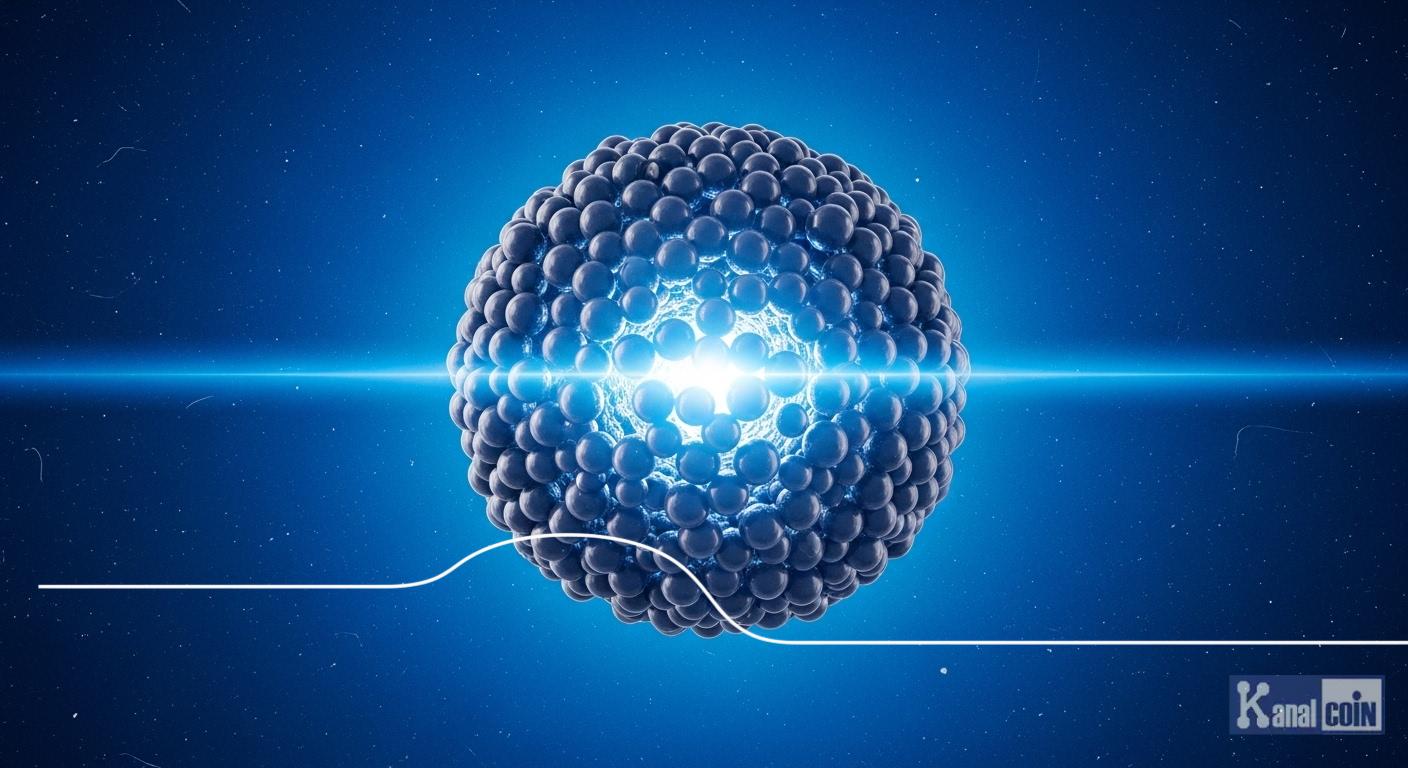
Nuclear fission was discovered in December 1938 by chemists Otto Hahn and Fritz Strassmann, with the theoretical explanation provided by physicists Lise Meitner and her nephew Otto Robert Frisch. Working separately, Meitner had fled Nazi Germany and was in Sweden while Hahn remained in Berlin, the team recognized that when uranium atoms were bombarded with neutrons, they actually split into lighter elements, releasing enormous amounts of energy. Meitner based her fission argument on the “liquid droplet model” of nuclear structure, a theoretical framework that likened the forces holding the atomic nucleus together to the surface tension of a water droplet.
The discovery came at a tumultuous time in European history. In 1938, Meitner was forced to flee Germany and Austria due to her Jewish heritage, leaving behind her laboratory and colleagues. From her exile in Sweden, she continued collaborating with Hahn and Strassmann, analyzing their experimental results and providing the crucial theoretical interpretation. When Hahn received the Nobel Prize in Chemistry in 1944 for the discovery of nuclear fission, Meitner’s contributions were notably absent from the award, a decision that has been widely criticized by the scientific community as one of the most egregious oversights in the history of the prize.
After World War II, Meitner moved to England, where at the age of 69 she began new research examining the role of neutrons in atomic stability and how heavy elements capture neutrons. She maintained her ethical stance against nuclear weapons throughout her life, refusing any involvement in weapons development despite the profound implications of her earlier discoveries.
The Nobel Prize Controversy and Her Lasting Legacy
The exclusion of Lise Meitner from the Nobel Prize awarded to Otto Hahn in 1944 remains one of the most debated decisions in the history of scientific recognition. Max Perutz, who won the Nobel Prize in Chemistry in 1962, was among those who criticized the Nobel committee’s bias and ignorance regarding Meitner’s essential contributions to the discovery of nuclear fission. Physics Today described her exclusion as a rare case where personal opinions denied a deserving scientist her rightful place in scientific history.
Despite this institutional oversight, Meitner’s legacy has grown substantially over the decades. Albert Einstein himself referred to her as “our Marie Curie,” placing her in the company of the most celebrated female scientists in history. Her nephew Otto Robert Frisch, who co-discovered nuclear fission with her, inscribed her gravestone with words that capture her unique character: “Lise Meitner: a physicist who never lost her humanity.” The element meitnerium (Mt), discovered in 1982, was named in her honor, ensuring that her name would be permanently associated with the periodic table.
Meitner’s story represents not only a scientific achievement but also a testament to perseverance in the face of discrimination and adversity. She broke numerous barriers as a woman in physics during an era when such accomplishments were rare, and her ethical considerations regarding the use of atomic energy continue to resonate in contemporary discussions about scientific responsibility.
Key Dates in Lise Meitner’s Life and Work
Lise Meitner was born in 1878 in Vienna, Austria, where she later became the second woman to receive a doctorate in physics from the University of Vienna in 1905. Her academic career led her to work alongside renowned physicists including Max Planck and, crucially, Otto Hahn at the Kaiser Wilhelm Institute in Berlin, where she remained from 1908 to 1938. The year 1917 marked her co-discovery of the element protactinium, followed by her identification of the Auger effect in 1922.
The critical period of nuclear fission discovery unfolded between 1938 and 1939: Meitner escaped Nazi Germany in July 1938, the fission experiment was conducted in December 1938, and the theoretical explanation was published in early 1939. After the war, she moved to Sweden and then to England, continuing her research into neutron interactions with atomic nuclei. She passed away in 1968 in Cambridge, England, leaving behind a scientific legacy that has been increasingly recognized and celebrated in the decades since her death.
| Disclaimer: This website provides information only and is not financial advice. Cryptocurrency investments are risky. We do not guarantee accuracy and are not liable for losses. Conduct your own research before investing. |