


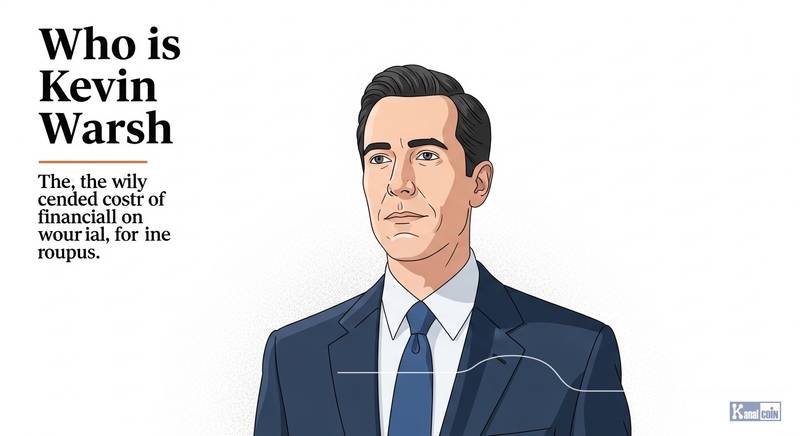
President Donald Trump formally nominated Kevin Warsh to serve as the next chair of the Federal Reserve on March 4, 2026, sending the filing to the U.S. Senate for confirmation. Warsh, a former Fed governor who has called for “regime change” at the central bank, now faces a confirmation process that will test whether the Senate shares his vision for overhauling the institution’s operating framework.
TLDR: Key Takeaways
- Filing confirmed: The White House sent Warsh’s nomination to the Senate on March 4, 2026, for a four-year chair term and a 14-year governor term.
- Not an outsider: Warsh previously served on the Fed’s Board of Governors from February 2006 to March 2011.
- Independence in focus: Investors and economists immediately flagged Fed independence as the central question surrounding the nomination.
Who Kevin Warsh Is and What Trump Actually Nominated Him For
The White House filing names Warsh for two distinct roles: a four-year term as chairman of the Board of Governors and a 14-year term as a Board governor beginning February 1, 2026. The distinction matters because the chair term is shorter and politically renewable, while the governor term is designed to outlast any single presidency.
As of the filing date, Warsh’s appointment still required Senate confirmation. The nomination alone does not install him as chair or grant him any authority over monetary policy.
Warsh’s Prior Federal Reserve Background
Warsh is not an outsider to the central bank. The Federal Reserve confirmed that he served on the Board of Governors from February 2006, with his resignation taking effect on or around March 31, 2011. That five-year tenure spanned the 2008 financial crisis and its aftermath, giving him direct experience with emergency lending programs and unconventional monetary policy.
His prior service distinguishes this nomination from a purely political appointment. Warsh held a seat at the table during some of the most consequential Fed decisions in modern history, a background that both supporters and critics cite when debating his fitness for the top job.
Why Warsh Wants ‘Regime Change’ at the Federal Reserve
The phrase “regime change” has drawn headlines, but it refers to something more specific than a political slogan. AP reported that Warsh has become sharply critical of the Fed in recent years, arguing the institution has expanded beyond its mandate.
His criticism targets three areas: the boundaries of the Fed’s statutory mandate, its balance sheet posture, and its regulatory stance. Taken together, these amount to a call for restructuring how the central bank operates, not abolishing it or changing its legal charter.
Rhetoric vs. Concrete Policy Changes
The balance sheet question is the most tangible. The Fed’s holdings ballooned during and after the 2008 crisis and again during the pandemic-era response. Warsh has argued the central bank should operate with a leaner balance sheet and narrower scope of intervention.
On the regulatory side, Warsh has pushed back against the Fed’s expanding role in areas like climate-related financial risk and bank supervision beyond core safety and soundness. Whether those positions survive the confirmation process and translate into actual policy shifts remains an open question, particularly as broader macroeconomic forces continue to shape digital asset markets.
Why the Nomination Raises Questions About Fed Independence and What Comes Next
The independence question dominated market reaction immediately after the filing. Reuters reported that investors and economists were focused on whether Warsh would preserve the Fed’s institutional separation from White House influence.
That concern is not abstract. Federal Reserve governors are nominated by the president and confirmed by the Senate, but the structure is designed to insulate monetary policy from day-to-day political pressure. Governors serve 14-year terms and may not be removed for their policy views.
The legal framework means a confirmed chair has significant autonomy once seated. A president can choose the nominee, but cannot direct interest rate decisions or fire a governor for disagreeing with the administration’s economic agenda.
“He’s abundantly qualified and will likely continue to be an independent thinker, not a puppet of the President.”
— Brian Jacobsen, via Reuters
That assessment from economist Brian Jacobsen reflects one camp’s view: that Warsh’s prior Fed experience and professional credentials make him unlikely to simply follow presidential directives on rates. Others remain skeptical, noting that his “regime change” rhetoric aligns closely with the administration’s stated desire for lower interest rates.
What Confirmation Would and Would Not Change Immediately
If confirmed, Warsh would replace Jerome Powell as chair. However, the transition would not immediately alter the Fed’s policy rate or its current quantitative tightening trajectory. The Federal Open Market Committee operates by vote, and a new chair must build consensus among sitting governors and regional bank presidents.
The more immediate effect would be on forward guidance and communication. A chair sets the tone for how the Fed signals its intentions to markets, something crypto investors tracking exchange deposit and withdrawal policies and broader financial infrastructure should watch closely as confirmation hearings proceed.
The Senate confirmation process is the next concrete step. Committee hearings will likely probe Warsh on his independence from the White House, his stance on the Fed’s dual mandate, and how aggressively he would pursue the institutional overhaul he has advocated.
Disclaimer: This article is for informational purposes only and does not constitute financial or investment advice. Cryptocurrency and digital asset markets carry significant risk. Always do your own research before making decisions.