


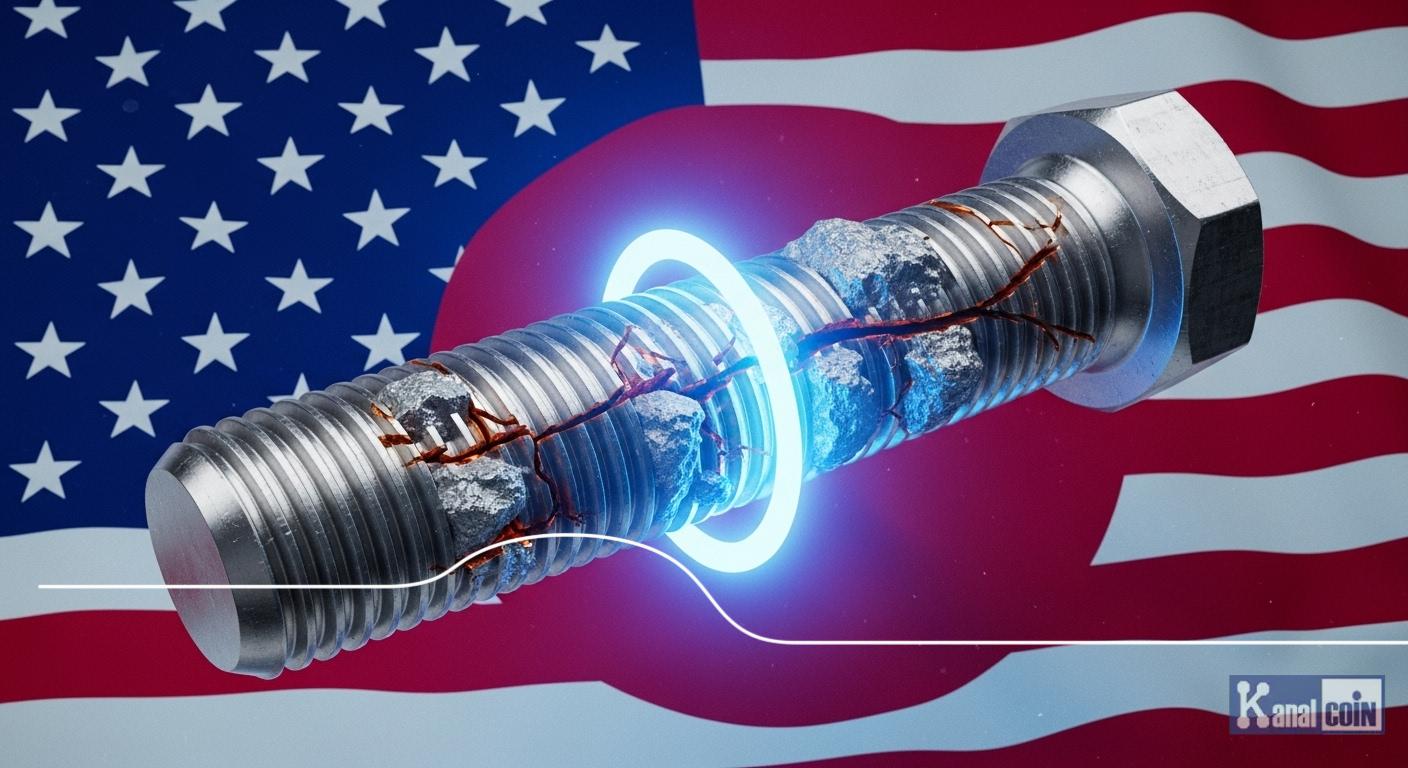
Japan $36 billion investment will fund oil, gas, minerals
Japan plans to invest up to $36 billion in U.S.-based oil, gas, and critical mineral projects, as reported by The Wall Street Journal. U.S. officials indicated that the portfolio spans critical minerals, oil and gas infrastructure, and power generation.
Framed as a strategic package, the Japan $36 billion investment concentrates on assets tied to energy capacity and materials availability. Specific project lists remain preliminary, but the targeted categories signal a combined focus on upstream resources and enabling infrastructure.
Why it matters: supply chain security and U.S.–Japan alignment
According to the Congressional Research Service, U.S. reliance on critical minerals from peer competitors is treated as a national security vulnerability, which has accelerated cooperation with trusted partners such as Japan to diversify supply chains. The report notes that aligning investment and import strategies can reduce single-point-of-failure risks across extraction, refining, and processing.
The Center for Strategic and International Studies has observed that current policy includes more direct involvement in critical-mineral equity than in past cycles, reflecting an industrial strategy to counter foreign dominance. That approach, paired with capital from allied sources, is intended to buttress resilience across energy and materials value chains.
As reported by The Guardian, expanding oil and gas infrastructure alongside minerals projects carries climate trade-offs that could lock in emissions unless paired with strong rules or offsets. That tension is likely to shape permitting timelines and community consultations, which can influence project sequencing and costs.
What changes now: initial projects and deployment steps
Kyodo News reported that the administration said Japan will finance the production of synthetic diamonds and two energy projects as part of the early pipeline. Those examples indicate a blend of advanced materials and conventional energy assets in the opening tranche.
In practical terms, near‑term steps are likely to focus on identifying eligible sites, preparing applications for federal and state approvals, and structuring loan or guarantee instruments. Actual construction timelines will depend on permitting outcomes, procurement, and grid or midstream interconnections where relevant.
Bloomberg has characterized the $36 billion as the first tranche within a broader commitment on the order of hundreds of billions, positioning the package as an initial deployment rather than a one‑off. How much moves from pledge to disbursement will become clearer as projects reach financing and regulatory milestones.
Deal structure, disbursement windows, and enforceability details
According to Anadolu Agency, most of Japan’s funding is expected to take the form of loans and guarantees rather than direct equity, with only a small share, on the order of 1–2%, in equity stakes. The same reporting indicates a profit‑sharing design in which, after principal is repaid, 90% of additional profits flow to the U.S. side and 10% to Japan.
Anadolu Agency also reported that elements of the pledge are linked to tariff adjustments, from 25% to 15%, and that U.S. authorities would retain significant influence over which projects are selected. The use of “up to” language and milestone‑based funding windows implies that enforceability will rest on documented conditions precedent, eligibility criteria, and compliance with selection governance.
Japanese economists have publicly questioned whether the benefits are balanced across both parties before terms are finalized. “This is a U.S.-dominated scheme that effectively utilizes funds from Japan’s financial institutions to support U.S. economic and industrial policy,” said Takashide Kiuchi, Executive Economist at Nomura Research Institute.
Taken together, the structure suggests execution risk around timing (pledged vs. disbursed), legal durability (tariff formulas and selection rights), and regulatory cadence (environmental and community reviews). CSIS has noted that a more interventionist industrial posture can accelerate supply‑chain realignment, but actual outcomes will depend on permitting progress, contract enforceability, and whether capital costs remain within modeled ranges.
| Disclaimer: This website provides information only and is not financial advice. Cryptocurrency investments are risky. We do not guarantee accuracy and are not liable for losses. Conduct your own research before investing. |