


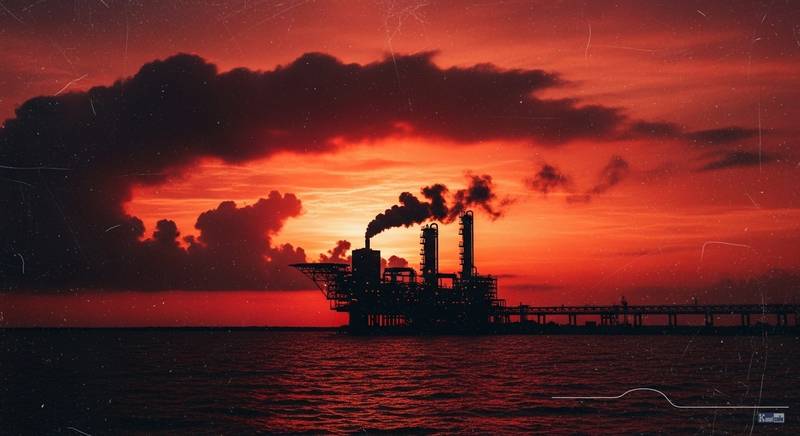
Oil infrastructure is back in focus as the Israel-Iran conflict raises the risk of damage to energy assets and tanker traffic through the Strait of Hormuz, a corridor the U.S. Energy Information Administration says carried 20.9 million barrels of oil per day in the first half of 2025.
Key points:
- CNBC said on June 20, 2025 that investor anxiety around the Israel-Iran conflict helped lift oil prices during the U.S. session.
- Reuters-attributed reporting said an Israeli strike caused a fire at Iran’s South Pars gas field and partially halted production.
- The EIA says bypass pipelines can move only about 4.7 million barrels per day, limiting alternatives if Hormuz traffic is disrupted.
CNBC’s Daily Open on June 20, 2025 framed the conflict as a growing source of market stress, with oil prices rising as investors weighed the chance of a wider regional shock. That concern now rests less on headline volatility and more on whether military escalation starts hitting physical energy infrastructure and shipping lanes in a sustained way.
Why the Iran War Is Putting Oil Infrastructure Back in Focus
The clearest infrastructure flashpoint in the current reporting cycle is South Pars. Reuters reporting carried by Yahoo News said an Israeli strike caused a fire at Iran’s South Pars gas field and partially halted production, which would mark a major escalation if confirmed.
Bloomberg also reported that a facility linked to South Pars was hit, warning that the development threatened further turmoil for energy markets. That matters because the issue is not simply whether oil prices jump for a day. The bigger risk is that repeated strikes could start degrading Iran’s oil and gas system itself.
Once markets start pricing that possibility, the focus shifts quickly from battlefield updates to supply-chain resilience. Traders are asking whether the conflict remains limited to isolated incidents or expands into a pattern of attacks on production sites, pipelines, export infrastructure, or shipping access.
Why the Strait of Hormuz Is the Real Market Pressure Point
The main pressure point is not only what happens inside Iran. It is also what happens in the Strait of Hormuz, the narrow corridor connecting Gulf producers to global buyers. According to the U.S. EIA’s chokepoint analysis, oil flows through Hormuz averaged 20.9 million barrels per day in the first half of 2025.
In plain terms, that is about one-fifth of global petroleum liquids consumption. The same EIA analysis says the strait also handled more than 20% of global LNG trade during the same period, which means any disruption would hit both oil and gas markets at once.
Other reporting supports the same scale. AP reported on June 23, 2025 that about 20 million barrels of oil per day moved through the Strait of Hormuz in 2024, equal to roughly 20% of world oil consumption. The exact yearly figure differs from the EIA’s first-half 2025 average, but the conclusion is the same: the route is too large to ignore.
The EIA also explains why the chokepoint matters so much in practice. Saudi Arabia and the UAE have bypass pipelines, but the agency says those routes together can move only about 4.7 million barrels per day. That is far below the volume that normally crosses Hormuz, so a full replacement is not feasible.
This is the arithmetic behind the market reaction. If conflict threatens tanker traffic through Hormuz, the world cannot simply reroute most of those barrels elsewhere. That is why even limited strikes on energy infrastructure can ripple outward into freight costs, insurance pricing, and broader risk sentiment.
What Traders and Crypto Readers Should Watch Next
The first signal to watch is the status of transit through the Strait of Hormuz. Any credible reports of disrupted tanker movements, naval incidents, or shipping restrictions would represent a more serious escalation than a single strike onshore.
The second signal is whether additional energy infrastructure is hit. South Pars has become the clearest named flashpoint in current coverage, but markets would likely react more sharply if attacks spread to refineries, export terminals, or other upstream assets tied to Iranian supply.
For crypto readers, the relevance is mainly macro. The research brief points to a risk-off market tone, and that is the cleaner framework than claiming a direct or guaranteed Bitcoin reaction. Higher energy prices and geopolitical stress can feed into broader repricing across global risk assets, including digital assets, but the spillover is indirect rather than mechanical.
The more useful approach is to track chokepoint risk instead of reacting to every oil-price headline. As long as Hormuz remains open, markets may treat individual strikes as severe but containable. If shipping through the corridor itself comes under threat, the supply math becomes much harder to dismiss.
Disclaimer: This article is for informational purposes only and does not constitute financial advice.
Disclaimer: This article is for informational purposes only and does not constitute financial or investment advice. Cryptocurrency and digital asset markets carry significant risk. Always do your own research before making decisions.