


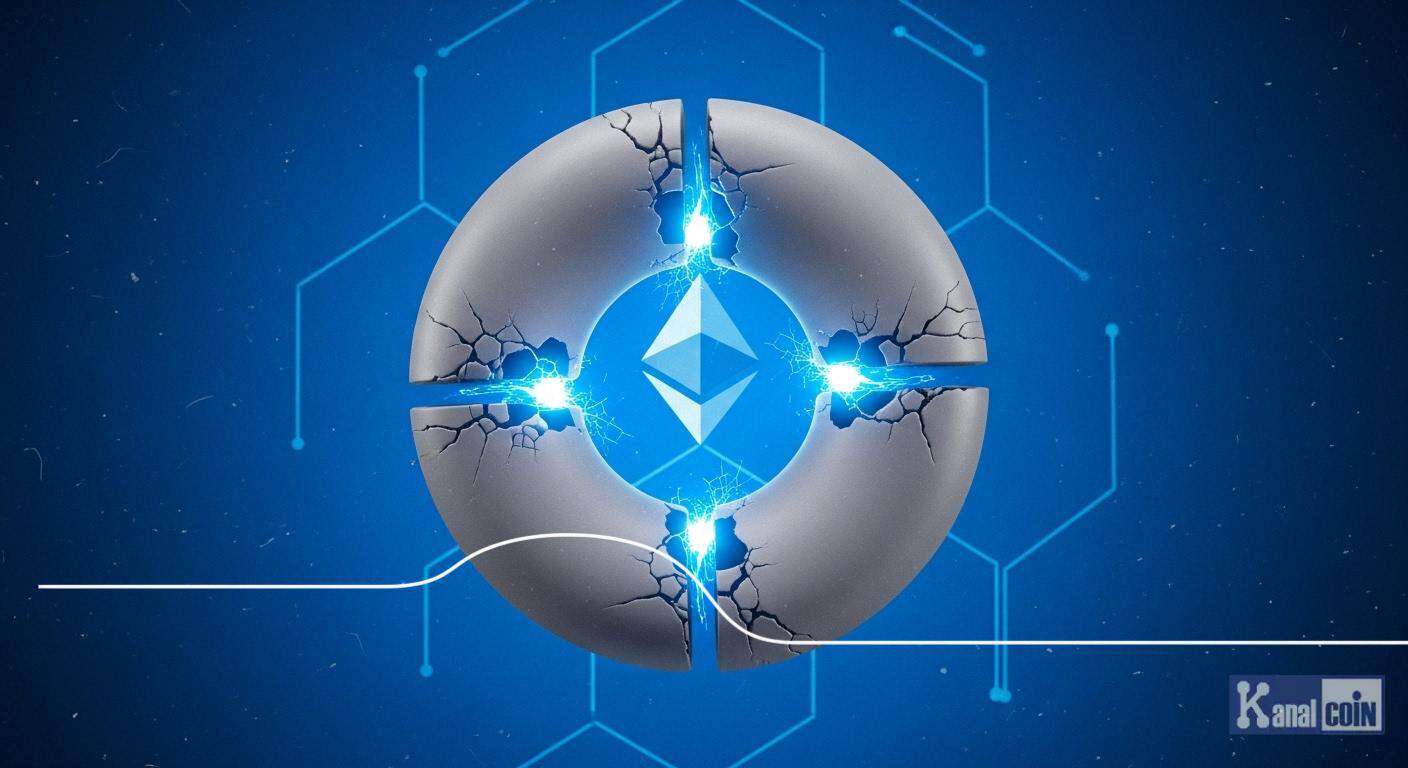
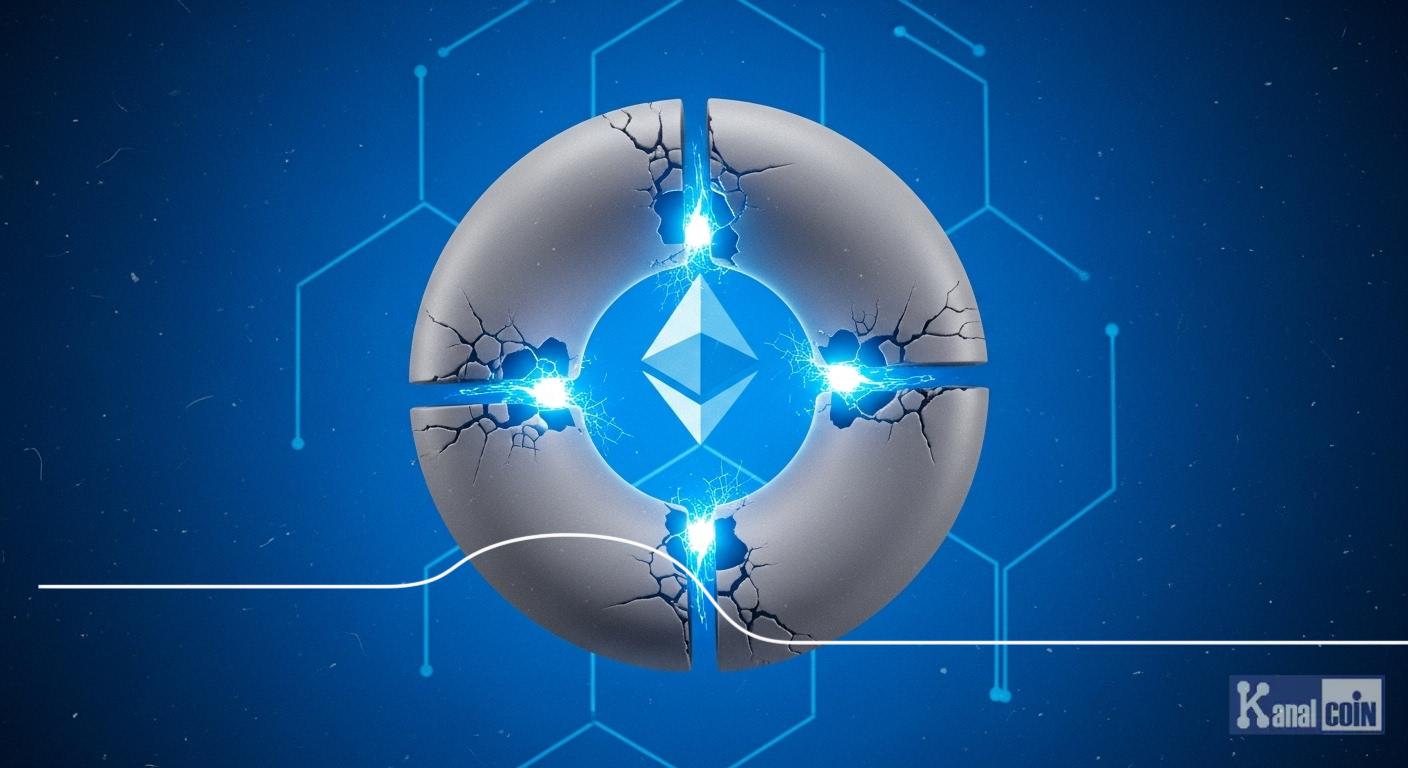
Vitalik’s roadmap: phase in post-quantum, hash-based signatures across four components
Vitalik Buterin has outlined a quantum-resistance roadmap for Ethereum that phases in post-quantum cryptography to address long-term risks from quantum computing, as reported by CoinDesk. The plan upgrades the cryptographic primitives that secure accounts and consensus without rushing disruptive changes.
The roadmap targets four components considered most vulnerable and prioritizes hash-based signatures as a first-line defense. The intent is to harden critical paths while keeping migrations orderly and backwards-compatible where feasible.
Why it matters: protect ECDSA and BLS signatures, bridges, oracles
Ethereum relies on ECDSA and BLS signatures for account control and validator duties, and sufficiently powerful quantum computers could endanger those schemes over a long horizon. As reported by Cointelegraph, the roadmap identifies quantum-vulnerable areas and places signature schemes front and center, with hash-based signatures proposed as a practical early step.
According to The Block, researchers have also flagged cross-chain bridges and DeFi oracles as weak links that could amplify any signature-level compromise. Securing those integration points is framed as a priority alongside core protocol paths.
Engineering trade-offs are expected: post-quantum schemes generally produce larger signatures and require more computation, which could increase on-chain data footprints and gas costs until clients and tooling are optimized. Any transition would therefore balance cryptographic strength with performance and user experience.
Immediate impact: staged upgrades, heavier data, prep for users and validators
In the near term, the path features staged upgrades and testbeds before any broad activation. ETHNews reports the Ethereum Foundation has elevated post-quantum security to a core engineering priority and is laying down concrete upgrades and early testnets to operationalize the roadmap.
Ahead of any activation, EF researchers have emphasized preparedness without alarmism. “The quantum threat is shifting from theory into engineering,” said Thomas Coratger, who leads the Ethereum Foundation’s post-quantum team. He has also clarified that Ethereum is not in immediate danger, but preparation reduces migration risk.
Users and validators should expect eventual changes in signature formats and wallet flows, with heavier data per signature until optimizations take hold. Migration design is expected to emphasize safety, minimizing user friction and fund-loss risk during the transition.
Timeline and debate: when could quantum threaten Ethereum’s signatures?
The timeline remains contested, and internal work has moved from abstract planning toward concrete testing even as the underlying threat is framed as long-term. Community debate centers on whether to front-load mitigations now or wait for clearer hardware milestones.
As reported by CCN, Adam Back and Nick Szabo view cryptographically relevant quantum computers as likely decades away, arguing that nearer-term risks remain legal, regulatory, and centralized points of failure. That stance contrasts with researchers who prefer to advance safeguards early to avoid bottlenecks if hardware progress accelerates unexpectedly.
Yahoo Tech has highlighted that Ethereum’s evolving roadmap embeds hash-based signatures among early upgrade targets, reflecting the shift from theory to implementation. The approach allows the ecosystem to iterate in phases while maintaining continuity of operations.
At the time of this writing, Ethereum (ETH) is priced around $2,021.49 with volatility near 13.63% and a 14-period RSI of 45.38; recent readings show 12 of the past 30 days were green, while the 50- and 200-day simple moving averages are approximately $2,543.65 and $3,167.49. These figures offer market context only and do not alter the long-term, engineering-led nature of the post-quantum effort.
| Disclaimer: This website provides information only and is not financial advice. Cryptocurrency investments are risky. We do not guarantee accuracy and are not liable for losses. Conduct your own research before investing. |