



Nakamoto, the Nasdaq-listed company associated with David Bailey, is seeking shareholder approval for a reverse stock split ranging from 1-for-20 to 1-for-50 in a bid to avoid delisting from the exchange.
A preliminary proxy statement filed with the SEC reveals the company has scheduled a special shareholder meeting for May 8, 2026 to vote on the proposal. The board would retain discretion over the final ratio within the approved range.
The filing discloses that Nasdaq notified Nakamoto on December 10, 2025 that its ticker, NAKA, had traded below the $1.00 minimum bid price for 30 consecutive business days, triggering a compliance review under Nasdaq Rule 5450(a)(1).
A June Deadline and Shrinking Share Price
Nakamoto has until June 8, 2026 to regain compliance. To do so, NAKA must close at or above $1.00 for at least 10 consecutive business days before that deadline.
That target looks distant. The proxy statement notes NAKA closed at $0.22 on April 6, 2026. A reverse stock split, which consolidates multiple existing shares into a single share at a proportionally higher price, is the company’s proposed path to clearing the $1.00 threshold.
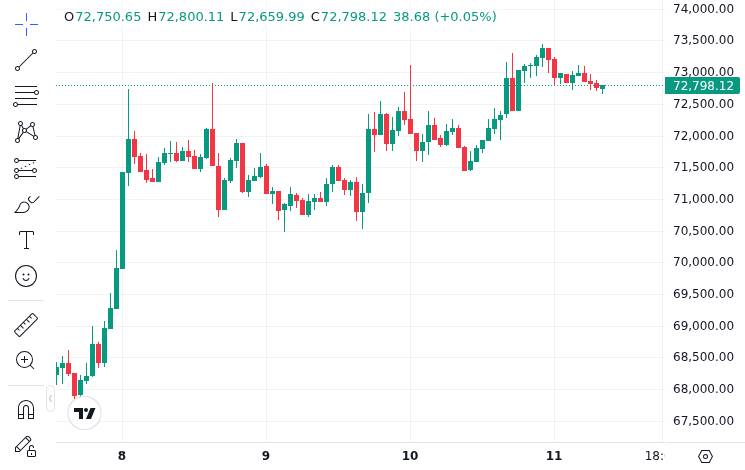
The broader crypto market context adds pressure. Bitcoin traded near $72,759 at the time of writing, while the Fear & Greed Index sat at 15, deep in “Extreme Fear” territory, a backdrop that has weighed on Bitcoin-linked equities broadly. Companies like Strategy and BlackRock have seen their own Bitcoin holdings scrutinized amid volatile conditions.
The Delisting Trap After a Reverse Split
The proxy filing contains a pointed warning. Under Nasdaq Rule 5810(c)(3)(A)(iv), if NAKA falls back below the $1.00 minimum bid within one year after executing a reverse split, the company would face delisting with no new compliance period.
This rule, strengthened by a Nasdaq-approved amendment in 2025, means a reverse split is not a repeatable fix. If the post-split share price drifts below $1.00 again within 12 months, Nakamoto would lose its Nasdaq listing outright.
Delisting would push NAKA to over-the-counter markets, reducing trading visibility, limiting institutional access, and likely compressing liquidity further. For a company operating at the intersection of public markets and the crypto sector, where even sovereign Bitcoin strategies face scrutiny, that outcome would significantly narrow its capital market options.
Authorized Shares Stay at 10 Billion
One detail competitors have largely overlooked: the proxy states Nakamoto’s 10,000,000,000 authorized common shares will remain unchanged after the reverse split. Because outstanding shares would shrink by a factor of 20 to 50, the ratio of authorized-to-outstanding shares would expand dramatically.
This effectively increases the company’s post-split issuance capacity per outstanding share, giving the board room to issue new equity without returning to shareholders for authorization. For investors, that dilution potential is a material consideration alongside the listing compliance question.
The crypto sector has seen growing activity on public exchanges, with firms like Binance exploring pre-IPO market access through new channels. Nakamoto’s struggle to maintain its listing highlights the gap between crypto-native ambitions and traditional exchange requirements.
What Comes Next
The May 8 shareholder vote is the immediate catalyst. If approved, the board will set the final ratio and execute the split ahead of the June 8 compliance deadline.
A reverse stock split does not change the company’s underlying business fundamentals, revenue, cash position, or Bitcoin exposure. It is a mechanical adjustment to share price and count. Whether the post-split price holds above $1.00 for the required 10 consecutive trading days, and stays there through the following year, will determine if this move resolves the compliance problem or merely delays it.
Shareholders and investors should monitor Nakamoto’s SEC filings and Nasdaq notices for updates on the vote outcome, the chosen split ratio, and any subsequent compliance determinations.
Disclaimer: This article is for informational purposes only and does not constitute financial or investment advice. Cryptocurrency and digital asset markets carry significant risk. Always do your own research before making decisions.