


Key Points:
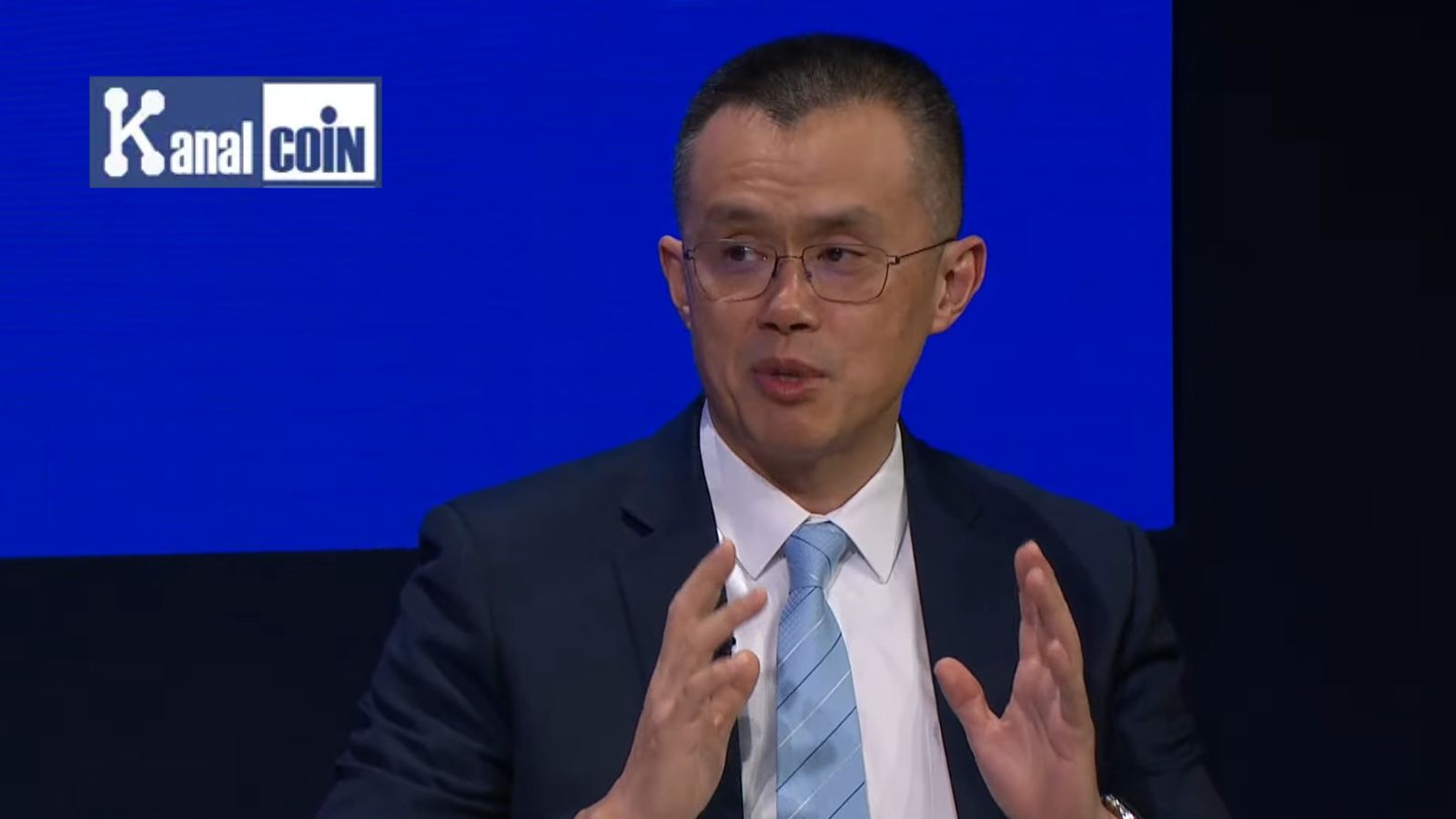
- CZ, in his address at the recent annual meeting in Davos, addressed questions about tokenization, money transfer using cryptocurrencies, and the use of artificial intelligence in the future of the global crypto economy.
- Mr. Zhao, founder of Binance Exchange, stated that Binance had infected over 300 million users with volumes greater than the New York Stock Exchange, highlighting that crypto assets have actually reached systemic scale.
- Additionally, CZ at Davos pointed out that cryptocurrency is to become a native currency for AI agents and a new economic system will emerge through these machines.
CZ at Davos Puts Tokenization at the Center of Government Finance

At the CZ event in Davos, the CEO revealed that he is working actively with over a dozen governments to develop asset tokenization infrastructure, helping nations raise capital for the digitization of sectors such as mining, tourism, and commodities.
Incrypted stated that the governments are realizing the value of the concept of tokenization as a faster means of financing and creating value out of illiquid public assets; as a result, blockchain technology would no longer remain an economic experiment.
The core message from CZ at Davos is that tokenization is no longer a crypto-native innovation but a sovereign financial instrument that aligns government incentives with on-chain capital markets.
CZ at Davos Reframes Crypto Payments and AI Adoption
During CZ at Davos, Zhao admitted that crypto payments have not yet succeeded at the retail level, but he explained that traditional card networks are quietly integrating crypto settlement rails so that users spend fiat while crypto moves value in the background.
He also stated that AI agents will require a native financial layer to autonomously buy services and pay for compute, and that cryptocurrency is the only viable infrastructure for machine-to-machine commerce.
This means CZ at Davos framed crypto not just as money for people, but as the economic backbone of artificial intelligence, a shift that dramatically expands crypto’s total addressable market.
CZ at Davos Explains Why Crypto Infrastructure Outperforms Banks
Zhao cited that Binance processed $14 billion in withdrawals within a single week during the post-FTX and Silicon Valley Bank turmoil, a stress test that traditional banks could not survive due to their reliance on fractional reserve models.
At CZ at Davos, he argued that financial crises are not caused by technology moving too fast, but by fragile system design, where faster withdrawals simply expose weaknesses that already exist in traditional banking.
The broader takeaway from CZ at Davos is that crypto-based financial infrastructure is structurally more resilient, transparent, and scalable than the legacy banking system it is now beginning to challenge.
CZ at Davos Calls for a Global Crypto Regulatory Passport
At the meeting of CZ in Davos, Zhao also commented on issues related to fragmentation in crypto regulations worldwide and noted that diverse regulations define crypto institutions as “one of the largest barriers to crypto’s institutional growth.”
He explained that while Binance holds more than 20 regulatory licenses worldwide, the lack of mutual recognition between jurisdictions creates unnecessary friction for exchanges, custodians, and payment providers operating across borders.
Zhao also suggested the use of the “regulatory passport” model, wherein companies who were licensed to function from key markets across the globe could also be approved to function from other markets as long as the organizations agreed to function according to similar sets of regulatory requirements.
The clear message from the visit of the CZ to Davos is that the days of the niche crypto asset technology being unconnected with the system are over. It now needs a set of regulatory infrastructure commensurate with its global, borderless nature, as currently exemplified by the world of international bank transfer, aviation, and telephony.
By calling for regulatory harmonization, CZ positioned crypto not as an adversary to governments, but as a financial layer that can integrate directly into national and international economic systems.
| Disclaimer: This website provides information only and is not financial advice. Cryptocurrency investments are risky. We do not guarantee accuracy and are not liable for losses. Conduct your own research before investing. |