



CME Group is targeting June 1, 2026, to launch Bitcoin Volatility Futures, a first-of-its-kind regulated product that lets traders isolate bitcoin volatility risk from price direction. The contracts are pending regulatory review by the CFTC.
What CME Group Announced About the June 1 Bitcoin Volatility Futures Launch
CME Group announced on May 5, 2026 that it plans to list Bitcoin Volatility Futures for trade date Monday, June 1. The launch remains subject to all relevant CFTC regulatory review periods.
The futures will settle to the CME CF Bitcoin Volatility Index (BVX), a 30-day forward-looking implied volatility benchmark derived from CME Bitcoin options order books. The index is published every second from 7 a.m. to 4 p.m. CT.
Contract specifications filed under SER 9733 set the size at $500 multiplied by the CME CF Bitcoin Volatility Index – Settlement (BVXS). The minimum outright price fluctuation is 0.05 index points, equal to $25 per tick.
The contract will trade under ticker BVI on CME Globex and clear through CME ClearPort, with BTIC code BVB. Initial listing months cover Jun 26 and Jul 26. The product is cash-settled, meaning no physical bitcoin delivery occurs.
Giovanni Vicioso of CME Group said that with these contracts, “traders will be able to invest or hedge against the future volatility of bitcoin.”
Why Bitcoin Volatility Futures Matter for Crypto Traders
Standard bitcoin futures and options expose traders to price direction. The new volatility futures isolate a different dimension: how much bitcoin’s price swings over the next 30 days, regardless of whether it moves up or down.
That distinction opens specific hedging use cases. An institutional portfolio holding spot bitcoin or bitcoin ETFs could use volatility futures to protect against sudden spikes in market turbulence without unwinding its directional position.
CME described the product as “first-of-its-kind” among regulated futures exchanges. According to secondary market coverage, no competing regulated bitcoin volatility futures existed on major U.S. exchanges at the time of the announcement, though this exclusivity claim has not been independently verified beyond CME’s own language.
Bitcoin was trading at approximately $80,789 with a market cap near $1.6 trillion at the time of research. The Fear & Greed Index sat at 48, classified as Neutral, suggesting the announcement landed in a relatively calm market environment rather than during extreme sentiment.
What Markets Will Watch Before the Possible Debut
The three-week window between the May 5 announcement and the June 1 target date creates a compressed timeline. The primary variable is whether the CFTC completes its regulatory review within that period or signals any delays.
Early liquidity will be a key indicator of institutional appetite. The contract’s $500 multiplier and $25 minimum tick size position it for professional and institutional participants rather than retail traders. How quickly open interest builds in the initial Jun 26 and Jul 26 listing months will signal whether the market sees genuine utility in the product.
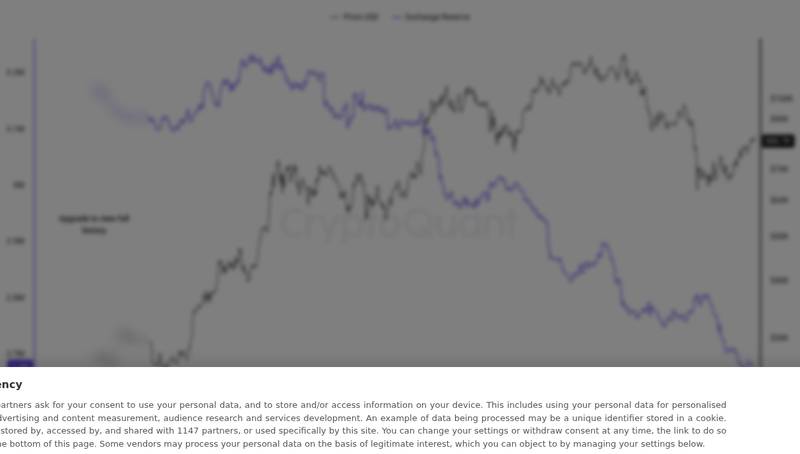
Exchange reserve data for bitcoin offers one lens into broader institutional positioning ahead of the launch. On-chain metrics tracking exchange flows can reveal whether large holders are adjusting their spot exposure in anticipation of new hedging tools becoming available.
The launch also arrives as the broader digital asset industry continues to attract significant capital. Recent funding rounds at multi-billion dollar valuations underscore that institutional infrastructure for crypto markets is expanding rapidly, with regulated derivatives a central piece of that buildout.
Major venture rounds, including Digital Asset’s $300 million raise led by a16z crypto, reflect the growing appetite for institutional-grade crypto infrastructure. Bloomberg has also reported on valuations reaching $2 billion in this space, reinforcing that products like CME’s volatility futures sit within a broader wave of institutional adoption.
If CME confirms the June 1 timeline, bitcoin volatility futures would add a new tool to the crypto derivatives stack listed under CME Rulebook Chapter 445. Traders and risk managers will be watching for the official go-live confirmation in the coming weeks.
Disclaimer: This article is for informational purposes only and does not constitute financial or investment advice. Cryptocurrency and digital asset markets carry significant risk. Always do your own research before making decisions.