



Catalysis says it is bringing vault-native risk coverage to institutional DeFi by embedding protection directly inside vault workflows instead of asking allocators to bolt on cover after capital is deployed. The pitch is to make protection programmable enough to sit alongside yield strategies rather than outside them.
The strongest fetched official source is Catalysis’ September 17, 2025 product announcement, which said the company was pivoting to fully onchain risk coverage infrastructure for institutional DeFi. That makes the story best read as an official launch-and-roadmap statement, not as independent confirmation of a live, widely used mainnet product.
TLDR KEY POINTS
- Catalysis says its coverage model is embedded at the vault layer, with underwriting sourced from restaked capital rather than a standalone cover marketplace.
- The company is differentiating around smart-contract payouts and slashing, while incumbent DeFi cover still relies on committee-led claims review.
- The published roadmap points to pilot CoverPools in Q4 2025, Ethereum pre-mainnet in Q1 2026, and full mainnet in Q2 2026.
What Catalysis announced and what vault-native means
In its official blog announcement, Catalysis used vault-native to mean coverage that is built into a vault or strategy at deployment time, so protection sits inside the same workflow that takes risk. The same post described the system as the first such infrastructure for institutional DeFi, but that superlative remains an unconfirmed company claim rather than a market-wide verified fact.
Catalysis also said underwriting capacity would come from restaked capital on EigenLayer, Symbiotic, and Babylon, and that the stack could quote more than $20 billion of protection capacity. Because that estimate comes from company materials and not from an independently audited dashboard, it should be treated as a stated target rather than a verified deployed pool.
On claims, Catalysis wrote that smart contracts and slashing can automate payouts instead of relying on a committee review cycle. That matters because Nexus Mutual’s claims assessment documentation still describes committee-led review and voting, which gives Catalysis a clear product distinction even before live scale is proven.
Catalysis’ official LinkedIn launch post tied the Symbiotic deployment to dedicated vaults, programmable slashing, CoverPools, and predefined payout triggers for institutional use cases. The official roadmap still points to pilot CoverPools in Q4 2025, Ethereum pre-mainnet in Q1 2026, and full mainnet in Q2 2026, so the market has a dated rollout to watch but not yet a fetched record of production claims history.
Why institutional DeFi needs embedded risk coverage infrastructure
OpenCover’s market report said DeFi had only $231 million of active cover, equal to about 0.5% of DeFi TVL, while DefiLlama’s Ethereum dashboard showed roughly $118.68 billion in TVL.
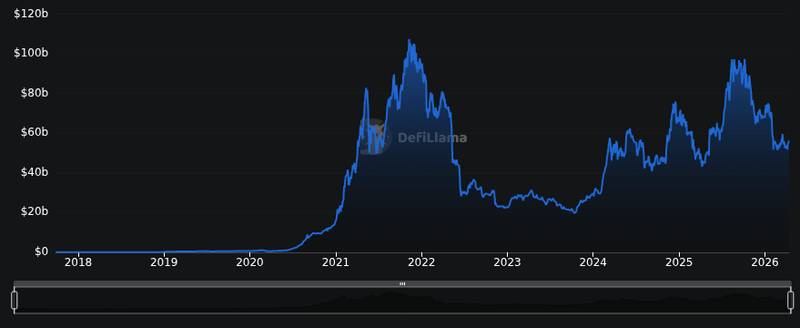
The mismatch between OpenCover’s $231 million active-cover figure and DefiLlama’s roughly $118.68 billion Ethereum TVL reading helps explain why Catalysis is aiming at embedded institutional coverage rather than another standalone policy marketplace. If allocators already judge risk at the vault level, embedding triggers and payouts at that level could remove one operational step from the coverage process.
Hugh Karp framed the broader need for DeFi protection in the same OpenCover report.
“DeFi cover is one of the fundamental building blocks that’s necessary for the next wave of capital to enter the ecosystem.”
— Hugh Karp via OpenCover
The dedicated vaults and predefined triggers described in Catalysis’ official LinkedIn post are the sort of control points institutional risk teams tend to want, because they keep coverage terms attached to the strategy instead of split across multiple venues. That institutionalization theme is visible elsewhere in the market too, from Kanalcoin’s coverage of Aave DAO Approves $25M Stablecoin Grant, Formalizes Revenue Model to Relm Insurance Launches Crypto and Cannabis Kidnap Coverage, where governance controls and specialty protection were both part of the infrastructure story.
What the Catalysis launch could mean for DeFi market structure
Tak Lee of Hashed Emergent offered a supportive investor view in secondary coverage from CryptoSlate.
“Institutional DeFi has long required precisely this caliber of infrastructure solution to unlock scale.”
If Catalysis reaches the Q4 2025 pilot, Q1 2026 Ethereum pre-mainnet, and Q2 2026 full-mainnet milestones it published, vault providers may start competing on how quickly and transparently they can pay out predefined losses, not only on headline yield. In a market still dealing with cautious positioning, the push for clearer downside tooling also lines up with the risk-management focus behind Kanalcoin’s report on US Bitcoin Spot ETFs See $291M Net Outflow on April 13, SoSoValue Says.
The limits of the announcement are just as important as the promise. The first-place label is unconfirmed beyond company materials, the quoted capacity remains company-sourced, and no fetched source independently verified live mainnet policies, vault activity, or a later company release matching the headline wording.
For Southeast Asian funds and desks that already touch Ethereum-based DeFi, the same $231 million active-cover figure against roughly $118.68 billion of Ethereum TVL suggests the global protection gap is still much larger than the insurance layer beneath it. Catalysis has put one design on the table, but the real test is whether its announced vault-native model becomes inspectable, liquid, and trusted once institutions move from pilots to live capital.
Disclaimer: This article is for informational purposes only and does not constitute financial or investment advice. Cryptocurrency and digital asset markets carry significant risk. Always do your own research before making decisions.