



Bitcoin’s options market has tilted decisively bullish around the $80,000 level, with a 3:1 call-to-put ratio and a 35-point swing in derivatives skew signaling that institutional traders are rotating out of crash hedges and into upside bets, even as retail sentiment sits at Extreme Fear.
Bitcoin traded at $71,183 at press time, down 0.72% over 24 hours, with a market cap of $1.42 trillion and daily volume of $37.1 billion.
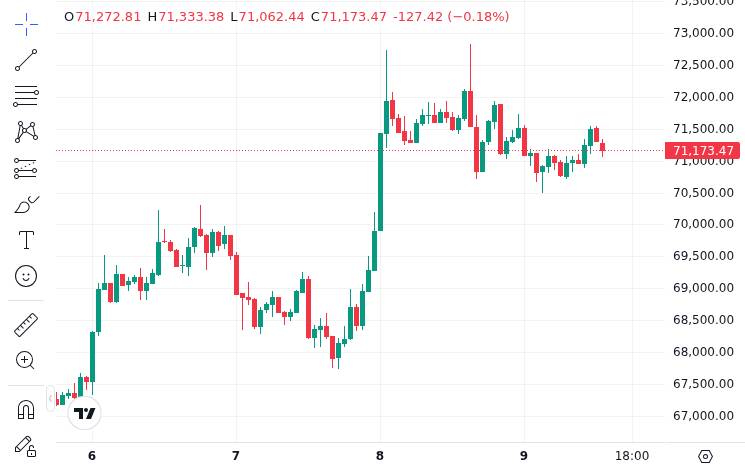
The gap between spot price and the $80,000 target represents roughly 12.4% upside. What makes this level significant is not just the round number psychology, but the sheer concentration of derivatives positioning built around it.
Why the $80,000 level has become the market’s center of gravity
TLDR KEYPOINTS
- Options skew swung 35 points, from -25% (bearish) in early February to +10% (bullish), reflecting a broad rotation from protective puts into upside calls
- March options expiry shows $660 million in call open interest versus $240 million in puts, a 3:1 ratio favoring bulls
- The Fear & Greed Index reads 14/100 (Extreme Fear), creating a sharp divergence between retail anxiety and institutional conviction
Derive.xyz data places the probability of Bitcoin trading above $80,000 by end of June at approximately 35%. That figure reflects implied volatility pricing across the options curve, not a poll or prediction, making it a market-weighted consensus of where capital expects price to go.
On Polymarket, odds for Bitcoin hitting $80,000 by end of March nearly doubled from 20% to 39% in a single trading session. Prediction markets and options desks rarely move in lockstep this aggressively unless new positioning flow is entering the market, not just recycling existing bets.
Nick Forster, founder of Derive.xyz, noted that traders are “unwinding protective put positions and rotating into upside exposure.” This is visible in the skew data: Bitcoin’s options skew recovered from -25% in early February to approximately +10%, a 35-point swing that marks one of the sharpest sentiment reversals in recent derivatives history.
The distinction between spot and derivatives positioning matters here. Spot buyers accumulate gradually. Derivatives traders express directional conviction with leverage. When the March expiry shows $660 million in call open interest versus $240 million in puts, that 3:1 ratio is not passive accumulation; it is active, leveraged betting on upside.
This kind of concentrated positioning has echoes of previous rallies. Similar patterns preceded moves like the ones tracked during recent sharp price swings across Bitcoin, XRP, and Ethereum, where derivatives activity foreshadowed spot moves.
What concentrated upside bets mean for momentum and liquidity
The gamma feedback loop
When call options cluster around a single strike, market makers who sold those calls must hedge by buying spot Bitcoin as price approaches the strike. This creates a gamma squeeze dynamic: the closer price gets to $80,000, the more buying pressure market makers generate through hedging.
Out-of-the-money calls are clustered between $110,000 and $220,000 strikes, indicating that some traders are positioning for outcomes far beyond the $80,000 level. These are low-probability, high-payoff bets, but their existence shows that the tail risk market has shifted from crash protection to moonshot exposure.
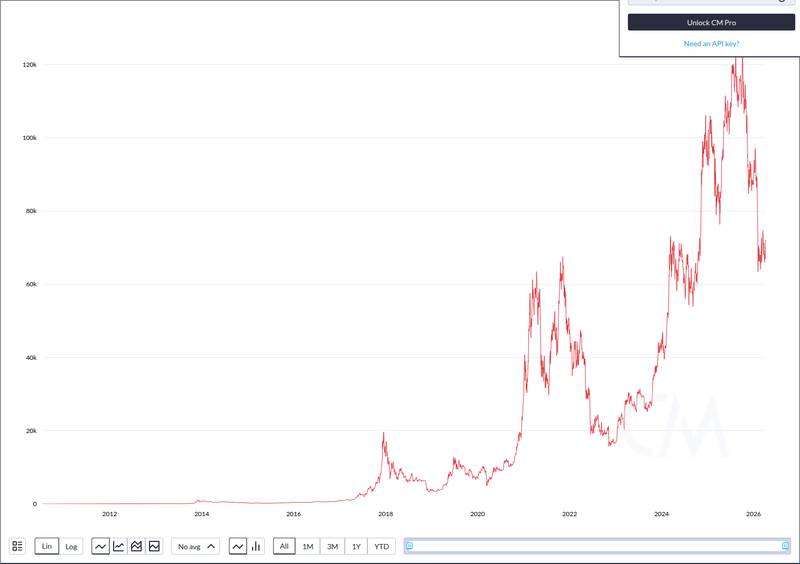
The CME gap as a liquidity magnet
A CME Bitcoin futures gap exists in the $79,660 to $81,210 range. Historically, 90% of CME gaps eventually close, making this zone a technical magnet that aligns with the options-driven $80,000 target.
The convergence of a CME gap, concentrated call positioning, and prediction market odds creates a self-reinforcing narrative. Each data point gives traders a reason to position for the same outcome, which itself increases the likelihood of price moving toward that level.
Institutional flows into Bitcoin products have been a persistent theme this year, with developments like Morgan Stanley’s Bitcoin ETF launch trailing BlackRock with $30 million in first-day inflows reinforcing the narrative that regulated capital is steadily building BTC exposure.
What could break the $80,000 thesis
The same leverage that amplifies rallies can accelerate reversals. If Bitcoin fails to hold support above $68,000 to $70,000, the 3:1 call-to-put ratio becomes a liability. Expiring out-of-the-money calls drain premium, and traders who sold puts may not roll them, removing a floor of implied demand.
The Fear & Greed Index at 14/100 signals that retail participants are already anxious. If leveraged longs begin unwinding while retail sentiment remains fearful, there is no natural buyer cohort to absorb selling pressure.
Recent episodes of sudden deleveraging, like the broad crypto decline that hit key price levels across major tokens, show how quickly crowded trades can reverse.
Bullish continuation requires:
- Spot price holding above $70,000 on weekly closes
- Call open interest remaining above put open interest through March expiry
- Options skew staying positive (above 0%)
- CME gap at $79,660 to $81,210 acting as a pull, not a rejection zone
Invalidation signals to watch:
- Skew reverting below -10%, indicating renewed demand for downside protection
- Rapid decline in call open interest without corresponding spot buying
- Break below $68,000, which would strand the majority of March call positions deep out of the money
Corporate treasury moves also add uncertainty. Cango’s recent sale of $442 million in Bitcoin to fund an AI pivot is a reminder that large holders can inject sudden supply into a market that derivatives traders assume is trending in one direction.
The $80,000 bull bet is real, measurable, and backed by institutional-grade capital. Whether it pays off depends on whether spot buyers show up to validate what the options market has already priced in.
Disclaimer: This article is for informational purposes only and does not constitute financial or investment advice. Cryptocurrency and digital asset markets carry significant risk. Always do your own research before making decisions.