



Bitcoin dropped just 2.4% while Ethereum and Solana fell far harder during the June 2025 Iran escalation, and that relative resilience has reshaped how traders use the largest cryptocurrency as a real-time stress gauge for global risk appetite.
KEY TAKEAWAYS
- Bitcoin fell 2.4% from June 20 to 23, 2025, while Ethereum dropped 8% and Solana shed 4.1% during the same Iran-war window.
- Derivatives traders pulled 17,394 BTC from perpetual-futures open interest in 24 hours, the sharpest leverage unwind since August 2024.
- BTC’s 24/7 trading and fast recovery above $100,000 have positioned it as a leading, always-on sentiment barometer rather than a simple safe haven.
Bitcoin’s war-time hesitation has changed the usual crypto script
On June 12, 2025, the White House confirmed that Israel had taken unilateral action against Iran and warned Tehran not to target U.S. interests or personnel. The statement anchored a weekend of risk-off positioning across crypto markets, but the reaction was uneven.
From 2 p.m. on June 20 to 1 p.m. on June 23, Bitcoin fell 2.4%, a notably shallow drawdown compared to Ethereum’s 8% slide and Solana’s 4.1% loss over the same window. BTC briefly dipped below $100,000 after the U.S. bombed Iran’s nuclear facilities, then recovered above that level by June 23.
That pattern, a stutter rather than a collapse, broke the expected playbook. In previous geopolitical shocks, Bitcoin had often traded in lockstep with risk assets or sold off harder than traditional equities. This time it absorbed the hit and bounced while altcoins bled.
The divergence matters because it signals a shift in how institutional and retail capital treats Bitcoin during crisis events. Rather than dumping BTC alongside everything else, traders held their core positions and de-risked through smaller-cap tokens, a hierarchy that is more consistent with how gold behaves relative to industrial metals than how a speculative asset should trade.
Why Bitcoin is becoming a real-time market stress barometer
24/7 trading makes BTC the first responder
Unlike equities, bonds, and commodities that trade on fixed schedules, Bitcoin markets never close. When the Iran strikes escalated over a weekend, BTC was the only major liquid asset repricing in real time. Futures desks, macro hedge funds, and retail traders all watched the same weekend candles for a signal about Monday’s broader open.
That structural advantage has turned Bitcoin into a de facto overnight sentiment indicator. A sharp Sunday evening wick now draws the same attention from cross-asset desks that S&P 500 futures once monopolized, simply because crypto is the only market open.
Leverage and liquidation dynamics amplify the signal
The derivatives side of the June response was even more telling. BTC perpetual-futures open interest fell by 17,394 BTC in 24 hours, the sharpest single-day drop since August 5, 2024. That unwind reflected professional de-risking, not panic selling of spot holdings.
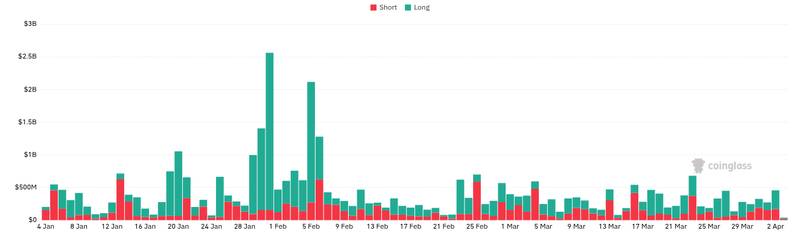
When leveraged positions flush out quickly but spot price recovers, it tells macro observers that conviction holders are staying in while short-term speculators are exiting. That separation between spot resilience and derivatives de-risking is the kind of signal that traditional market analysts typically look for in Treasury futures or VIX term structure, not in crypto.
The old framing of Bitcoin as “digital gold” assumed that BTC should rally during geopolitical turmoil. The newer reading is more nuanced: Bitcoin functions as a risk-sentiment barometer, one that reveals the speed and severity of fear before other markets can react. When regulatory uncertainty around crypto market structure compounds geopolitical stress, the barometer becomes even more sensitive.
What traders should watch if Bitcoin keeps leading sentiment
Nearly ten months after the June escalation, Bitcoin trades at $66,824 with a market cap of roughly $1.34 trillion and 24-hour volume near $37 billion. BTC commands 56.10% of total crypto market capitalization, a dominance level that reinforces its role as the sector’s anchor asset.
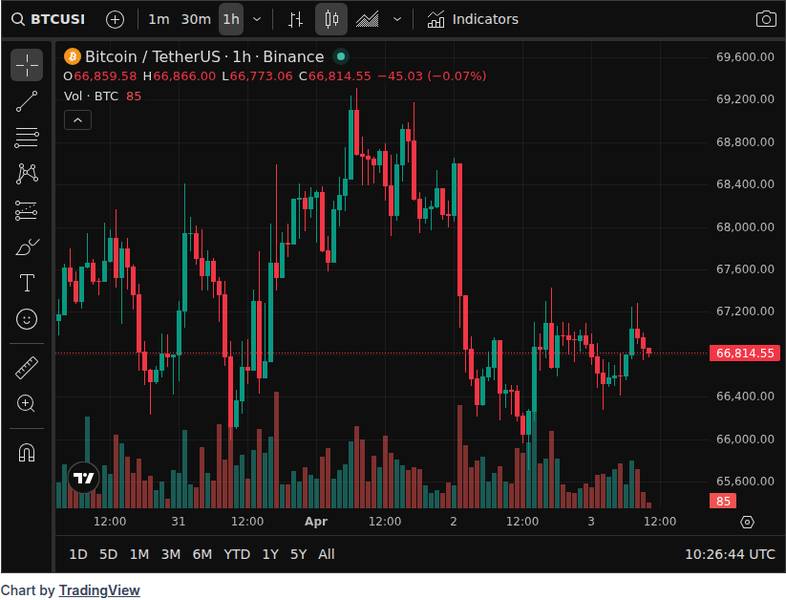
The Fear & Greed Index currently reads 9, deep in Extreme Fear territory. That reading, combined with BTC’s relative price stability, echoes the June 2025 pattern: broad fear is elevated, yet Bitcoin is not leading the sell-off.
For the thesis that BTC has become a critical market indicator to hold, traders should watch several concrete triggers. Weekend volatility spikes that precede Monday equity gaps would confirm that crypto is pricing shocks first. Failed rebounds, where BTC drops and stays down rather than recovering within 48 hours as it did in June, would weaken the signal.
Sharp downside wicks followed by fast recovery suggest that leveraged positions are flushing while spot demand absorbs selling. That behavior, visible during the June 20-23 window, is the clearest fingerprint of an asset functioning as a leading indicator rather than a lagging one.
The relative performance gap matters too. If Bitcoin continues to outperform altcoins during stress events, questions around institutional flows and custody movements become more important for understanding who is driving that resilience. Similarly, how data integrity infrastructure evolves in tokenized markets could shape whether institutional capital keeps treating BTC as its preferred crypto risk gauge.
If Bitcoin stabilizes first after the next geopolitical shock and altcoins catch up days later, the hierarchy established in June 2025 will look less like an anomaly and more like a structural feature. If BTC instead lags traditional safe havens like Treasuries and gold, the “critical indicator” argument weakens considerably. The evidence so far supports a cautious version of the thesis: Bitcoin is not yet a safe haven, but it has become the fastest mirror of market fear available to any trader with an internet connection.
Disclaimer: This article is for informational purposes only and does not constitute financial or investment advice. Cryptocurrency and digital asset markets carry significant risk. Always do your own research before making decisions.