


Capital B has completed a capital increase and purchased 44 additional Bitcoin, bringing its total treasury holdings to 2,888 BTC. Here’s what it means.

Capital B has completed a capital increase and purchased 44 additional Bitcoin, bringing its total treasury holdings to 2,888 BTC. Here’s what it means.

For the first time in 2026, markets are pricing more Fed rate hike probability than rate cuts — a macro shift with direct consequences for Bitcoin and crypto risk appetite.
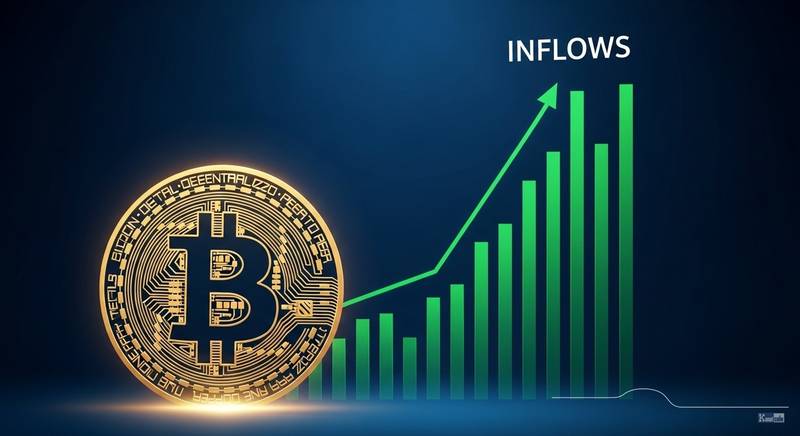
U.S. Bitcoin spot ETFs posted $95.18 million in net inflows for the week of March 16–20, extending a four-consecutive-week streak of positive institutional flows.

Bitcoin fell to around $68,000, triggering nearly $400 million in crypto liquidations across major exchanges. Here’s what the data shows.

Resolv Labs suspended its DeFi protocol after a $23 million exploit caused its USR stablecoin to lose its dollar peg. Here is what happened and what it means for users.

Strategy, the bitcoin treasury company formerly known as MicroStrategy, has purchased 89,618 BTC since the start of 2026, deepening its position as the largest corporate bitcoin holder.
Morgan Stanley is proposing a Bitcoin ETF that could channel $160 billion into the market. Here’s what the proposal means for institutional Bitcoin adoption.

Strategy is on pace for its second-largest Bitcoin accumulation quarter on record, with purchases continuing even as BTC prices decline in Q1 2026.

Haliey Welch, the viral ‘Hawk Tuah’ girl, has publicly responded to the collapse of her HAWK meme coin, which shed over 90% of its value within hours of launch on Solana.
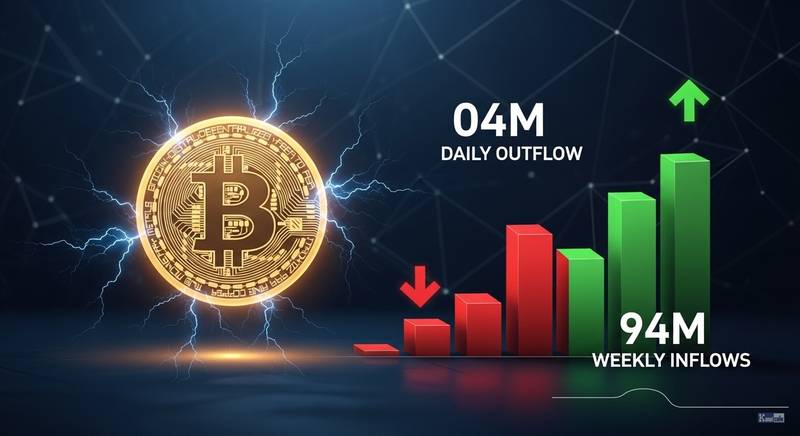
U.S. spot Bitcoin ETFs saw a 1-day net outflow of 1,488 BTC ($104.1M) on March 20, 2026, while the 7-day net flow remains firmly positive at +4,204 BTC ($294.22M).

U.S. spot Bitcoin ETFs saw a net outflow of $90.19 million on March 19, according to SoSoValue data. Here is a breakdown of which funds drove the exodus and what it signals for ETF demand.

Contrarian investor Doug Casey warns an Iran conflict could become a drawn-out crisis, triggering major market disruptions and accelerating shifts in global power structures.

Bitcoin dropped below $70,000 as the Fed’s latest decision fueled risk-off sentiment. XRP also fell amid compounding pressures beyond just monetary policy.

Early Bitcoin holders sold more than $100 million in BTC after the Federal Reserve signaled a more hawkish stance, crushing near-term hopes for interest rate cuts and rattling the crypto market.
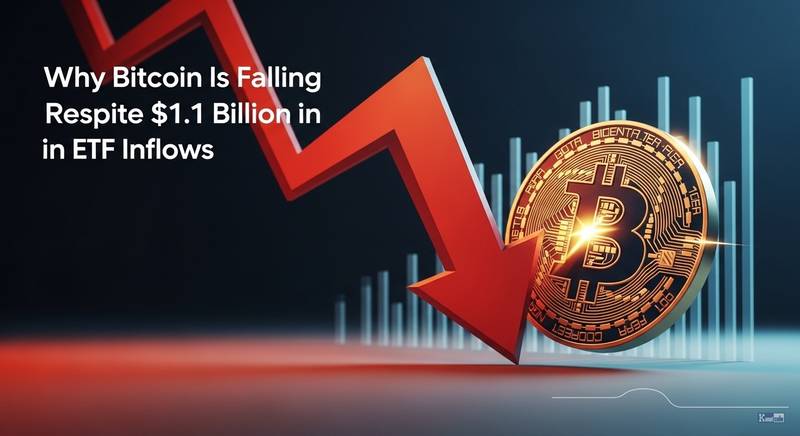
Bitcoin is sliding in price even as spot ETFs record $1.1 billion in inflows. Breaking down the selling pressure, macro headwinds, and market mechanics driving the paradox.

The FBI has warned of a criminal network impersonating law enforcement to coerce victims into sending funds through crypto ATMs. Here’s how the scam works and what to watch for.

A long-dormant Bitcoin whale has deposited 1,000 BTC worth $71.57M into Binance. The wallet originally accumulated 5,000 BTC roughly 13 years ago, signaling potential profit-taking after years of holding.

Bitcoin slipped under $71,000, but key market indicators — from funding rates to on-chain flows — suggest the underlying bullish structure remains intact.

China is brushing off Trump’s request for help over the Strait of Hormuz as the Iran conflict deepens. Here’s why the standoff matters for oil prices, inflation, and crypto markets.

Velvet has launched a Bitcoin trading competition with a 20 million Gems prize pool. Here is how the rewards work, who is eligible, and how to compete.

Bitcoin’s network hash rate is declining sharply as the Iran war pushes energy prices higher, squeezing miner profitability and forcing rigs offline.
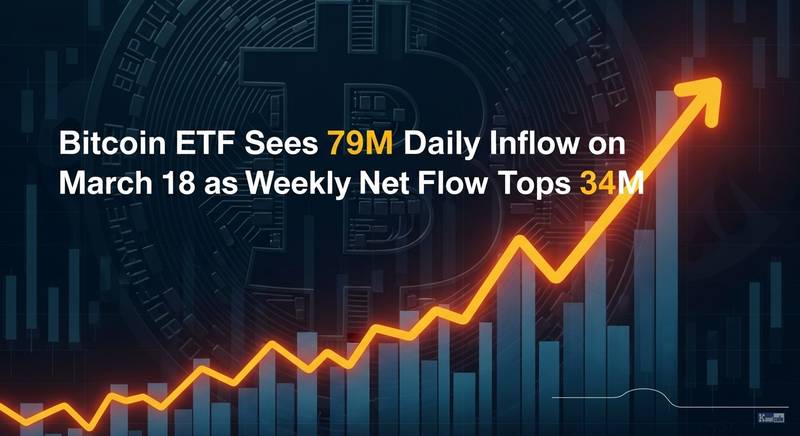
U.S. spot Bitcoin ETFs recorded a net inflow of 2,492 BTC ($179.33M) on March 18, extending the 7-day total to 10,210 BTC ($734.63M). Ethereum ETF flows also tracked.

Fed Chair Powell’s latest remarks on oil prices and inflation could shape Bitcoin trader positioning as macro signals increasingly drive crypto market moves.

Bitcoin’s rally may face sell-the-news pressure ahead of the Fed decision. This analysis outlines the setup, key market risks, and what traders may watch next.
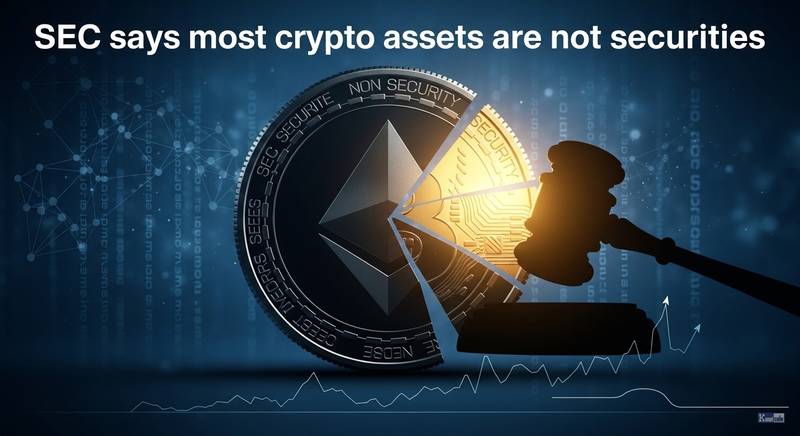
The SEC says most crypto assets are not securities, with staking, airdrops and Bitcoin mining highlighted. Here is what the policy shift could mean for the market.

Chainwire reports a Stacks upgrade that could expand Bitcoin DeFi capacity by up to 30x. Here is the SEO angle and narrow outline for Kanalcoin coverage.

Strategy’s Bitcoin purchases outpace new post-halving BTC supply by 700%, raising the question of whether halvings still drive price or institutional demand has taken over.

Bitcoin broke above $75,000 in a derivatives-driven rally. Open interest surged, funding rates spiked, and cascading liquidations amplified the move. Here’s what the data shows.

XRP is posting accelerating gains as institutional investors build crypto positions ahead of the Federal Reserve’s rate decision. Here’s what’s driving the rally.

Escalating Iran war risks are sharpening divisions inside the Federal Reserve over the pace of rate cuts, threatening to delay monetary easing that crypto markets have been pricing in.

Trump calls for allied naval support in the Strait of Hormuz; allied countries respond with cautious diplomatic backing amid Gulf energy security concerns.

Data shows Israeli tech workers leaving at record levels, driven by war, judicial reform and economic uncertainty. Innovation Authority warns of sector risks.

Supreme Court ruling in February 2026 strikes down Trump tariffs as unlawful under IEEPA, opening legal pathways for affected businesses to seek refunds and injunctions.

Geopolitical conflicts involving Shahed drones are creating new demand for small drone manufacturers in Ukraine, Taiwan, and Latvia, reshaping military supply chains.

Bitcoin price risk private credit grows as stress in the private credit market reduces crypto liquidity, analysts cite flow data showing strained funding.

Filipino sailors remain stranded in the Strait of Hormuz amid warlike conditions. The Department of Migrant Workers coordinates with the Joint Manning Group to ensure seafarer protection.

SEC and CFTC agree to combined crypto oversight via Project Crypto, ending years of rivalry. What the harmonization means for US digital asset regulation.

Keir Starmer has accused Kemi Badenoch of a U-turn on UK positioning regarding potential military involvement in Iran, escalating the political exchange between the two party leaders.

IEA announces oil reserve release to ease supply concerns. Analysts from J.P. Morgan and Goldman Sachs weigh market impact on Brent crude prices.

Data shows US Solana ETFs received $540M in Q4 inflows as Wall Street increased exposure, marking a notable shift in institutional crypto allocation.
The U.S. House voted 212-219 to reject the Iran war powers resolution, blocking effort to limit Trump’s military authority.

Mercado Libre has renewed its partnership with Williams Racing as the F1 team partner. The renewal confirms the company’s continued F1 sponsorship strategy.

Analysis of sovereign infrastructure requirements for AI agents as data sovereignty becomes critical for national security, featuring NVIDIA, SK Telecom, and Singapore.

Think tanks warn of geopolitical vacuum risks as US lawmakers criticize absence of clear conflict resolution planning for Ukraine and Gaza.

Andreessen Horowitz’s crypto arm is raising a $2 billion fifth fund, its first since 2022, as crypto VC fundraising contracts across the sector.

Kraken 360 breaks down the critical execution window between token launch readiness and successful deployment, outlining a 5-step framework for blockchain protocol launches.

Bitcoin trades near $68K amid Middle East tensions, data shows mixed safe-haven performance vs gold since Feb 27.

A satirical website calling for Barron Trump to be drafted into the Iran conflict has gone viral following US military strikes.

The US government’s Bitcoin strategic reserve faces uncertainty as the CLARITY Act reaches a stalemate, with the Trump administration exploring executive alternatives amid ongoing regulatory challenges.

ICX to SODA migration advances after governance approval, with CEX support and one-way swap; fixed SODA supply ends ICX emissions as rewards shift to fees.