


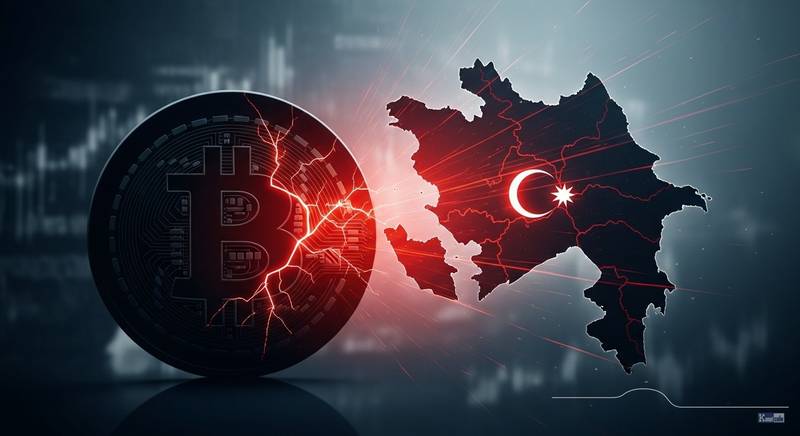
Armenia-Azerbaijan tensions near Iran remain relevant for crypto markets because the conflict sits on Iran’s doorstep and the 2025 peace process was still unfinished, a mix that can feed sanctions-sensitive risk pricing for traders in Southeast Asia and beyond.
The safest reading of the available evidence is narrower than the New York Times style headline that described two “sister nations” waging a “bloody war.” The local research only partially verifies that framing, so this article uses conflict and tensions rather than repeating a present-tense battlefield claim that the source set does not fully support.
What the 2025 record actually confirms about the conflict near Iran
Armenia and Azerbaijan are neighboring South Caucasus states whose dispute has centered on Nagorno-Karabakh and adjacent border issues. Iran borders both countries, which is why the story carries regional weight beyond the Caucasus itself.
Reuters reported on April 10, 2025 that Armenia and Iran held joint drills along their 44 km border. That detail matters because it places Iranian territory directly beside one side of the Armenia-Azerbaijan fault line.
On March 13, 2025, Reuters said Armenia and Azerbaijan had agreed the text of a peace accord intended to end more than three decades of conflict. Azerbaijan’s foreign ministry also said that negotiations on the draft peace agreement text had concluded on the same date.
The process moved forward again when the two sides initialed the agreed peace text in Washington on August 8, 2025. That joint declaration also said further steps were still required for signing and ratification, which means normalization was advancing but not finished.
That is the key editorial correction. The evidence supports a long-running conflict that still required a formal peace process in 2025, not a clean confirmation of a current full-scale war in the exact terms used by the headline prompt.
Why this Iran-adjacent conflict matters to crypto risk, including in Southeast Asia
Kanalcoin’s crypto angle is not that a specific token rallied or sold off on this story. The embedded research found no confirmed on-chain spike, exchange-volume jump, or token-specific price move linked directly to the Armenia-Azerbaijan situation.
The more defensible angle is risk transmission. When tensions sit next to Iran, traders and compliance teams watch for changes in sanctions exposure, cross-border payment monitoring, and pressure on alternative settlement rails, including crypto.
That framing also matters for Southeast Asian readers because regional exchanges and over-the-counter desks operate in a market that is highly sensitive to sanctions screening and correspondent banking risk. Even without a measurable market move in the local research set, instability near Iran can still sharpen compliance attention around cross-border crypto flows.
The diplomatic context reinforces that caution. The available documents show normalization was still tied to treaty signing, ratification, and the closure of legacy peace-process structures, which means the story remained a live geopolitical variable rather than a settled historical dispute.
Reuters described Armenia and Azerbaijan as having fought two major wars in the past 40 years and reported continued ceasefire and border tensions in 2025.
Source: Reuters summary included in the embedded research brief.
For crypto readers, that keeps the story in the macro-risk bucket. It is a sanctions-adjacent geopolitical development that could affect sentiment, monitoring, and payment-friction assumptions, not a basis for unsupported claims about immediate trading opportunity.
Signals crypto markets should watch as the border picture develops
The clearest de-risking signal would be formal treaty signing followed by ratification. The August 2025 initialing showed progress, but the primary document makes clear that those legal and political steps were still outstanding.
A second watchpoint is any new security move involving Iran’s frontier, especially around the 44 km Armenia-Iran border. Additional drills, border incidents, or harsher official rhetoric would suggest a higher chance of spillover into sanctions and settlement-risk narratives.
Markets should also watch whether peace-process momentum holds or stalls. A signed, ratified deal would reduce one source of geopolitical premium, while a collapse in negotiations or renewed clashes would increase attention on non-traditional payment channels and regional compliance controls.
For Southeast Asian market participants, the practical takeaway is simple: treat this as a geopolitical monitoring story, not a token call. Until the Armenia-Azerbaijan peace track is completed, tensions near Iran remain relevant mainly through macro sentiment, sanctions sensitivity, and cross-border payment risk.
Disclaimer: This article is for informational purposes only and does not constitute investment advice or a recommendation to buy or sell any digital asset.
Disclaimer: This article is for informational purposes only and does not constitute financial or investment advice. Cryptocurrency and digital asset markets carry significant risk. Always do your own research before making decisions.