


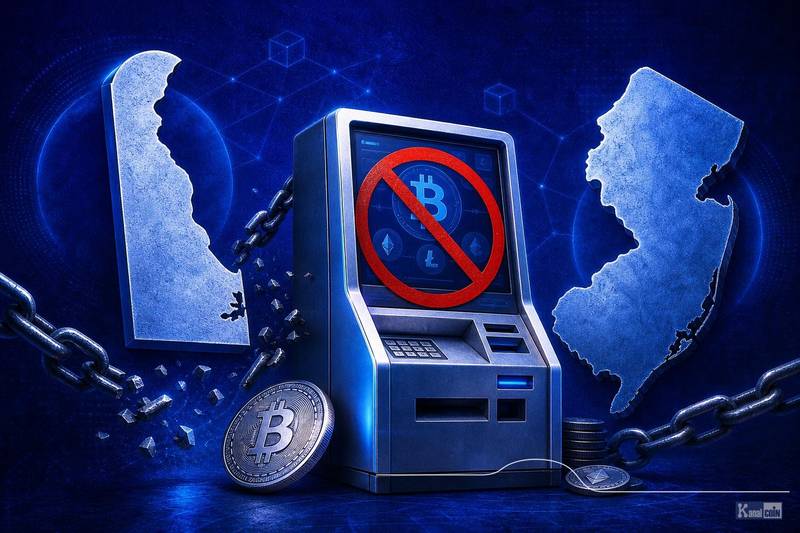
Delaware and New Jersey are both moving to ban cryptocurrency ATMs, with legislators in each state advancing bills aimed at eliminating unregulated crypto kiosks from their jurisdictions.
The parallel actions mark a notable regulatory moment, as two northeastern states target the same sector within days of each other. The bills focus on machines that allow users to buy or sell digital currencies like Bitcoin using cash or debit cards.
Delaware targets unregulated crypto kiosks
On June 9, the Delaware House Economic Committee released a bill to eliminate unregulated cryptocurrency kiosks operating in the state. The legislation focuses specifically on machines that lack adequate regulatory oversight.
Crypto ATMs have drawn scrutiny from consumer protection advocates and law enforcement agencies concerned about their use in fraud schemes. Delaware’s bill signals that state legislators view the current lack of regulation as a consumer risk worth addressing through outright prohibition.
New Jersey advances its own prohibition
New Jersey legislators have introduced companion measures targeting crypto ATMs. Assembly Bill 3244 is one of the bills working through the New Jersey legislature, while a companion Senate measure, S2141, addresses the same issue from the upper chamber.
The introduction of bills in both chambers signals legislative momentum in Trenton. New Jersey’s approach, like Delaware’s, centers on the lack of consistent regulation governing these machines.
How the crackdown could affect operators and users
If enacted, the bans would force crypto ATM operators to shut down machines across both states. Companies running networks of kiosks in convenience stores, gas stations, and shopping centers would lose access to these markets entirely.
For retail users who rely on physical crypto access points, the legislation would eliminate a direct on-ramp to digital assets. Users in affected areas would need to turn to online exchanges or peer-to-peer platforms instead, similar to how platform-level service suspensions force users to find alternative channels.
The compliance pressure extends beyond the two states. Operators with machines in neighboring jurisdictions may face increased scrutiny as regulators monitor whether similar legislative efforts emerge elsewhere.
Why this matters for U.S. crypto policy
Two separate states pursuing nearly identical legislation at the same time sends a clear signal to the crypto ATM industry. While these are state-level actions rather than federal policy, they could serve as a template for other legislatures weighing similar measures.
The moves come as the broader crypto industry navigates an evolving regulatory landscape, with developments ranging from protocol-level privacy initiatives to increasing state-level oversight. Delaware and New Jersey’s coordinated push suggests that unregulated physical crypto infrastructure is becoming a priority target for lawmakers.
Both bills remain subject to full legislative votes and gubernatorial approval before taking effect.
Disclaimer: This article is for informational purposes only and does not constitute financial or investment advice. Cryptocurrency and digital asset markets carry significant risk. Always do your own research before making decisions.