



SharpLink Gaming Ltd. reported first-quarter revenue exceeding $12 million while advancing an Ethereum-based yield strategy, combining traditional business performance with a crypto-native treasury approach.
TLDR: Key Takeaways
- SharpLink’s Q1 revenue topped $12 million, disclosed through the company’s public financial reporting.
- The company is actively pursuing an ETH yield strategy, positioning its treasury around Ethereum-based returns.
- The dual focus on revenue growth and crypto yield signals SharpLink’s evolving identity as a publicly traded company with significant digital asset exposure.
Q1 Revenue Clears the $12 Million Mark
The revenue figure, reported through the company’s investor relations disclosures, places SharpLink above $12 million for the quarter. For a company that has pivoted toward crypto-focused operations, clearing that threshold reinforces the viability of its current business mix.
SharpLink’s public filings with the U.S. Securities and Exchange Commission, accessible through the SEC’s EDGAR system, provide the regulatory paper trail behind the company’s financial disclosures. The company trades publicly and is subject to standard quarterly reporting requirements.
The company had previously disclosed a substantial ETH treasury position. As covered in a related report on SharpLink’s Q1 2026 financial results and 872,984 ETH treasury, the scale of that holding underscores how central Ethereum has become to the company’s financial architecture.
Why SharpLink Is Pursuing an ETH Yield Strategy
Alongside the revenue result, SharpLink has signaled its pursuit of an Ethereum yield strategy. In practical terms, this means the company is deploying ETH holdings to generate returns, likely through staking, lending, or other DeFi mechanisms available on the Ethereum network.
This approach places SharpLink among a small but growing group of publicly traded companies that treat digital assets not just as balance sheet holdings but as yield-generating instruments. The strategy carries inherent risks, including smart contract vulnerabilities, ETH price volatility, and regulatory uncertainty around corporate crypto treasury management.
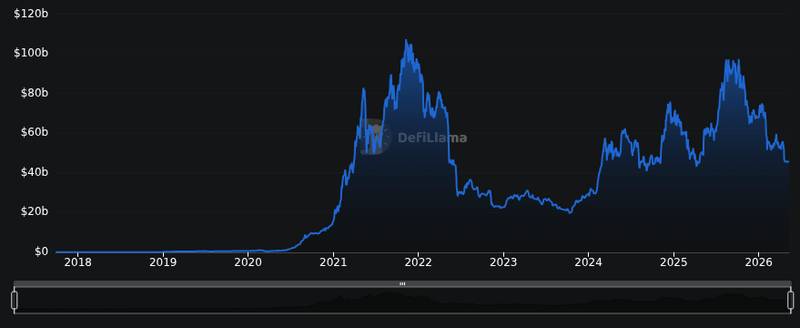
Ethereum’s broader DeFi ecosystem continues to serve as the primary infrastructure layer for institutional yield strategies. Total value locked across Ethereum-based protocols remains the largest of any chain, providing the liquidity depth that corporate treasury operations require.
Execution Risks for Corporate ETH Yield Programs
Corporate ETH yield strategies face distinct challenges compared to individual DeFi participation. Accounting treatment of staking rewards, tax obligations on yield income, and fiduciary duties to shareholders all add complexity.
SharpLink’s willingness to pursue this path despite those ambiguities suggests management confidence in the strategy’s risk-adjusted returns. Investors should monitor upcoming quarterly filings for disclosure on realized yields, impairment charges, and any changes in the ETH position’s size.
What the Revenue Growth and ETH Focus Signal Going Forward
The combination of quarterly revenue above $12 million and an active ETH yield program creates two parallel performance tracks. On the revenue side, the question is whether SharpLink can sustain or grow that figure in subsequent quarters.
On the crypto side, the key variables are ETH price performance and the actual yield generated from the company’s strategy. Developments in the broader regulatory landscape for corporate crypto adoption and institutional digital asset licensing could also influence how aggressively SharpLink scales its Ethereum exposure.
The next quarterly filing, expected through SharpLink’s investor relations page, will be the most telling indicator of whether the ETH yield strategy is delivering measurable returns.
Disclaimer: This article is for informational purposes only and does not constitute financial or investment advice. Cryptocurrency and digital asset markets carry significant risk. Always do your own research before making decisions.