



Circle announced CPN Managed Payments on April 8, 2026, a fully managed stablecoin settlement platform built for payment service providers, fintechs, banks, and global enterprises that want to use USDC-based rails without directly holding or managing digital assets.
The product sits within Circle’s existing Circle Payments Network and is designed to abstract blockchain complexity for institutional users. Circle handles USDC minting and burning, payment orchestration, compliance controls, and blockchain infrastructure, allowing partners to remain entirely in fiat.
Nikhil Chandhok, a Circle executive, framed the product as a simplification layer for institutions scaling stablecoin payments.
“With CPN Managed Payments, we’re simplifying how institutions adopt and scale stablecoin payments.”
— Nikhil Chandhok, Circle (source)
What CPN Managed Payments covers
Circle’s launch materials list four core institutional use cases: cross-border USDC settlement, merchant acceptance of stablecoins, high-volume global payouts, and reduced foreign exchange costs and settlement friction. The infrastructure spans over 20 blockchains and domestic payment rails, with connectivity to fiat payout corridors worldwide.
The “managed” distinction matters. Traditional stablecoin integration requires institutions to custody digital assets, operate wallet infrastructure, and navigate blockchain-specific compliance. CPN Managed Payments removes that requirement, letting institutions plug into stablecoin settlement while Circle assumes operational responsibility for the digital asset layer.
Circle operates under existing regulatory licenses, including authorization as a money transmitter and for virtual currency business activity by the New York State Department of Financial Services. This licensing structure is what allows institutions to use the platform without obtaining their own digital asset licenses.
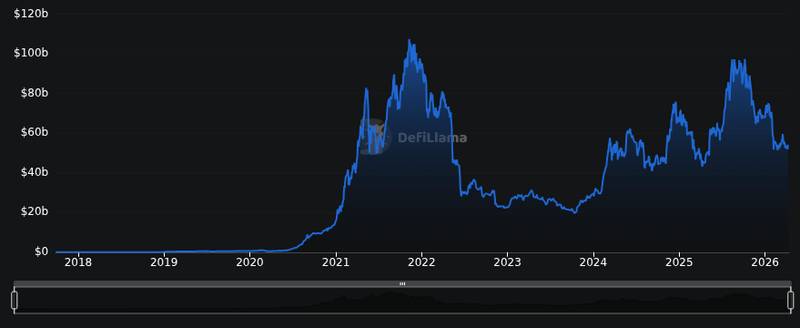
USDC itself carries a market cap of roughly $78.6 billion, ranking sixth among all cryptocurrencies. Circle’s press release noted that USDC has processed over $70 trillion in cumulative onchain settlement, with Q4 2025 alone nearing $12 trillion in onchain transaction volume.
Why managed settlement infrastructure matters now
Institutional stablecoin adoption has historically been limited by operational complexity. Banks and PSPs that process billions in fiat payments daily have no native capability to manage blockchain wallets, handle gas fees, or monitor multi-chain transactions. CPN Managed Payments targets that gap directly.
PYMNTS independently confirmed that the new offering lets banks, payment service providers, fintechs, and global enterprises use regulated digital dollars without directly managing digital assets. The launch also named institutional participants including Veem, with supporting statements from Thunes and Worldline.
The timing coincides with a broader crypto market environment marked by caution. The Fear & Greed Index sits at 12, deep in “Extreme Fear” territory, even as USDC holds its dollar peg at $0.9997. Infrastructure launches like this tend to be less sensitive to market sentiment than token-driven products, since the value proposition is operational efficiency rather than speculative exposure. Still, as recent geopolitical and rate-driven pressure on crypto markets has shown, institutional appetite for new crypto products can shift quickly.
Cross-border payments remain one of the clearest use cases for stablecoin settlement. Traditional correspondent banking involves multiple intermediaries, multi-day settlement windows, and FX conversion fees that can exceed 3-5% on certain corridors. A managed USDC settlement layer could compress that to near-instant finality at a fraction of the cost, provided the receiving end has fiat off-ramp coverage.
Signals to watch after the launch
The announcement establishes the product but leaves key adoption metrics unconfirmed. Transaction volumes routed through CPN Managed Payments, the number of institutional partners onboarded, and geographic corridor coverage will be the first indicators of whether this platform gains traction beyond the launch press cycle.
Competitive context matters here. Ripple, Stellar, and a growing number of bank-consortium blockchain projects target the same cross-border institutional settlement space. Circle’s advantage is USDC’s existing liquidity and its regulatory licensing, but execution on partner integration and corridor expansion will determine whether CPN Managed Payments captures meaningful market share.
The broader stablecoin regulatory environment also plays a role. Ongoing legislative activity in the U.S. around stablecoin frameworks, combined with evolving regulatory approaches in other jurisdictions, could either accelerate or constrain institutional adoption of products like this. Circle’s existing NYDFS licensing provides a foundation, but federal stablecoin legislation could reshape the competitive landscape.
For institutions watching crypto market sentiment indicators before committing to new infrastructure, the current Extreme Fear reading of 12 may actually create a quieter environment for operational integration, removed from the hype cycles that complicate enterprise decision-making.
Circle has not disclosed pricing for CPN Managed Payments or provided a public timeline for partner onboarding milestones. Those details will likely surface as early adopters begin processing live settlement volumes through the platform.
Disclaimer: This article is for informational purposes only and does not constitute financial or investment advice. Cryptocurrency and digital asset markets carry significant risk. Always do your own research before making decisions.