



Bitcoin pulled back below $71,000 this week as escalating Middle East tensions and fading expectations for Federal Reserve rate cuts pushed crypto sentiment to its lowest level in months, with the Fear and Greed Index dropping to Extreme Fear territory.
The largest cryptocurrency by market cap was trading at $70,762 at press time, down roughly 1.15% over the past 24 hours. Bitcoin’s market capitalization stood at approximately $1.41 trillion, with 24-hour trading volume near $28.6 billion.
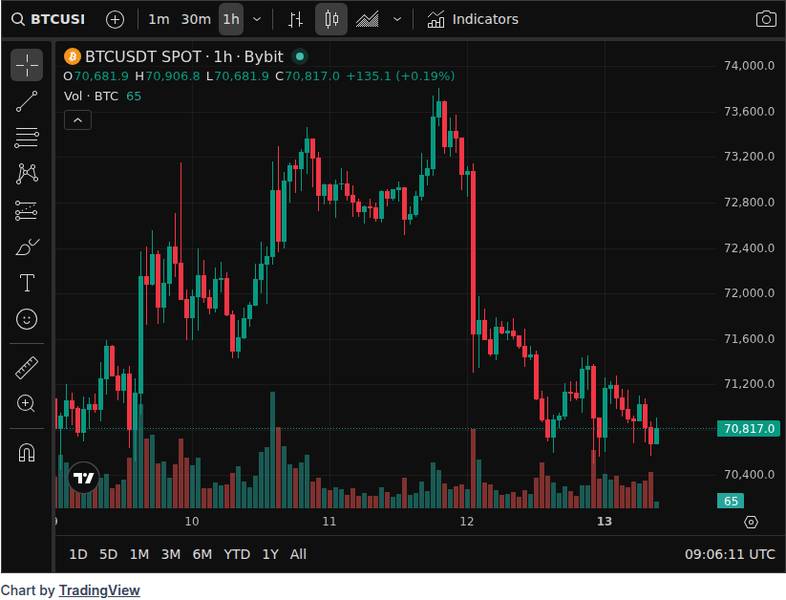
The pullback follows a brief push toward $70,000 earlier this month. Moneycontrol reported that Bitcoin reversed after nearing that level as rising US-Iran tensions and oil prices above $110 per barrel increased inflation pressure.
Why Bitcoin Is Retreating Now
The immediate catalyst is a combination of geopolitical risk and shifting monetary policy expectations. Saxo Bank wrote on April 7 that the ongoing Middle East crisis was stoking inflation fears, lifting bond yields, and lowering the chance of rate cuts, with Bitcoin trading around $68,700 at that time.
The macro picture has deteriorated further since then. AP reported on March 24 that war-driven gas prices had pushed longer-term interest rates higher and that Wall Street investors no longer foresaw any Fed rate reductions this year, with the odds of a rate hike by October rising to nearly 25%.
CME FedWatch data confirmed the hawkish repricing. Cointelegraph reported on April 10 that the tool showed a 0% chance of an April FOMC rate cut and 98.4% odds of rates staying on hold.
For Bitcoin, which rallied through much of late 2025 partly on expectations of easier monetary policy, the evaporation of rate-cut hopes removes a key tailwind. Higher rates increase the opportunity cost of holding non-yielding assets, and crypto has struggled to decouple from that dynamic. Traders watching the Fear and Greed Index for Bitcoin will note the gauge has plunged to 12, a reading classified as Extreme Fear.
How Macro Pressure Is Spilling Into the Wider Crypto Market
Bitcoin’s weakness is setting the tone across digital assets. When BTC trades with a cautious, risk-off posture, altcoins typically follow with amplified losses as traders reduce exposure to more volatile tokens first.
The current environment echoes the kind of macro-driven selling that has historically triggered broader liquidation events in derivatives markets. With sentiment at extreme lows and funding conditions tightening, leveraged positions face heightened risk of forced unwinds.
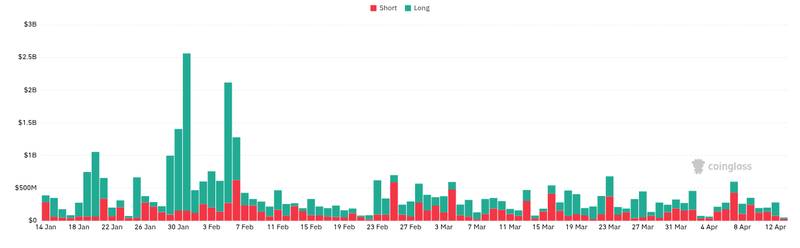
Institutional caution is also visible. Digital assets have been trading with a defensive tone rather than behaving as strong risk-on instruments, as Saxo Bank noted, suggesting that large allocators are not yet stepping in to buy the dip.
The broader regulatory environment adds another layer of uncertainty. Recent moves by the SEC and CFTC to fast-track crypto oversight through interpretive rules could further influence how institutional capital approaches the market in coming weeks.
What Traders Are Watching Next
The April FOMC meeting is the nearest scheduled macro catalyst, though markets have already priced in a near-certain hold. Any shift in the Fed’s forward guidance or dot plot would carry outsized weight given current positioning.
Geopolitical headlines from the Middle East remain the dominant wildcard. Further escalation could push oil prices higher, reinforcing the inflation narrative that has eroded rate-cut expectations. A de-escalation, by contrast, could relieve some of the pressure on risk assets including crypto.
On-chain and sentiment indicators suggest the market is stretched to the downside. An Extreme Fear reading of 12 has historically preceded periods of stabilization, though not always immediately. Events like the Bank of Korea’s crypto circuit breaker activation after a recent exchange error illustrate how fragile market infrastructure can be during periods of elevated stress.
For now, Bitcoin sits in a holding pattern between macro headwinds and a sentiment floor that looks increasingly washed out. The next directional move likely depends on whether inflation data or geopolitical developments shift the rate outlook before the May FOMC meeting.
Disclaimer: This article is for informational purposes only and does not constitute financial or investment advice. Cryptocurrency and digital asset markets carry significant risk. Always do your own research before making decisions.