



The SEC and CFTC have jointly issued an interpretive release clarifying how federal securities and commodities laws apply to crypto assets, bypassing the traditional notice-and-comment rulemaking process to deliver regulatory guidance that took effect on March 23, 2026.
The action, published in the Federal Register under the label “Final rule; interpretation; guidance,” represents what law firm Sidley Austin called the SEC’s most comprehensive crypto guidance to date. It arrived while broader market-structure legislation remained stalled in the Senate Banking Committee.
What the Joint Interpretation Actually Does
TLDR KEYPOINTS
- The SEC and CFTC published a joint interpretive release on crypto asset classification, effective March 23, 2026.
- The release creates a five-part token taxonomy and addresses airdrops, staking, mining, and wrapping.
- The interpretation supersedes prior staff statements but is not binding on federal courts.
On March 17, 2026, the SEC announced it had issued an interpretation clarifying how federal securities laws apply to certain crypto assets and related transactions. The CFTC joined the release so that the Commodity Exchange Act would be administered consistently with the SEC’s framework.
The CFTC’s companion press release confirmed the interpretation creates a five-part token taxonomy covering digital commodities, digital collectibles, digital tools, stablecoins, and digital securities.
Beyond classification, the interpretation specifically addresses airdrops, protocol mining, protocol staking, and wrapping of non-security crypto assets. These are activities that had operated in a regulatory gray zone, with market participants uncertain whether they triggered securities registration requirements.
An interpretive rule differs from formal rulemaking in a critical way. Rather than creating new legal obligations through the Administrative Procedure Act’s notice-and-comment process, an interpretive rule explains how agencies view existing law as applying to specific facts. It carries the weight of the commission’s position but, as Sidley noted, it is not binding on federal courts.
The SEC’s interpretation stated that most crypto assets are not themselves securities. This distinction matters for exchanges evaluating token listing decisions, as it potentially narrows the universe of assets requiring securities registration.
Why Agencies Chose Speed Over Formal Rulemaking
Traditional notice-and-comment rulemaking at federal agencies can take years. The process requires publishing a proposed rule, soliciting public comments over a 60- to 90-day window, reviewing submissions, and issuing a final rule with responses to major comments. For crypto markets that evolve in weeks, this timeline has proven impractical.
The agencies appear to have chosen the interpretive path for several reasons. Congress has not passed comprehensive crypto market-structure legislation, leaving the SEC and CFTC to work within existing statutory authority. The interpretation allows both agencies to coordinate their positions without waiting for a bill that remains stuck in committee.
The release does accept public comments under File No. S7-2026-09, suggesting the agencies want industry feedback even though interpretive rules do not legally require it. This hybrid approach signals some openness to revision.
Critics of this approach argue that interpretive guidance creates uncertainty precisely because it lacks the force of formal rulemaking. Firms may comply with the interpretation only to find that a court later disagrees with the agency’s reading of the statute. For projects navigating volatile market conditions, regulatory ambiguity adds another layer of risk.
The interpretation also supersedes prior staff statements on covered topics. This means earlier SEC staff guidance, including no-action letters and frameworks that market participants relied on, may no longer reflect the commission’s official position.
What US Crypto Firms and Investors Should Watch Next
The five-part taxonomy will likely force compliance teams to reclassify assets in their portfolios. Tokens previously treated as unregulated may now fall clearly into the “digital securities” category, while others may benefit from the “digital commodities” designation that places them under CFTC oversight.
Firms should monitor how the SEC and CFTC handle enforcement actions filed before the interpretation’s effective date. Cases brought under older staff guidance could face challenges if defendants argue the new framework supports their position. The treatment of decentralized exchange operations under the new taxonomy is another open question.
The staking and airdrop guidance deserves particular attention. Protocol teams that distribute tokens through airdrops or reward stakers now have a clearer, though still non-binding, framework for evaluating whether those activities implicate securities laws.
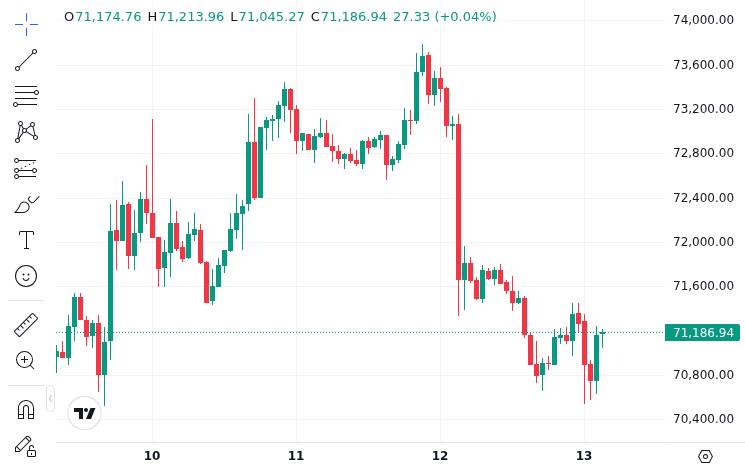
Bitcoin traded at $71,182 at the time of the interpretation’s release, with the crypto Fear & Greed Index sitting at 12, indicating extreme fear. The risk-off backdrop suggests the market has not yet priced in meaningful regulatory relief from the joint framework.
Investors should watch for whether the Senate Banking Committee uses the joint interpretation as a reason to delay or accelerate its own legislative efforts. If lawmakers view the agencies’ action as sufficient interim coverage, the broader market-structure bill could lose momentum further.
The comment period under File No. S7-2026-09 will also reveal industry sentiment. Large exchanges, DeFi protocols, and trade associations are expected to submit detailed responses that could shape future revisions to the framework.
Disclaimer: This article is for informational purposes only and does not constitute financial or investment advice. Cryptocurrency and digital asset markets carry significant risk. Always do your own research before making decisions.