


Betsson shares plunged nearly 20% on April 9 after the Swedish gaming company disclosed that first-quarter operating income fell 47% year over year, dragged down by a sharp decline in B2B license revenue that caught investors off guard.
The Nasdaq Stockholm-listed stock dropped 18.5% intraday after Betsson published preliminary Q1 2026 figures under EU Market Abuse Regulation rules. The selloff reflected concern that the B2B segment weakness could persist beyond a single quarter.
Why Betsson Shares Dropped Nearly 20%
Betsson reported preliminary Q1 2026 revenue of EUR 285 million, down from EUR 294 million a year earlier. The modest top-line decline masked far steeper damage at the profit level.
Operating income (EBIT) came in at EUR 34 million, compared with EUR 64 million in Q1 2025. That 47% collapse in profitability was the figure that triggered the immediate market reaction, as analysts had not anticipated a miss of that magnitude.
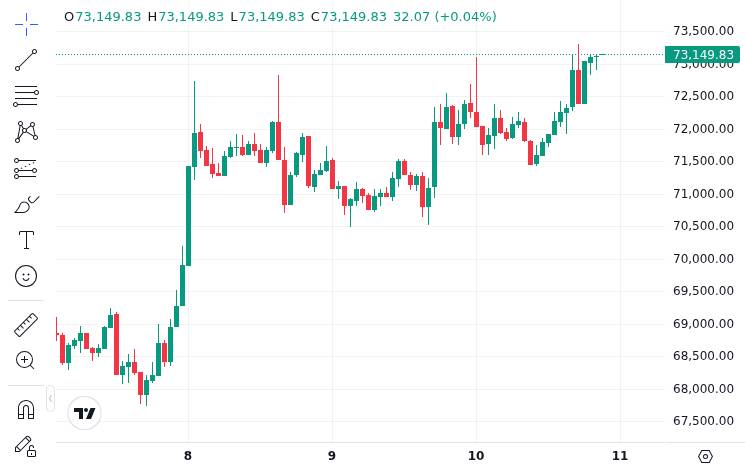
The severity of the stock drop suggests investors viewed the earnings shortfall as structural rather than seasonal. For context, the broader crypto market showed no parallel weakness on the same day, with Bitcoin trading at $73,060 and posting a modest 1.6% gain over the prior 24 hours.
The Fear and Greed Index sat at 16, classified as Extreme Fear, indicating that crypto sentiment was already fragile. Still, Betsson’s selloff was clearly company-specific rather than part of a broader risk-off move, a distinction that matters for investors watching crypto treasury firms and traditional gaming equities side by side.
Q1 Profit Fell 47% as B2B Revenue Weakened
The primary driver was B2B license revenue, which fell to EUR 51 million from EUR 90 million in Q1 2025. Betsson attributed the decline mainly to lower revenue from one customer, though it did not name the client.
A single-customer concentration risk of that scale turning into a realized loss explains why the market reaction was so sharp. Losing roughly EUR 39 million in quarterly B2B revenue from one relationship represents a structural gap that cannot be filled quickly.
Meanwhile, Betsson’s shift toward locally regulated markets continued. Revenue from regulated jurisdictions rose to 73% of total revenue, up from 59% a year earlier. That shift came at a cost: gaming taxes climbed to EUR 53 million from EUR 45 million, further compressing margins.
The combination of lower B2B revenue and higher tax burden created a margin squeeze that turned a 3% top-line decline into a 47% profit drop. For companies navigating similar regulatory transitions, including crypto ETF issuers adapting to new market structures, the Betsson case illustrates how quickly compliance costs can erode profitability.
What the Results Mean for Betsson in the Near Term
Investor focus will center on whether the B2B revenue shortfall stabilizes in Q2 or worsens further. If the unnamed customer’s reduced activity is permanent, Betsson faces a structural hole in its highest-margin segment.
The regulated-market mix shift is a long-term positive for sustainability but a near-term headwind for margins. Gaming taxes rising from EUR 45 million to EUR 53 million while revenue declined means the effective tax rate on operations increased meaningfully.
Full Q1 results, expected in the coming weeks, will provide more detail on whether B2C operations partially offset the B2B weakness. Betsson’s management will also face questions about customer diversification within the B2B segment, a vulnerability this quarter exposed clearly.
The 18.5% stock decline priced in significant pessimism, but recovery depends on concrete evidence that B2B revenue has bottomed. Until then, the Q1 figures set a low baseline against which future quarters will be measured, in a market environment where even affiliate-driven revenue models face scrutiny over concentration risk.
Disclaimer: This article is for informational purposes only and does not constitute financial or investment advice. Cryptocurrency and digital asset markets carry significant risk. Always do your own research before making decisions.