



VanEck, the $200 billion asset manager, has argued that Bitcoin adoption continues to strengthen even amid geopolitical conflict, pointing to sovereign-level interest as evidence that the digital asset’s macro narrative is advancing beyond retail and corporate buyers.
The firm’s digital assets team wrote in a March 17, 2025 research note that despite Bitcoin’s monthly price correction, its broader adoption story “continues to strengthen” as governments, institutions, and emerging markets make strategic moves into digital assets.
According to an unconfirmed report circulating on social media, a VanEck representative stated that the firm is “seeing that at the sovereign level,” though the full context of that remark and its exact wording could not be independently verified from published sources. The truncated quote has drawn attention because it implies nation-state interest in Bitcoin, a claim that carries significant weight when attributed to a major asset manager.
Sovereign and institutional moves back VanEck’s framing
The sovereign-level angle gained concrete support on March 6, 2025, when the White House signed an executive order establishing a Strategic Bitcoin Reserve. The order stated that government-held BTC placed into the reserve shall not be sold, treating Bitcoin as a long-term reserve asset rather than seized property awaiting liquidation.
The same executive order directed the Treasury and Commerce departments to develop budget-neutral strategies for acquiring additional Bitcoin, a directive that moved U.S. policy from passive holding to active accumulation.
VanEck’s research note cited this policy shift as part of a broader pattern. In Europe, Deutsche Boerse announced on March 11, 2025 that its Clearstream subsidiary would launch institutional crypto custody and settlement for Bitcoin and Ether starting in April 2025. The move opened a regulated gateway for European institutional capital that had previously lacked compliant infrastructure.
Days earlier, BBVA confirmed on March 10, 2025 that Spain’s CNMV had approved the bank to offer bitcoin and ether trading and custody services. BBVA became one of the first major European banks to receive such approval under the evolving regulatory framework, a development that echoes Schwab’s plans to launch spot Bitcoin and Ether trading in the U.S.
Market fear contrasts with institutional expansion
Bitcoin traded at $66,871 at press time, with a market capitalization of $1.338 trillion. The price was roughly flat over 24 hours, down 0.13%.
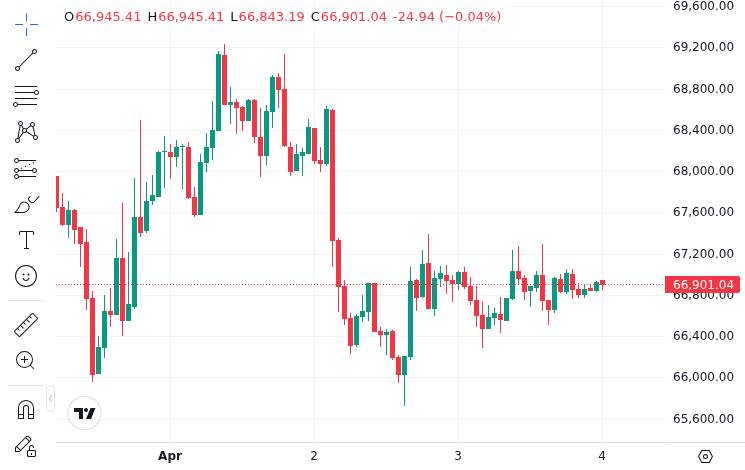
The Fear & Greed Index sat at 9, deep in “Extreme Fear” territory. That reading represents a stark disconnect: institutional and sovereign actors were expanding Bitcoin infrastructure at the same time retail sentiment collapsed.
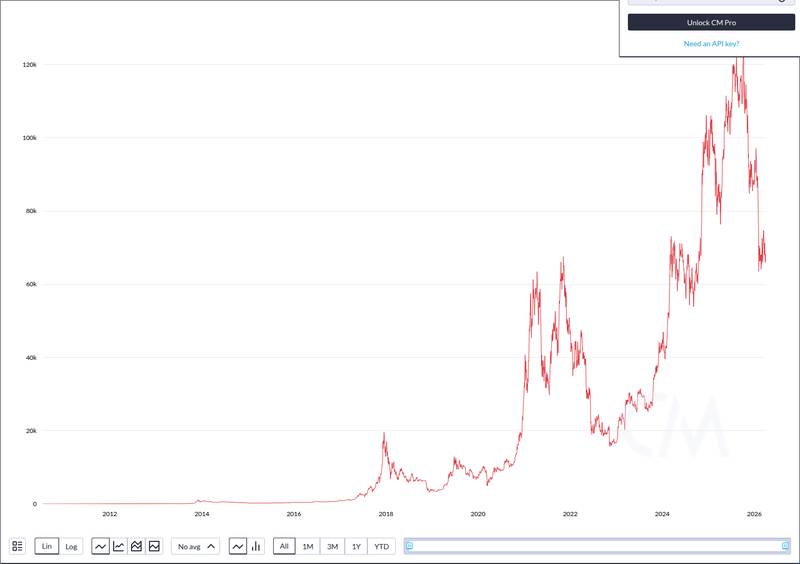
Independent reporting supports the idea that institutional adoption still has room to run. Reuters reported in July 2025 that public companies worldwide held just over 859,000 BTC, roughly 4% of the eventual 21 million supply, describing institutional demand as still nascent.
What the adoption claim means during geopolitical stress
VanEck’s framing positions Bitcoin not as a speculative asset retreating under pressure, but as infrastructure being built out precisely when traditional systems face strain. The combination of a U.S. strategic reserve, European institutional custody, and regulated bank trading in Spain represents adoption across three distinct channels: sovereign, market infrastructure, and retail banking.
The regulatory backdrop shifted materially in early 2025. MiCA-era implementation in Europe advanced alongside the White House reserve order, creating parallel regulatory frameworks on both sides of the Atlantic. That simultaneous movement is what VanEck’s research highlighted as evidence that adoption was structural rather than cyclical.
The contrast with current market sentiment is notable. Extreme Fear readings have historically coincided with periods where long-term positioning diverges from short-term price action, a dynamic visible in broader macro conditions including the latest U.S. jobs data showing labor market resilience alongside risk-asset weakness.
Security risks remain a concern across the ecosystem. The recent Drift Protocol exploit, which resulted in $285 million in losses, underscores that institutional infrastructure must be paired with robust security frameworks for adoption to be durable.
VanEck’s core argument, that adoption is advancing at the sovereign and institutional level despite wartime conditions, rests on verifiable policy actions and corporate announcements rather than price performance. Whether that structural expansion translates into sustained demand will depend on execution: Clearstream’s April 2025 launch, BBVA’s rollout in Spain, and the U.S. government’s budget-neutral Bitcoin acquisition strategy each represent concrete milestones to watch.
Disclaimer: This article is for informational purposes only and does not constitute financial or investment advice. Cryptocurrency and digital asset markets carry significant risk. Always do your own research before making decisions.