



Ten executives and employees tied to four cryptocurrency market-making firms, Gotbit, Vortex, Antier and Contrarian, are at the center of a new U.S. criminal case that puts a core crypto service under scrutiny just as Southeast Asian exchanges and token issuers keep leaning on outside liquidity providers. The case matters because market makers help shape quoted liquidity, visible trading activity and the sense of trust retail users see on screen.
In a March 30, 2026 announcement, the U.S. Attorney’s Office for the Northern District of California said federal grand juries had indicted 10 executives and employees in three separate indictments tied to Gotbit, Vortex, Antier and Contrarian. The official DOJ release uses Contrarian as the fourth firm’s name, not the “Contraria” spelling seen in some headline fragments.
A crypto market maker is usually the firm posting bids and offers so a token looks liquid enough to trade without large price gaps. When prosecutors say the case reaches staff and executives across four firms, the significance is that the scrutiny lands on a service layer many exchanges and token projects outsource rather than on a single promoter or trader.
What the indictments add beyond the headline
The DOJ said the case grew out of an FBI and IRS-CI undercover operation targeting wash trading in crypto, and said the FBI created several cryptocurrency tokens as part of the probe. For exchanges in Singapore, Jakarta and Manila, that means investigators were not only reviewing past trades but actively testing whether service providers would manufacture activity even in investigator-controlled assets.
Prosecutors also said three defendants, including two chief executive officers, were arrested and extradited from Singapore, while authorities had seized more than $1 million in cryptocurrency to date. That combination makes the story more than a U.S. courtroom filing for Southeast Asian readers because it reaches one of the region’s main crypto hubs and shows real asset recovery already underway.
The DOJ also said each wire-fraud count carries a maximum penalty of 20 years in prison and a $250,000 fine if convicted. Because the case already involves three indictments, Singapore extraditions and seized crypto, compliance teams already investing in tools like Chainalysis Deploys AI Agents to Counter Criminal Use of AI in Crypto are likely to read this as another sign that market surveillance is moving from optional to operationally necessary.
Why the Gotbit history raises the stakes
This is not Gotbit’s first collision with U.S. prosecutors. In a separate March 21, 2025 DOJ release, Gotbit and founder Aleksei Andriunin pleaded guilty, the firm agreed to cease operations, and prosecutors said it would forfeit about $23 million in seized cryptocurrency.
The new California announcement also said Antoine Tsao pleaded guilty on June 2, 2025 and Nemanja Popov pleaded guilty and was sentenced on February 10, 2026 before Judge Araceli Martinez-Olguin in related Gotbit conduct. Those 2025 and 2026 case milestones make the latest action look less like a sudden sweep and more like a rolling crackdown built from earlier pleas, forfeiture and follow-on indictments.
For market participants that contract out liquidity, that history matters because it changes the risk calculation around due diligence. The combination of a prior guilty plea and shutdown agreement with the new three-indictment case suggests exchanges and token issuers may need to examine whether “liquidity support” promises were backed by lawful trading practices or by manufactured volume.
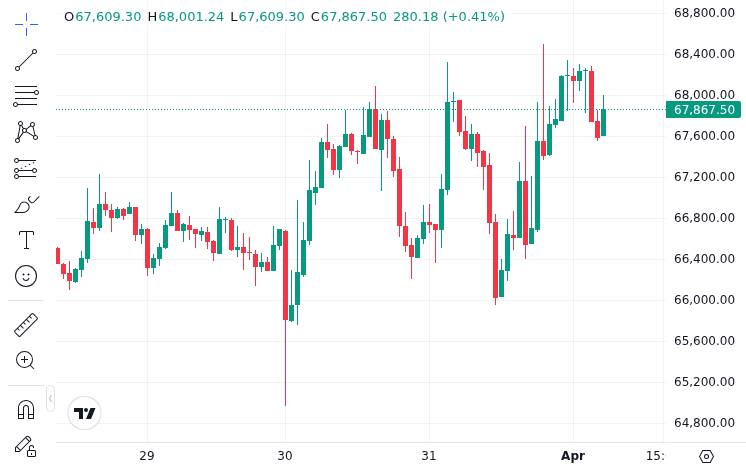
As the legal story developed, Bitcoin was trading around $67,918, a reminder that enforcement headlines are hitting a still-large market rather than a marginal corner of crypto. That price backdrop helps explain why manipulation cases involving service providers can matter well beyond the firms named by prosecutors.
What exchanges and token projects should watch next
The next concrete signals will be company statements, court filings and any exchange or token-project disclosures about their ties to the named firms. Because the DOJ says authorities already have more than $1 million seized and three defendants extradited from Singapore, the case has moved well beyond a preliminary inquiry.
Readers should also watch whether token issuers distance themselves from arrangements that blur the line between quoted liquidity and manufactured trading activity. That distinction sits at the center of an undercover case where the DOJ said the FBI created several tokens as part of the wash-trading probe.
For Southeast Asian operators, the stronger read-across is that outsourcing does not remove accountability. The fact pattern here, a case spanning four firms, Singapore extraditions and an undercover token operation, points to the same hidden-risk problem Kanalcoin highlighted in North Korean Hackers Hit 3CX in Suspected Crypto Plot, where a service layer looked routine until it became the center of the threat.
The wider enforcement backdrop also matters for investor confidence because users rarely see the market-making contracts behind the order book they trade against. With this case already involving asset seizures and cross-border arrests, the message to regional platforms is that integrity controls now sit in the same risk bucket as fraud prevention measures tracked in Kanalcoin’s coverage of FBI Flags Criminal Network Exploiting Crypto ATMs With Fake Law Enforcement Threats.
Disclaimer: This article is for informational purposes only and does not constitute financial or investment advice. Cryptocurrency and digital asset markets carry significant risk. Always do your own research before making decisions.