


<!DOCTYPE html>
ETF convergence is becoming a mainstream market theme, and the latest signal came from a CNBC panel that framed equities, fixed income, crypto and commodities as part of the same product conversation. CNBC’s March 17 video page says the discussion featured Anna Paglia of State Street Investment Management, David Mann of Franklin Templeton, Paul Baiocchi of SS&C Alps Advisors, and Bill Birmingham of Osprey Funds at Exchange 2026 in Las Vegas.
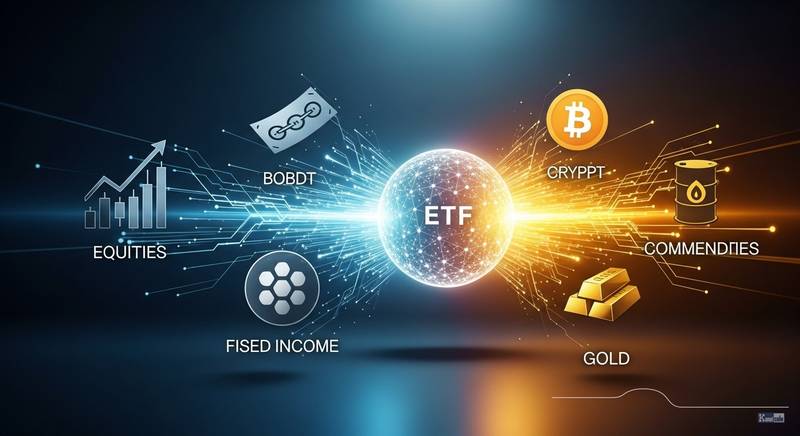
How Equities, Fixed Income, Crypto and Commodities Are Coming Together in the ETF Space
That framing matters because it shows how crypto is increasingly being discussed inside the same portfolio toolkit as stocks, bonds and inflation hedges, rather than as a separate corner of the market. The evidence in hand supports the existence of that industry discussion, but not every on-air argument behind it, so this article treats the segment as conference commentary on ETF direction rather than proof of a quantified industry shift. For related coverage, see BlackRock Rejects Exotic Crypto ETFs Amid ETHB Launch.
Why ETF Issuers Are Blending Equities, Bonds, Crypto and Commodities Into One Story
In ETF language, “coming together” does not necessarily mean one fund holds all four asset classes at once. It more often means issuers, allocators and advisers are discussing these exposures through a single portfolio lens, where growth assets, income assets, alternative hedges and digital assets are evaluated together instead of in separate product silos. For related coverage, see SEC and CFTC Seek Clearer Crypto Oversight in New March 2026 MOU.
Traditional ETFs were usually easy to sort: an equity index fund, a Treasury fund, a gold fund, or a sector product with a narrow objective. The CNBC segment title suggests the industry is now emphasizing cross-asset storytelling, where portfolio construction starts with macro questions such as rates, inflation, liquidity and risk appetite, then uses ETFs as the wrapper for each piece of that view. The verified brief also states that Exchange 2026 was scheduled for March 15 to March 18 at the Virgin Hotel in Las Vegas, matching the event setting identified in the CNBC page metadata. For related coverage, see Token2049 Dubai Canceled: Singapore Emerges as 2026 Crypto Hub.
Crypto’s role in that mix is especially important for Kanalcoin readers. When digital assets are presented next to equities, fixed income and commodities, the message is not just about novelty. It suggests crypto is being assessed as one more variable in asset allocation discussions, even if it remains more volatile and policy-sensitive than the older segments it is being compared with.
How Cross-Asset ETF Design Changes Portfolio Construction
The practical shift for investors is that diversification is being explained in plainer, more integrated terms. Equities may still drive growth, bonds may still help with income or duration exposure, and commodities may still be used as a hedge against inflation shocks. Crypto complicates the picture because it can behave like a high-beta risk asset in one period and a differentiated store-of-value trade in another.
The ETF wrapper makes these comparisons easier to package and rebalance because each sleeve can be accessed through listed instruments instead of a patchwork of separate accounts or custody arrangements. That convenience does not remove risk. It only lowers the operational friction around moving between exposures, which is why the “coming together” theme is better understood as a portfolio design trend than as proof that the assets now move in lockstep.
For Southeast Asian market participants, this matters because portfolio narratives built in the US often shape product distribution and investor education across the region a few steps later. If global issuers and advisers keep discussing crypto in the same sentence as bonds, equities and commodities, local exchanges, wealth platforms and regulated intermediaries in markets such as Singapore, Indonesia and the Philippines may face stronger demand for clearer digital-asset allocation frameworks, even where direct ETF access still varies by jurisdiction.
Risk, liquidity and volatility remain the key constraints. Crypto can raise the upside of a diversified basket, but it can also change the drawdown profile very quickly. Bonds can reduce portfolio stress in some macro regimes, but that relationship weakens when inflation and rates move abruptly. Commodities can hedge specific shocks, though they bring their own roll and timing risks. ETF investors still need to understand the behavior of the underlying assets, not just the convenience of the wrapper.
Exchange president Todd Rosenbluth described the event in a separate conference article as “the most productive three business days of the year,” underscoring why a panel held there can shape how issuers frame the next phase of ETF competition. Source.
What This Means for the Next Wave of ETF Innovation
The most defensible takeaway is that ETF innovation is increasingly about packaging and narrative discipline. Issuers are trying to explain how different exposures fit together under one investment thesis, and crypto is now part of that conversation often enough to appear beside stocks, bonds and commodities in mainstream financial media. CNBC’s event coverage supports that broad shift in framing, even if the available proof set does not quantify it yet.
The next wave of products could extend that logic through model portfolios, multi-asset sleeves, or more explicit pairings between traditional exposures and digital-asset strategies. Still, the regulatory backdrop matters. The current brief does not establish any new SEC action, filing or rule change, so investors should view this as an industry direction signal, not as confirmation that a new class of products has already cleared every approval hurdle.
For crypto adoption, the significance is cultural as much as structural. Each time digital assets are discussed inside a broader ETF framework, they move further into mainstream portfolio language. For Southeast Asia, where investor education, product access and regulatory treatment still differ widely across markets, that shift could matter as much as any single product launch because it changes how crypto is introduced to the next wave of allocators.
Disclaimer: This article is for informational purposes only and does not constitute investment advice. It is based on verified conference coverage and event context available in the supplied research brief, and it avoids unsupported claims where transcript or market data evidence was not provided.
Disclaimer: This article is for informational purposes only and does not constitute financial or investment advice. Cryptocurrency and digital asset markets carry significant risk. Always do your own research before making decisions.