


The Trump administration has issued a 30-day waiver on Russian oil sanctions to cool energy prices spiking from the ongoing US-Iran war, as Thailand, the Philippines, and Vietnam introduce emergency fuel measures and Bitcoin holds above $71,000, outperforming equities and gold since hostilities began February 28.
TLDR Key Points
- Trump’s 30-day Russia oil sanctions waiver, announced by Treasury Secretary Bessent, expires April 11 and primarily benefits Indian refiners purchasing Russian crude already at sea.
- Hormuz disruption has pushed Brent crude above $100/barrel, triggering fuel rationing in Thailand, a four-day government work week in the Philippines, and work-from-home orders in Vietnam.
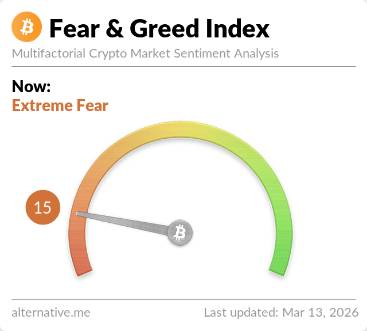
- Bitcoin is up 7% since the Iran war began, outperforming the S&P 500 (-1%), gold (-3%), and silver (-9%), though the Fear & Greed Index sits at 15 (Extreme Fear).
Treasury Secretary Scott Bessent described the sanctions relief as “narrowly tailored,” stating it “will not provide significant financial benefit to the Russian government.” The waiver covers Russian oil already en route to market, primarily benefiting India’s Reliance Industries and Indian Oil Corp, which have been the largest buyers of discounted Russian crude since 2022. The measure expires April 11, 2026.
President Trump confirmed the policy intent at a press conference, saying the administration would “waive certain oil-related sanctions to reduce prices” while the Iran situation “straightens out.” The executive action bypassed the 30-day Congressional notification window required under CAATSA, drawing sharp criticism from Senate Democrats who noted reports that Russia was simultaneously assisting Iran in targeting US forces.
Southeast Asian Households Bear the Cost of the Hormuz Shutdown
The US-Israel military operation against Iran, which began February 28, severely disrupted traffic through the Strait of Hormuz, a chokepoint through which roughly 20 to 34% of global crude oil transits daily. For Southeast Asia’s net energy importers, the knock-on effects have been immediate. Thailand suspended overseas travel for civil servants and instructed workers to use stairs to conserve electricity. The Philippines introduced a temporary four-day work week for some government agencies. Vietnam urged employees to work from home to reduce fuel consumption.
The Philippines faces additional exposure through its seafarers: thousands of Filipino sailors remain stranded on vessels near the Strait, with the Department of Migrant Workers coordinating emergency interventions. Indonesia, Thailand, and Vietnam, which together import hundreds of millions of barrels of crude annually, face widening trade deficits as pump prices spike.
India sits at the direct center of the Russian oil waiver. As the world’s third-largest oil importer and already the largest buyer of sanctioned Russian crude, Indian refiners now have formal US cover to continue purchases. Singapore’s refining hub, which processes crude flows from both Russia and the Middle East, is watching closely as regional supply routes are reshuffled.
Bitcoin Holds While Crypto Fear Hits Extreme Levels
Bitcoin traded between $65,600 and $72,000 since the Iran war began on February 28, ending the period up approximately 7%. That compares favorably to the S&P 500 (-1%), gold (-3%), and silver (-9%) over the same window. For Southeast Asian investors watching local currencies face depreciation pressure from higher energy import costs, Bitcoin’s relative resilience is a notable data point.
The Fear & Greed Index stood at 15 as of March 13, registering Extreme Fear, as geopolitical risk keeps crypto market sentiment suppressed even while Bitcoin outperforms traditional assets.
On Hyperliquid, traders piled into oil futures: the platform’s crude oil contract logged $1.62 billion in 24-hour volume and set a record $1.2 billion in open interest, with $36.9 million in leveraged short positions liquidated during the oil price surge. Bitcoin funding rates have remained negative since early March, the longest such stretch since April 2025, signaling that leveraged long positions are being priced out of the market.
Mark Connors, a former Credit Suisse macro strategist, framed the dynamic plainly: “Liquidity drives bitcoin. If the war runs longer, that means more spending and more deficit spending. That’s constructive for bitcoin.” US federal debt has grown at an annualized rate of approximately 14% since mid-2025.
Crypto’s sanctions dimension adds another layer. Russia has reportedly settled portions of its oil trade with China and India using Bitcoin and USDT to sidestep the SWIFT-based financial system. With formal US sanctions relief on Russian oil purchases now in place, the urgency to route those trades through crypto rails may temporarily ease. Kanalcoin has previously tracked how state actors use crypto to evade sanctions, a pattern Chainalysis flagged as accelerating through the Iran conflict.
April 11 Is the Key Date for ASEAN Energy Markets
The 30-day waiver expires April 11. If the Iran conflict remains unresolved by that date, the Trump administration faces a choice: renew the waiver and extend Russian oil flows, or allow sanctions to snap back and risk another price spike. Brent crude climbed back above $100 as of March 12, suggesting the initial calming effect is already fading. Homayoun Falakshahi, Head of Crude Oil Analysis at Kpler, warned that oil “could reach new all-time highs in coming weeks if Strait of Hormuz remains closed.”
For Southeast Asian crypto markets, the April 11 expiry is the near-term variable to monitor. A renewed Hormuz disruption would amplify inflation pressure on regional currencies, which may accelerate crypto adoption as a store of value, but would likely deepen the risk-off sentiment already reflected in the Fear & Greed Index. The Fed’s shifting rate cut timeline adds further pressure on ASEAN central banks navigating imported inflation and currency weakness simultaneously.
Disclaimer: This article is for informational purposes only and does not constitute financial or investment advice. Cryptocurrency investments carry significant risk. Always conduct your own research before making any financial decisions.