


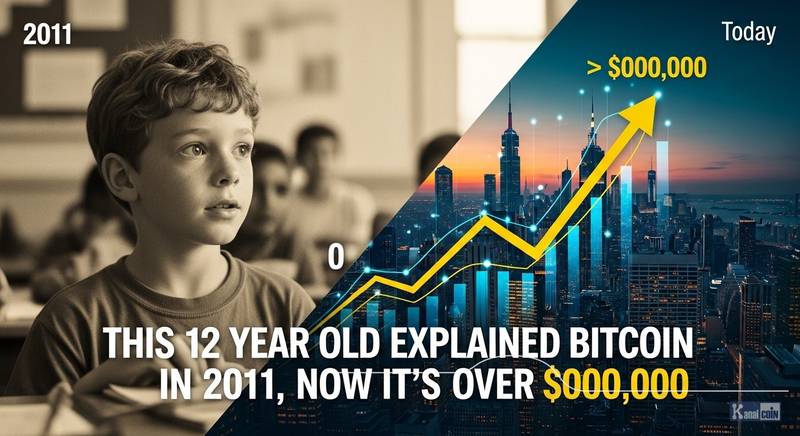
A YouTube video uploaded by a 12-year-old in May 2011, when Bitcoin was trading at roughly $8, resurfaced in early 2025 after sitting unnoticed for 13 years. Bitcoin now trades above $71,000, and the kid’s plain-English breakdown of how the network works has aged better than most professional analysis from that era.
A 12-Year-Old’s 2011 Bitcoin Explanation, Revisited
TLDR KEY POINTS
- Tom Lapsing, then 12, uploaded “BitCoins: What Are They?” on his TechPodUSA channel in May 2011 when BTC traded near $8
- The video went unnoticed for 13 years until crypto enthusiasts rediscovered it in late January 2025
- Bitcoin has since climbed roughly 8,888%, and Tom’s core explanations of decentralization and halving proved accurate
What Bitcoin Looked Like in 2011
In May 2011, Bitcoin averaged $6.34 for the month, closing at $8.78 on May 31. There were no regulated exchanges, no institutional custody providers, and virtually no media coverage outside of niche tech forums.
The entire network was a rounding error by today’s standards. Bitcoin’s current market capitalization sits at $1.423 trillion, with $42.74 billion in daily trading volume. In 2011, most people had never heard the word “cryptocurrency.”
Why a Child’s Explanation Stood Out
Tom Lapsing’s video, titled “BitCoins: What Are They?”, broke down peer-to-peer virtual currency in language anyone could follow. He covered the mining process, the decentralized structure, and even referenced Bitcoin’s halving mechanism, all concepts that remain central to how Bitcoin operates today.
The video accumulated only about 1,000 views over 13 years before crypto enthusiasts rediscovered it in late January 2025. What made it notable was not just the age of the presenter but the accuracy of his technical breakdown at a time when even adult commentators frequently got the basics wrong.
From $8 to Over $70,000: What Actually Changed
Market Structure Then vs Now
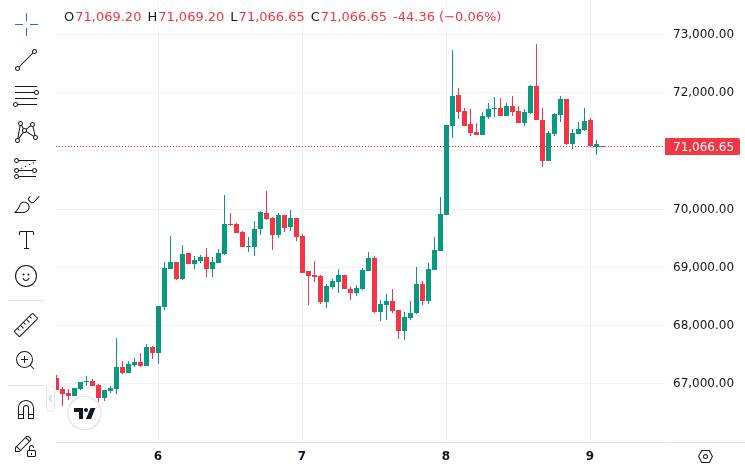
In 2011, buying Bitcoin meant navigating unregulated platforms with minimal liquidity. Today, Bitcoin trades at $71,108, a roughly 8,888% increase from the $8 price Tom referenced. That repricing reflects a complete transformation in market infrastructure.
Regulated exchanges, institutional-grade custody solutions, and spot ETF products now channel billions in daily volume. The 24-hour trading volume of $42.74 billion alone dwarfs Bitcoin’s entire market cap from 2011. This shift from hobbyist network to global financial instrument is the core story behind the price move.
Adoption and Access Milestones
Bitcoin’s supply schedule, the very halving mechanism Tom described at age 12, has driven a scarcity narrative that intensifies with each four-year cycle. Reduced block rewards tighten new supply while demand has broadened from cypherpunks to sovereign nations.
El Salvador made Bitcoin legal tender in September 2021, a development that directly contradicts one of Tom’s 2011 predictions. He had speculated that governments would shut Bitcoin down entirely. In his February 2025 follow-up video, Tom acknowledged this was partially correct, noting that while China banned Bitcoin, more countries have moved toward regulation rather than prohibition.
Despite the long-term price trajectory, current sentiment remains cautious. The Fear & Greed Index reads 17, or Extreme Fear, reflecting short-term anxiety even as Bitcoin holds above $70,000. This disconnect between price level and sentiment is not unusual during consolidation phases, similar to conditions seen around broader market pivots in recent months.
What Still Holds Up From the 2011 Explanation
Timeless Basics for New Readers
Tom’s 2011 explanation of Bitcoin as a decentralized, peer-to-peer currency with a fixed issuance schedule remains accurate 15 years later. The core value proposition he described, transferring value without a central authority, is still the foundation of every Bitcoin pitch.
After the video went viral in early 2025, a Solana-based memecoin called $TPU was created in honor of Tom’s TechPodUSA channel. He received 13 million tokens, locked for six months. The memecoin chapter is a distinctly 2025 footnote to a 2011 story, but it underscores how deeply the crypto community values its own origin mythology.
Common Beginner Misconception to Avoid
Tom’s biggest miss, that governments would simply shut Bitcoin down, reflects a misconception that persists among newcomers today. The assumption that any single authority can “turn off” a decentralized network misunderstands how distributed systems work.
In practice, governments have opted for regulation, taxation, and in some cases adoption. The regulatory landscape is complex and varies by jurisdiction, but outright prohibition has proven difficult to enforce even where it has been attempted. New readers studying Bitcoin in 2026 would benefit from starting exactly where Tom did: understand the technical fundamentals first, then interpret the price narrative.
Disclaimer: This article is for informational purposes only and does not constitute financial or investment advice. Cryptocurrency and digital asset markets carry significant risk. Always do your own research before making decisions.