


An Indonesian exchange route should be checked in two layers: whether the provider and entity fit the OJK framework, and whether the specific IDR funding or withdrawal product works for the user. The right IDR platform is the one whose operator, local funding rail, order flow, and withdrawal can be matched to the same user account. This guide separates Indonesian entity evidence from the practical bank test.
Verify the Indonesian operator before sending IDR
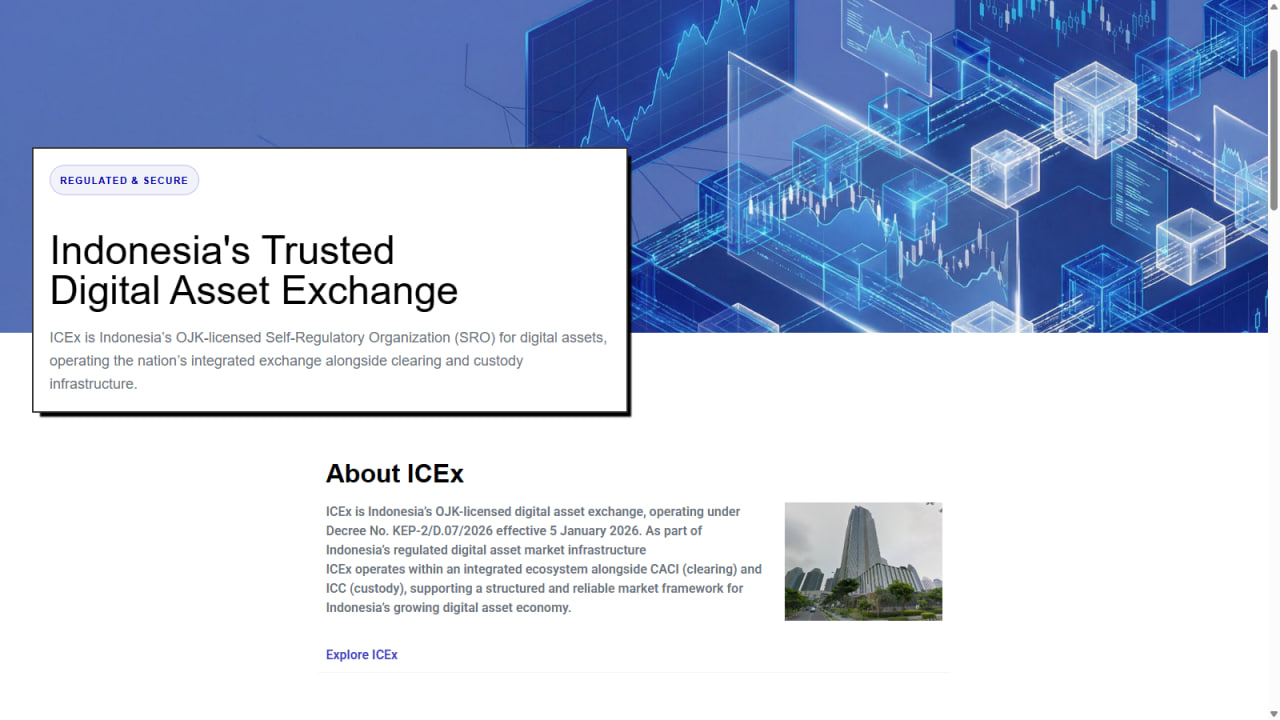
The Indonesian choice starts with the operator behind the brand. A mobile-first app, an older order-book exchange, and a trading-oriented platform may all support IDR while producing different spreads, limits, interfaces, and withdrawal experiences.
Open the exact IDR funding and cash-out instructions before ranking the candidates. The local operator, account name, bank route, and current supervisory record should point to the same user journey.
Compare IDR deposit and withdrawal routes
| Question | What to compare | What remains unproven |
|---|---|---|
| Legal entity | Named Indonesian operator | A group brand may use another entity |
| IDR deposit | Bank or virtual-account route | A visible method may be restricted |
| IDR liquidity | Pair depth and spread | Global volume does not equal IDR depth |
| Withdrawal | Small test and timing | Provider terms do not prove completion |
Indonesia has several different “local exchange” experiences, so the first comparison should name the operator behind the app. Pintu is positioned as a mobile-first consumer route, while Indodax and Tokocrypto are more exchange-oriented surfaces. That distinction does not decide which one is best, but it tells the editor which evidence to collect: app onboarding and convenience for one, IDR pair depth and order execution for another.
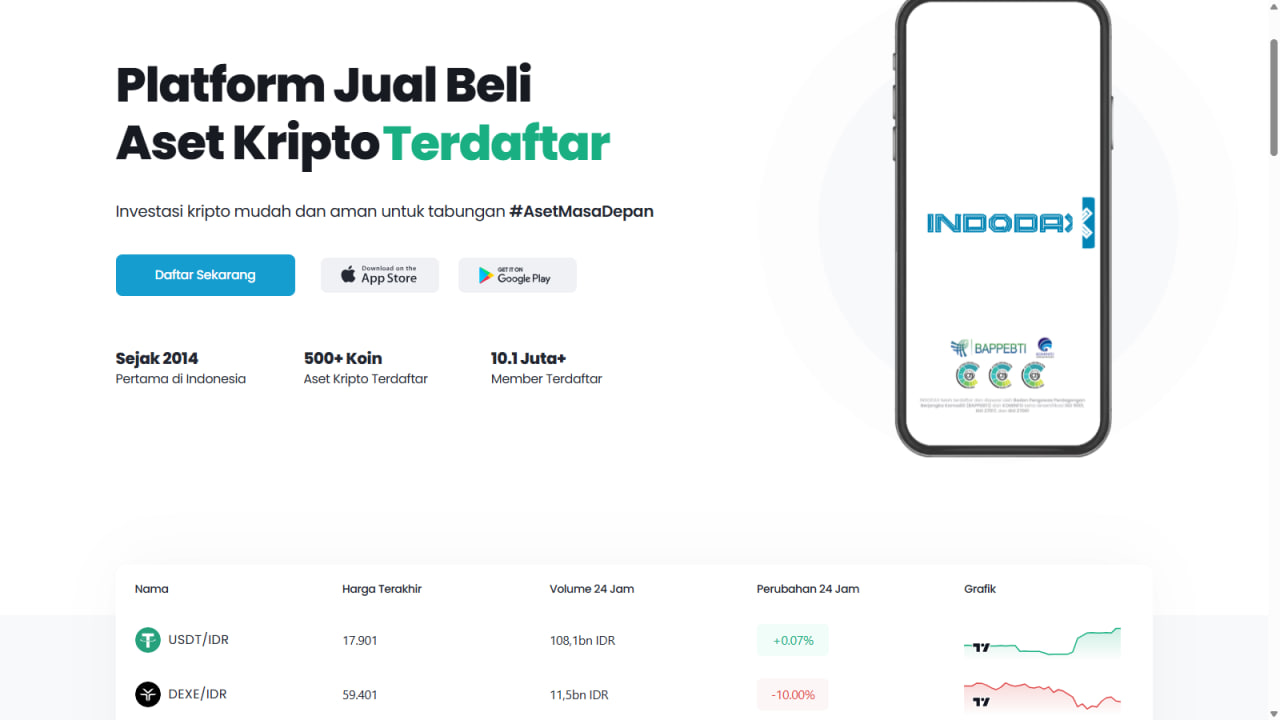
For each candidate, open the IDR deposit instructions and record whether the route is a bank transfer, virtual account, e-wallet, or P2P transaction. Then check whether the same account supports the intended withdrawal. A provider list or brand page is only the beginning; the exact operator, payment rail, account name, asset network, and current supervisory record need to line up with the regional onramp and offramp workflow.
| Candidate evidence | Check in the same session | What it does not prove |
|---|---|---|
| Pintu product page | Consumer onboarding and IDR funding language | Completed bank withdrawal |
| Indodax market page | IDR pair, order-book access, withdrawal terms | Current execution at the reader’s size |
| Tokocrypto product page | Local exchange features and account eligibility | Stability of every bank route |
| OJK or successor register | Exact entity and status date | Safety of a particular trade or asset |
Calculate the full cost of an IDR withdrawal
Calculate the IDR result from the amount the user starts with, not from the advertised trading fee. Include the buy or conversion spread, trading fee, network charge, withdrawal fee, bank or partner charge, and any cost created by a failed or delayed transfer. If the route uses USDT or another stablecoin, record the network because the same asset can have a very different transfer cost and confirmation experience across networks.
For a larger amount, repeat the calculation at two order sizes. A convenient app may be sensible for a first purchase but less competitive once the spread grows with the notional. Conversely, an order-book venue can have a lower trading cost but require more work to fund, trade, and cash out. The comparison should show both outcomes using the same exchange total-cost framework rather than force one platform to win every use case.
Check account names and payment ownership
Name matching is an operational control, not a minor onboarding detail. Check whether the provider permits third-party deposits, whether a corporate account can use a personal bank rail, and what happens when a bank transfer arrives with an unexpected reference. Keep the account name, payment receipt, and support instruction together before sending a larger amount.
When a withdrawal is delayed, do not create a second transaction to “unstick” the first. Confirm the status in the official app, use the documented support channel, and ask which evidence is missing. A clear record of the original deposit, conversion, and withdrawal request is more useful than a screenshot of a general help page.
Recheck the operator, bank route, and withdrawal limits
An IDR comparison needs a monthly refresh because supervisory records, bank partners, asset support, and withdrawal limits can change independently. Recheck the legal entity, the current regulator or industry list, the supported bank route, the IDR pair, fee page, asset network, withdrawal limit, and incident notices. Keep the old result with its date instead of silently overwriting it.
Remove a provider from the shortlist when the entity cannot be matched, the IDR route is only described by a third party, the withdrawal path is unavailable, or a critical term cannot be verified. This is a stronger editorial rule than giving every candidate a soft “may be suitable” label.
Example: choosing between Pintu, Indodax, and Tokocrypto
A beginner may prefer a mobile-first route, while a more active user may accept a traditional exchange interface to access deeper IDR markets. The comparison should run one small IDR funding and withdrawal test on the intended candidates, then compare spread, fee, account-name rules, processing time, and support. It should not rank an app using global token count.
If one venue has better trading execution but a less convenient bank route, the article should keep both facts visible. The right choice depends on whether the user is buying occasionally, trading repeatedly, or moving money through a remittance corridor. That is the kind of decision context a generic “best exchange” list misses.
| Platform | IDR route to check | Best starting use | Verify before scaling |
|---|---|---|---|
| Pintu | Local bank or virtual-account funding and withdrawal | Simple mobile-first purchase | Effective spread, limits, and completed bank receipt |
| Indodax | IDR order-book trading and local bank route | Users who need a traditional exchange market | Pair depth at the intended order size and withdrawal timing |
| Tokocrypto | Local exchange account and IDR funding route | Users comparing a broader trading interface | Exact operator, supported bank, and current account eligibility |
| MEXC | IDR P2P where available | Users comparing quote competition and token access | Merchant depth, escrow, payment rail, and final cash-out |
This table is only a first screen. The same platform can look cheap for a small order and expensive for a larger one once the quote gap, trading fee, withdrawal fee, and bank cost are included. Test the exact IDR amount and payment rail that the reader will use instead of copying a headline fee.
The IDR comparison fields a platform list misses
The stronger Indonesia comparison pages do not treat “lowest fee” as the whole answer. MEXC’s June 2026 IDR P2P comparison frames the decision around live quote gaps, merchant competition, liquidity depth, payment flexibility, escrow, and order size. It also warns that the lowest spread can change by payment method, trading hours, and market conditions. Because the page is published by a venue, use it as a useful SERP and methodology benchmark, not as neutral proof that MEXC or any other exchange is the permanent winner.
For an Indonesian reader, the comparison should be run at one timestamp with the same asset, IDR notional, payment rail, and direction. Save the best buy and sell quotes, the number of active offers that actually cover the order, the merchant completion rate, and the order limit. Then separate the P2P spread from trading, withdrawal, network, and bank costs. A small order can look cheap because it fits the first ad; a larger order may cross several ads or fail to find one merchant with enough limit.
| IDR comparison field | How to test it | Why it can change the result |
|---|---|---|
| Quote spread | Capture best buy and sell ads for the same asset and payment rail | A headline fee does not include the live P2P quote gap |
| Merchant depth | Count active offers that cover the intended IDR notional | One cheap ad may not fill the whole order |
| Payment flexibility | Repeat the check for the bank or e-wallet the reader actually uses | A deep market on one rail may be thin on another |
| Escrow and appeal | Read the in-platform order flow and dispute conditions before paying | A low quote is not useful if the recovery path is unclear |
| Completion history | Record merchant completion percentage and order age | Fast-looking price can hide unreliable settlement |
| Withdrawal result | Run a small IDR withdrawal and save the receipt and timing | Trading execution does not prove bank cash-out |
The editorial result should therefore be written as a route verdict: best for a small bank-funded purchase, best for a repeat trader who needs deeper IDR execution, or not enough evidence for a larger cash-out. That wording is more honest and more useful than recycling a five-platform ranking every month.
A simple IDR spread example
The spread becomes easier to understand with one fixed amount. On an IDR 10,000,000 USDT purchase, a 0.5% quote gap equals IDR 50,000, a 1% gap equals IDR 100,000, and a 2% gap equals IDR 200,000 before trading, withdrawal, network, or bank charges.
| USDT/IDR quote gap | Example amount | Difference on IDR 10,000,000 | Practical reading |
|---|---|---|---|
| 0.5% | IDR 10,000,000 | IDR 50,000 | Competitive if the merchant and payment rail are reliable |
| 1.0% | IDR 10,000,000 | IDR 100,000 | Material cost that can outweigh a small headline fee |
| 2.0% | IDR 10,000,000 | IDR 200,000 | Recheck another merchant, payment method, or platform |
The roughly 1% example is a reference point from the MEXC comparison, not a current ranking of Indonesian exchanges. Recheck the buy and sell ads for the same asset, payment rail, order size, and timestamp before turning the calculation into a platform verdict.
Final rule: match the legal entity to the IDR bank route
Close by separating OJK status, platform access, IDR liquidity, and withdrawal evidence into separate checks.
Frequently asked questions
Which IDR evidence matters most before a deposit?
Match the app or brand to the exact operator, then confirm the current IDR funding and withdrawal route. A regulator record helps with entity scope but does not replace a small transaction test.
Why can an exchange with good IDR volume still be a poor fit?
The user may face a weak withdrawal route, higher spread at the needed size, account-name restrictions, or a network mismatch. Liquidity is only one part of the money path.
How often should an IDR exchange comparison be updated?
At least when a regulator list, bank partner, fee schedule, asset network, or withdrawal rule changes. A dated monthly check is safer than treating a static ranking as permanent.
Disclaimer: This article is for informational and editorial purposes only and does not constitute legal, tax, or financial advice. Terms, fees, supported countries, and onboarding requirements can change and should be confirmed with each provider before integration.