

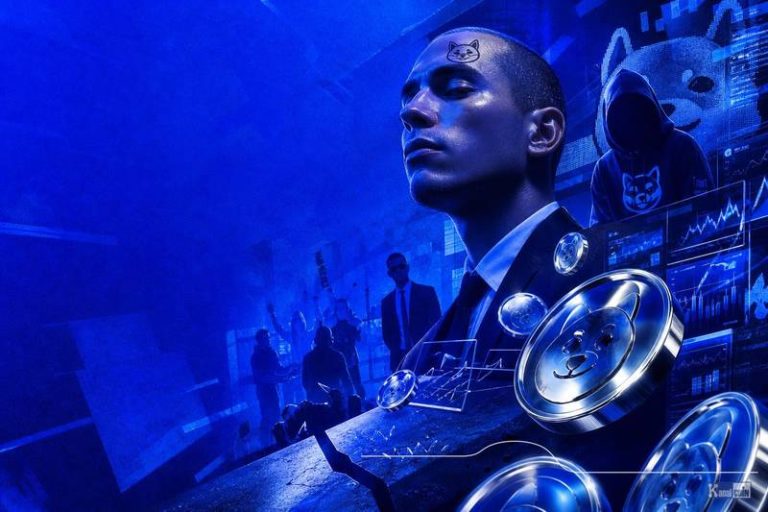
The memecoin economy has entered a phase where forehead tattoos, alcohol dares, and other extreme stunts have become promotional tools, revealing an incentive structure that rewards spectacle over substance and pushes participants toward increasingly reckless behavior.
KEY TAKEAWAYS
- Memecoin promotion increasingly relies on viral stunts and shock content to capture attention and liquidity.
- Platforms like Pump.fun have created infrastructure where extreme behavior translates directly into token awareness.
- The human costs, from physical harm to financial losses for retail traders drawn in by hype, extend far beyond the initial spectacle.
Attention as currency: why stunts drive memecoin markets
Memecoins lack the fundamentals that support traditional crypto assets. Without utility, governance mechanisms, or revenue models, attention becomes the primary input for price action. The faster a token trends on social media, the faster liquidity flows in.
This dynamic has turned shock value into a promotional strategy. Platforms now pay users to complete bizarre tasks, including getting forehead tattoos, as a form of performative commitment that generates screenshots, clips, and viral reposts. Each piece of content functions as free marketing for the associated token.
The escalation follows a predictable pattern. As audiences grow desensitized to one level of shock, creators push further. Alcohol dares and physical stunts become the next frontier, each designed to outperform the last viral moment in reach and engagement.
Pump.fun, the Solana-based memecoin launchpad, has become a central venue for this behavior. Its latest experiments have already drawn attention for pushing boundaries, creating an environment where token launches are inseparable from content performance.
The logic is straightforward: in a market where thousands of tokens launch daily, the ones that trend are the ones that get bought. Spectacle is not a side effect of memecoin culture; it is the core mechanism.
The human and financial toll behind the hype
Physical harm and permanent consequences
The stunt economy has already produced real casualties. A Solana developer was hospitalized after suffering burns in a memecoin-related incident, illustrating that the physical risks of these promotional tactics are not hypothetical.
Forehead tattoos are permanent. Alcohol dares carry health risks. These are not reversible marketing decisions. Yet the incentive structure treats them as rational promotional investments because the potential token price spike, however brief, can appear to justify the cost.
Financial damage to retail participants
The broader harm extends to traders who enter positions based on viral social proof rather than risk assessment. When a stunt trends and a token pumps, inexperienced participants buy in at inflated prices. The inevitable collapse leaves them holding worthless assets while early insiders have already exited.
This cycle operates on a predictable timeline: stunt goes viral, token pumps, insiders sell, price collapses. The spectacle creates the illusion of organic demand, but the underlying liquidity is shallow and temporary.
The reputational spillover affects the wider crypto industry. Each headline about forehead tattoos and alcohol dares reinforces the perception that crypto is a casino rather than a developing financial technology. Projects working on institutional crypto infrastructure or documenting DeFi’s legitimate history find their credibility undermined by association.
What this trend reveals about market conditions
Low barriers and saturated competition
The stunt economy thrives because token creation has become nearly frictionless. Platforms like Pump.fun allow anyone to launch a memecoin in minutes, which means the bottleneck is no longer technical. It is promotional. When supply is infinite, the scarce resource is attention.
This environment rewards novelty and emotion over substance. In a field crowded with identical tokens, the one backed by a shocking video clip outperforms the one with a marginally better tokenomics model. Promotion has become the product.
Speculative cycles tend to amplify this pattern. When markets run hot, capital flows toward whatever is trending fastest. The combination of cheap token creation, abundant speculation, and social media virality creates ideal conditions for the stunt economy to flourish.
The question is whether this represents a durable feature of crypto markets or a phase that burns itself out. The behavior is structurally tied to conditions of excess liquidity and low barriers to entry. If those conditions persist, so will the stunts. But as institutional flows shift and regulatory attention increases, the market segment competing on spectacle may find its audience shrinking.
The memecoin stunt economy is not an aberration. It is the logical output of a market where attention equals value. Until the incentive structure changes, the dares will keep escalating.
Disclaimer: This article is for informational purposes only and does not constitute financial or investment advice. Cryptocurrency and digital asset markets carry significant risk. Always do your own research before making decisions.