

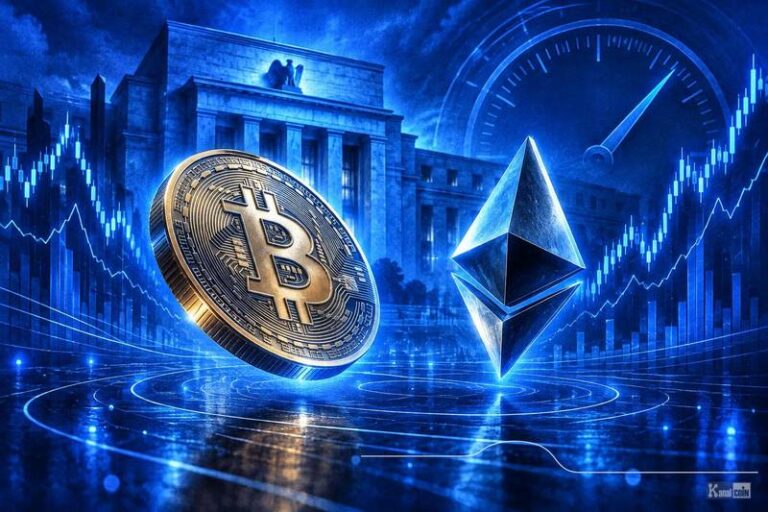
Bitcoin and ether swung on September 16, 2026, after the Federal Open Market Committee voted 12-0 to raise the federal-funds target range by 25 basis points to 3.75%–4.00%, marking the first Fed rate increase since 2023. Fed Chair Kevin Warsh called inflation too high and too persistent, reinforcing a hawkish policy signal that rippled through risk-sensitive crypto markets across Southeast Asia and beyond.
Bitcoin and ether react after the Fed’s quarter-point hike
The FOMC’s September 16 decision lifted the benchmark rate to its highest level in years, with the committee citing elevated inflation and the need to support a timelier return to its 2% inflation goal. The unanimous vote left no dissent to soften the hawkish read. For related coverage, see Bitcoin Back Above $77,500 as XRP Leads Majors on Lower Fed Hike Odds.
According to unconfirmed reports, Bitcoin and ether moved sharply in the minutes immediately after the decision, though timestamped intraday data was not independently verified at the time of publication. The broader 24-hour market snapshot showed Bitcoin trading at $76,239, up 0.76% over the prior 24 hours, with a market capitalisation of approximately $1.53 trillion and $30.8 billion in daily volume.
Ether tracked a similar path, trading near $2,418 with a 24-hour gain of 0.74%, a market cap of roughly $295 billion, and $15.8 billion in volume. The parallel moves in both assets reflected a broadly cautious market posture rather than outright panic, with the Crypto Fear & Greed Index holding at 50, classified as Neutral. This follows a period of elevated tension: Bitcoin had already fallen below $75,000 and rebounded above $76,000 on Fed-hike fears in the weeks leading up to the decision.
Why Warsh’s inflation stance matters for crypto markets
Warsh described inflation as too high and too persistent, according to CNBC’s reporting on the decision. That language signals the Fed is not done tightening, and markets pricing any near-term pivot may need to revise those expectations. Higher-for-longer rates raise the opportunity cost of holding non-yielding assets like Bitcoin and ether, a transmission channel that Southeast Asian traders familiar with dollar-denominated funding costs understand well.
Financial analyst Matt Schulz summarised the household-level impact: “A rate hike is great news for savers, but it stinks for borrowers. It means that you’ll get better returns on high-yield savings accounts and CDs, but you’ll also see higher interest rates on your credit cards.” For Southeast Asian retail crypto participants who fund positions through consumer credit or leveraged products on regional exchanges such as Indodax or Tokocrypto, that cost-of-capital squeeze is a direct headwind.
Prior to the decision, Kraken had mapped out three Warsh Fed scenarios and their crypto implications, and the unanimity of this hike aligns with the more hawkish end of that range. Warsh’s earlier Jackson Hole appearance had already sent a clear signal: Bitcoin had fallen below $77,000 after that speech lifted September hike odds.
What traders will watch next
The Fed’s next scheduled policy meeting and any interim remarks from Warsh or other FOMC members will be closely monitored for clues about the pace of further tightening. Upcoming U.S. inflation prints, particularly the Consumer Price Index and Personal Consumption Expenditures data, will be the clearest guide to whether the committee has room to pause.
For crypto markets specifically, sustained Bitcoin ETF inflows amid elevated volatility have signalled institutional appetite even during macro stress. Regional exchanges and regulators from Manila to Singapore will be watching the dollar-liquidity environment closely, as tighter U.S. monetary conditions historically tighten dollar access across ASEAN markets and raise the premium on locally denominated crypto on-ramps.
Disclaimer: This article is for informational purposes only and does not constitute financial or investment advice. Cryptocurrency and digital asset markets carry significant risk. Always do your own research before making decisions.